
- Home
- Companies
- Proteus Instruments
- Products
- Proteus - Multiparameter Water Quality ...
Proteus - Multiparameter Water Quality Meter
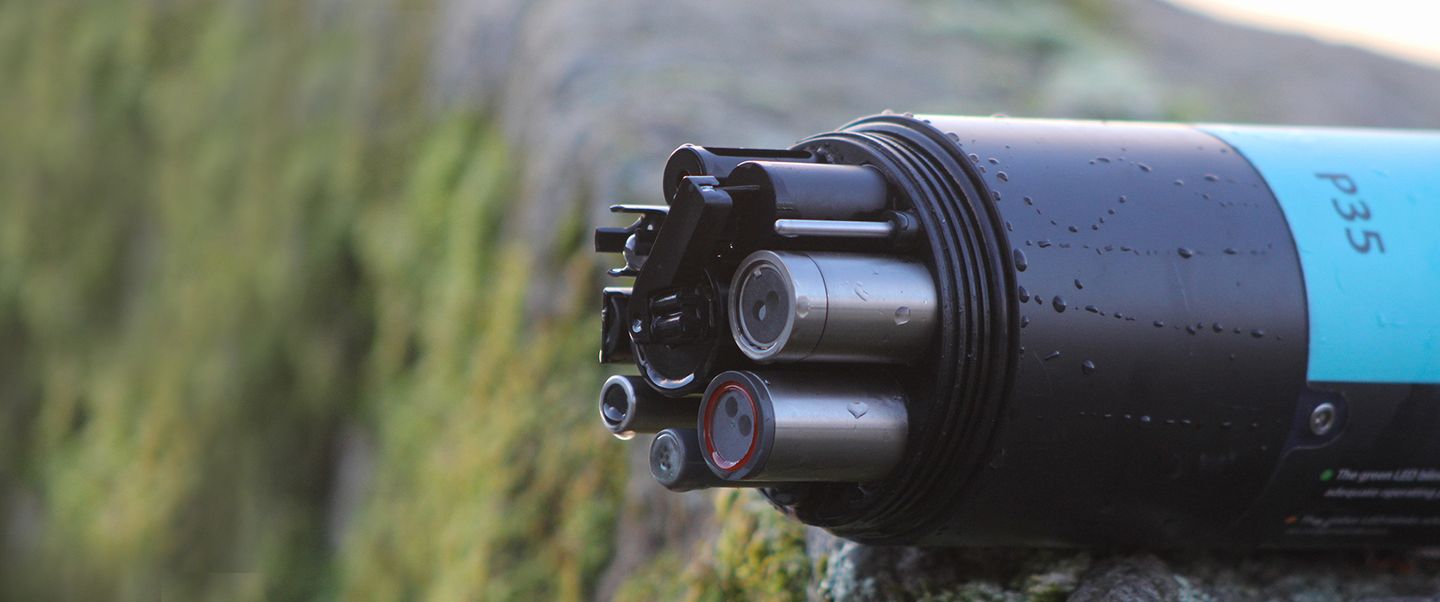
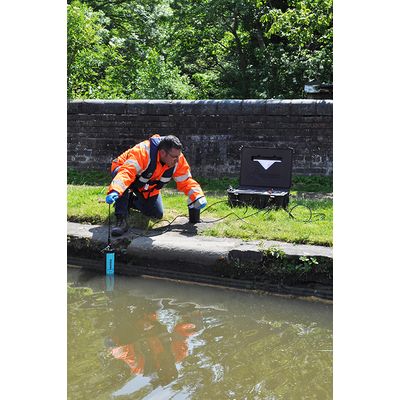
The Proteus is a brand new multi parameter sensor platform for real-time measurement of BOD, COD, TOC and Coliforms (total, e.coli or faecal) that compensates for temperature and turbidity. The Proteus can be easily integrated with any telemetry / SCADA system and can also be used with existing logging devices with external RS232/Modbus/SDI 12. Its integrated datalogger can store 1,000,000 readings which can be viewed on mobile phone / tablet.
The Proteus multi-probe can be configured to the users choice of parameters and offers a unique platform to add additional sensors such as pH, REDOX, electrical conductivity, dissolved oxygen and many others.
Parameters include:
- BOD/COD/TOC/DOC
- Temperature
- Refined Oils
- Coliforms (total, e.coli or faecal)
- Dissolved Oxygen
- Optical Brignteners
- Pressure
- Nitrate
- EC/SALINITY/TDS
- Chloride
- ORP/REDOX
- Turbidity
- pH
- Tryptophan
- Crude Oils
- CDOM
- fDOM
- TDG
A range of power options are available including internal lithium battery packs, ideal for unattended logging, or multiple external power options of battery, mains or solar panel.
Manufactured by: Proteus Instruments
Model: Proteus Multiparameter Water Quality Meter
Services offered for this product
- Sales
- Rental
- Installation
- Calibration
- Maintenance
- BOD loading to wastewater treatment works (WWTWs)
- Combined Sewage overflow (CSO) event monitoring
- Point source solution monitoring
- Total Coliform Monitoring (e.coli, total or faecal)
- River pollution monitoring and surveillance
- Efficiencies of wastewater treatment works
- Diffuse pollution monitoring
- Groundwater water quality monitoring
- Survey tool combined with Bluetooth
General Specifications - Proteus 30
- Diameter 75 mm (2.95")
- Length - w/o Battery Pack 483 mm (19")
- Weight - with IBP 2.3 kg (5.0 lbs)
- Number of Sensors Up to 7
- Optional Battery Pack 8 “C” cells
General Specifications - Proteus 35
- Diameter 89 mm (3.5")
- Length - w/o Battery Pack 483 mm (19")
- Weight - with IBP 4.1 kg (9.0 lbs)
- Number of Sensors Up to 11
- Optional Battery Pack 8 “C” cells
General Specifications - Proteus 40
- Diameter 102 mm (4.00”)
- Length - w/o Battery Pack 483 mm (19")
- Weight - with IBP 4.5 kg (10.0 lbs)
- Number of Sensors Up to 13
- Optional Battery Pack 8 “C” cells
General Specifications - All Versions
- Internal Power Battery Life 1 to 24 month depending on sensors / logging rates
- External Power 5-15 vdc
- Operating Temperature 0 to 50 °C non-freezing
- Depth Rating 200 m
- Communications RS-232, SDI-12, USB or Bluetooth
- Sample Rate 1 Hz
- Data Memory >1,000,000 logged readings
- Logging Rates 1 second to 1 day
- Warranty 2 years*
- * All sensors included except ISE’s (Ammonia/nitrate/chloride)
Biochemical Oxygen Demand (BOD)
The BOD test was devised in the early 20th century and selected as an indicator of organic enrichment in water bodies by the U.K Royal Commission on River Pollution in 1908. Subsequently, the method was adopted by American Public Health Association Standard Methods Committee in 1936 as a reference indicator to evaluate the biodegradation of chemicals and hazardous substances.
BOD is defined as the amount of oxygen taken up through the respiratory activity of microorganisms growing on organic material in the sample. The test is conducted in airtight bottles in the absence of light and under a controlled temperature (20°C ± 1°C) for a set time period. The widely employed 5 days interval was selected as this the time taken from source to sea for the longest U.K river. Hence, the parameter provides a measurement of the carbonaceous organic pollution of water that can be degraded biologically and is expressed in milligrams of O2 per litre (see Table 1 for expected levels from a range of aquatic habitats).
Why is it important?
BOD is a key water quality parameter used in a wide range of applications in the water industry and for environmental monitoring:
- it is used under the WFD to assess the quality of water bodies (see Table 1);
- it is used to confirm wastewater discharge and the waste treatment procedure meets criteria set by regulators (see Table 2);
- the ratio between BOD and COD (chemical oxygen demand) is indicative of the biodegradable fraction of wastewater effluent;
- COD/BOD is also used as an indicator of the size of a wastewater treatment plant required for a specific location.
- BOD is used to identify sources of organic pollution in river networks
Challenges to monitoring BOD
Despite the BOD5 test being long entrenched in legislation there are substantial deficiencies associated with it:
- long lead times until results are available (5 days) that can lead to environmental damage having occurring before the data is available;
- the test is time consuming and expensive;
- it fails to recreate natural processes (i.e. the test involves a 5-day incubation conducted in the dark);
- results are not always simple to interpret as a low value can be due to high organic content that is not readily degraded or that degradation is inhibited by toxins;
- it is imprecise and has a high minimum detection limit thus is not applicable to clean/uncontaminated river samples;
- the accuracy/repeatability is low with measurement variability in certified laboratories as high as 20%; and that is just the measurement in the laboratory and does not involve all of the potential issues of the sampling and transportation process
It is clear that a move from traditional laboratory testing to in-situ (real-time) monitoring would help to alleviate most of the problems outlined above. It would immediately address points I - III and would help to improve spatial temporal resolution of monitoring that would be directly beneficial to basin managers, water companies and legislators alike.
Proteus the real-time solution for BOD
The Proteus is a new product providing users with a robust, repeatable, low maintenance sensor platform for measuring BOD in real-time. The Proteus is underpinned by comprehensive research exploring the use of in-situ fluorescence as a technique for real-time BOD measurement. The Proteus is a multi-parameter instrument and for standard BOD configuration - a tryptophan-like fluorescence (TLF) sensor, turbidity sensor (see Fig. 2) and thermistor - provide users with real time measurement of reactive dissolved organic matter found in sewage and slurry, negating the need for a 5-day BOD laboratory analysis. Using a robust correction algorithm the tryptophan signal is corrected, in real time, for known interferrants. The result is a repeatable and highly accurate measurement that can provide instantaneous BOD measurement with a simple site specific calibration.
The science...
Fluorescence spectroscopy is a selective and sensitive optical technique enabling in-situ, real-time measurement of dissolved organic matter. Molecules absorb light of a specific wavelength and orbiting electrons are excited to a higher energy state .The electrons then emit light of a specific wavelength to return to the base state.
The dissolved organic matter pool can be mapped in optical space based on its fluorescent properties (see Fig. 2). The TLF peak (red) represents a mixture of free amino acids, peptides and proteins. This is associated with microbial activity and human/animal waste contamination. Numerous published studies have correlated TLF with BOD and faecal coliform counts and our site specific or generic calibrations are able to provide users with highly accurate and repeatable BOD measurements (Fig. 3).
Applications
- Monitoring for compliance
- Optimization of wastewater treatment processes
- Development of process control algorithms
- Identification of cross-connected sewers
- Identification of pollution sources
- Rapid assessment of incident severity
- Advanced treatment monitoring & protection
- Effluent pollution control
Dissolved/Total Organic Carbon (DOC/TOC)
Dissolved Organic Carbon (DOC) is operationally defined as the amount of organic carbon based compounds that can pass through a 0.45 µm filter. Measurement is usually conducted in the laboratory using expensive benchtop analysers that oxidize organic carbon in the water sample to form carbon dioxide. There are two different methods for the oxidation of organic carbon to CO2: (1)combustion in an oxidizing gas; and (2) UV or heat driven chemical oxidation with a persulfate solution. A conductivity detector or an infrared detector then detects the released CO. Unfortunately these techniques require expensive and power hungry laboratory equipment with high reagent costs.
Why is it important
In natural river systems, the quantity of DOC is of interest to river basin managers as shifts in concentration can alter nutrient levels, pH, light absorbance and photochemistry of the river system. In addition, high DOC concentration poses many problems for drinking water treatment. In Particular, it can influence coagulant demand, filter backwash runtime,disinfectant dose and the formation rate of disinfectant by-products(Trihalomethanes – THMs). THMs have long-term negative implications for health and formation potential is a critical consideration when chlorinating drinking water high in DOC. Furthermore, high DOC can lead to water discolouration. However, to date real-time DOC measurement hasrequired expensive monitoring cabinets with high maintenance requirements and reagents costs. Hence, many industrial and environmental monitoring regimes have been comprised of sporadic grab samples with analysis subsequently undertaken in a laboratory.
Challenges associated with DOC monitoring
Despite the test being entrenched in legislation there are numerous problems and challenges associated with use of the test:
- There is a lag until results are available (transportation to lab + analytical test time 1h),hence damage can occur before the data is available;
- The test require expensive laboratory equipment;
- The test involves dangerous chemicals that need careful disposal and are potentially harmful to operators;
It is clear that a move from traditional laboratory testing to in-situ (real-time) monitoring would help to alleviate some of the problems outlined above. It would immediately address points I - III and would help to improve spatial temporal resolution of monitoring that would be directly beneficial to basin managers, water companies and legislators alike.
Proteus the real-time solution for DOC monitoring
The Proteus is a new product launched by Proteus instruments providing users with a robust,repeatable, low maintenance sensor platform for measuring DOC in real-time. The Proteus is underpinned by comprehensive research exploring the use of in-situ fluorescence as a technique for real-time DOC measurement. The Proteus for DOC monitoring (See Fig. 1) is a multi-parameter instrument that incorporates a CDOM fluorometer, turbidity sensor and thermistor to provide real time measurement of the bulk dissolved organic load, negating the need for couriers and laboratory analysis. Using a robust correction algorithm the CDOM signal is corrected, in real time, for temperature interference. The result is a repeatable measurement that can provide instantaneous DOC measurement with a simple site specific calibration for turbidity and CDOM relationship with DOC (Fig. 3).
Fluorescence spectroscopy is a selective and sensitive optical technique enabling in-situ,real-time measurement of dissolved organic matter. Molecules absorb light of a specific wavelength and orbiting electrons are excited to a higher energy state .The electrons then emit light of a specific wavelength to return to the base state.
The dissolved organic matter pool can be mapped in optical spaced based on its fluorescent properties (see Fig. 2). A subset of the coloured dissolved organic matter (CDOM) pool is fluorescent and has a distinct fluorescence peak (Fig.2). This peak is primarily associated with humic and fluvic acids, the by-products of microbial degradation of vascular plant material. The intensity of the CDOM fluorescence signal, often reported in quinine sulphate (QSE) units, is strongly correlated to DOC concentration and TOC. Numerous published studies from a wide range of geographical locations have correlated CDOM fluorescence with DOC and our site-specific calibrations can provide users with accurate and highly repeatable measurements (see Fig. 3).
Applications
- Catchment monitoring (upland / peatland)
- Assessing organic load through water treatment works
- Process control - Filter management and coagulation control
- Monitoring disinfection by-product formation potential
- Monitoring raw water intake
Chemical Oxygen Demand (COD)
Chemical Oxygen Demand (COD) is a test that measures the amount of oxygen required to chemically oxidize the organic material and inorganic nutrients, such as Ammonia or Nitrate, present in water. The earliest methods for quantification of COD were developed ~150 years ago and involved recording colour changes of a permanganate solution mixed when mixed with a water samples.
There was, however, significant variability between samples using this compound. The use of the dichromate procedure was pioneered and perfected for wastewater in 1949. COD is measured via a laboratory assay in which a sample is incubated with a strong chemical oxidant for a specified time interval and at constant temperature (usually 2 h at 150°C). The most commonly used oxidant is potassium dichromate, which is used in combination with boiling sulphuric acid. It is important to note that the chemical oxidant is not specific to organic or inorganic compounds, hence both these sources of oxygen demand are measured in a COD assay. Furthermore, it does not measure the oxygen-consuming potential associated with certain dissolved organic compounds such as acetate. Thus, measurements are not directly comparable to Biochemical Oxygen Demand (BOD) but can be used to compliment (though is sometimes used as surrogate measure).
Why is it Important?
COD is an important water quality parameter and is used in a wide range of applications, including:
- to confirm wastewater discharge and the waste treatment procedure meets criteria set by regulators (see Table 2);
- to quantify the biodegradable fraction of wastewater effluent - ratio between BOD and COD;
- COD or BOD measurements are also used as an indicator of the size of a wastewater treatment plant required for a specific location.
Challenges associated with COD monitoring
Despite the test being entrenched in legislation there are numerous problems and challenges associated with use of the test:
- There is a lag until results are available (transportation to lab + 2h for test), hence environmental damage can occur before the data is available;
- the test is time consuming and expensive;
- the test involves dangerous chemicals that need careful disposal and are potentially harmful to operators;
- it fails to recreate natural processes (i.e. the test involves an artificial incubation with a strong oxidising agent);
- it is imprecise and has a high minimum detection limit thus is not applicable to clean/uncontaminated river samples;
It is clear that a move from traditional laboratory testing to in-situ (real-time) monitoring would help to alleviate some of the problems outlined above. It would immediately address points I - III and would help to improve spatial temporal resolution of monitoring that would be directly beneficial to basin managers, water companies and legislators alike.
Proteus the real-time solution for COD monitoring
The Proteus is a new product launched by Proteus Instruments providing users with a robust, repeatable, low maintenance sensor platform for measuring COD in real-time. The The Proteus is underpinned by comprehensive research exploring the use of in-situ fluorescence as a technique for real-time COD measurement. The Proteus (See Fig. 1) is a multi-parameter instrument that can incorporate a range of optical sensors. For COD measurement the standard configuration includes a tryptophan-like fluorescence (TLF) sensor, turbidity sensor and thermistor and can provide real-time measurement of reactive dissolved organic matter found in sewage and slurry, negating the need for COD laboratory analysis. Using a robust correction algorithm the tryptophan signal is corrected, in real time, for temperature interference. The result is a repeatable measurement that can provide instantaneous COD measurement with a simple site specific calibration for turbidity and TLF relationship with COD.
The Science...
Fluorescence spectroscopy is a selective and sensitive optical technique enabling in-situ, real-time measurement of dissolved organic matter. Molecules absorb light of a specific wavelength and orbiting electrons are excited to a higher energy state .The electrons then emit light of a specific wavelength to return to the base state.
The dissolved organic matter pool can be mapped in optical spaced based on its fluorescent properties (see Fig. 2). The TLF peak (red) represents a mixture of free amino acids, peptides and proteins. This is associated with microbial activity and human/animal waste contamination. Numerous published studies have correlated TLF with COD and our site specific calibrations can provide users with accurate and highly repeatable measurements (see Fig. 3).
Applications
- Monitoring for compliance
- Optimization of wastewater treatment processes
- Development of process control algorithms
- Identification of cross-connected sewers
- Identification of pollution sources
- Rapid assessment of incident severity
- Advanced treatment monitoring & protection
- Effluent pollution