


- Home
- Companies
- AB Sciex LLC
- Products
- Sciex ZenoTOF - Model 7600+ - QTOF Mass ...
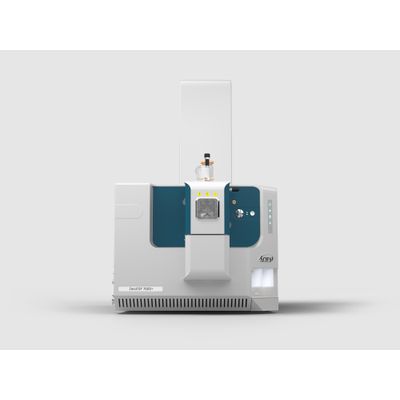
Sciex ZenoTOF - Model 7600+ -QTOF Mass Spectrometry System
Take quantitative accuracy to the next level. Combine fast scanning and sensitivity on a Zeno trap-enabled QTOF system to maximize the total number of high-quality MS/MS spectra generated per cycle. Extend the depth and certainty of quantitative measurements to unravel the complexity of proteomics samples. The SCIEX ZenoTOF 7600+ system is a Zeno trap-enabled QTOF engineered with the added specificity of the scanning quadrupole dimension to enhance speed, depth and certainty in quantitative measurements.
Welcome to the future of quantitative proteomics, where the numbers that count are the proteins quantified and the precision of their measurement, while calculated at the speed of life.
Discover how leading scientists are revolutionizing proteomics using ZT Scan DIA on the SCIEX ZenoTOF 7600+ system.
Explore groundbreaking research in proteomics with our exclusive video series.
Continuing the (r)evolution in quantitative proteomics
The SCIEX ZenoTOF 7600+ system takes quantitative accuracy to the next level. This high-resolution mass spectrometry solution combines powerful MS/MS sensitivity, fragmentation-centric technology and innovative developments in data independent acquisition (DIA) approaches.
The ZenoTOF 7600+ system offers the selectivity of the scanning quadrupole dimension, high sensitivity MS/MS enabled by Zeno trap pulsing, and fast time-of-flight acquisition rates to improve the detection of quantifiable protein groups by over 125% at sub-nanogram levels when using ZT Scan DIA relative to conventional discrete-window DIA. This innovative method offers precise quantitation of entire proteomes with exceptional speed and sensitivity, overcoming previous limitations.
ZT Scan DIA
A powerful multi-acquisition approach combining DDA, DIA and targeted methods enables the deconvolution of highly chimeric spectra to improve specificity and therefore identify and quantify more protein groups.
Tunable electron fragmentation of all molecule types
Fast, reagent free and easy to use, electron activated dissociation (EAD) offers complementary fragmentation information to further extend analytical capabilities.
Scanning speeds of up to 640 Hz
The fastest SCIEX accurate mass system yet, increasing the scope for large quantitation panels.
In biomarker research, scientists often struggle to translate insights into actionable data due to the balance between data depth and measurement quality. For proteomics studies, quantifying numerous proteins quickly is crucial for large-scale clinical research. Yet, sensitive techniques are needed for detecting low abundance proteins in cell and drug studies with small sample sizes.
Traditionally, researchers faced a dilemma: prioritize sensitivity and specificity for a few proteins, or sacrifice precision and data quality to quantify many proteins broadly. ZT Scan DIA on the ZenoTOF 7600+ system combines the depth of data independent acquisition (DIA) methods with the specificity of data dependent acquisition (DDA) and precision of targeted approaches. This innovative method allows precise quantitation of entire proteomes with exceptional speed and sensitivity, overcoming previous limitations.
Target, validate and translate with ZT Scan DIA
Whether confirming a biomarker as the right target or validating a new translational biomarker for drug discovery, determining the pathway for biotherapeutic efficacy demands timely and precise decisions.
Biology beyond protein ID
For quantitative proteomics, ZT Scan DIA bridges the gap between protein identification and translation, enabling you to make informed decisions based on quantitation at unparalleled speed, accuracy and precision.
With the added dimension of data from quadrupole scanning, ZT Scan DIA brings certainty to your research, enabling precise decisions on which protein biomarker to validate and which therapeutic pathway to choose.
Data processed with DIA-NN (p.g.matrix.tsv file used for ID reporting). Human cell lines pH spectral library: 11,269 protein groups and 169,395 precursors. Library-free (SwissProt, canonical+isoform January 2021).
Biological relevance at speed
Translational certainty requires a depth of proteome coverage that can be accurately validated at scale.
ZT Scan DIA data allows you to precisely quantify proteins with no compromise in depth or coverage. With up to 10-fold improvement in throughput for protein quantitation, ZT Scan DIA enables 1-minute analyses for low to moderate protein loads.
Data processed with DIA-NN (p.g.matrix.tsv file used for ID reporting). Human cell lines pH spectral library: 11,269 protein groups and 169,395 precursors. Library-free (SwissProt, canonical+isoform January 2021).
Biological nuances unlocked
In biomarker discovery and development, low protein load analysis exposes measurement vulnerabilities, increasing the need for precision and reducing margins of error.
With ZT Scan DIA, navigate these risks with up to 9 fold increase in protein coverage at low loads. This enhanced protein coverage will help you negate those frailties with increased certainty to make precise decisions.
Above is a summary of the improvements in protein coverage depth with ZT Scan DIA, represented by the fold-change gain in overall sequence coverage per protein (A), the differential in actual sequence coverage per protein (B), and the change in number of amino acid residues identified per protein (C) using ZT Scan DIA relative to Zeno SWATH DIA. ZT Scan DIA extends protein characterization depth through higher confidence identifications of peptides, particularly those from lower abundance proteins.
(Mixed species sample: human (HEK 293 + MCF7) + yeast + mouse + drosophila extract tryptic digest, acquired either with ZT Scan DIA method (750 Da/sec, 5 Da window) or Zeno SWATH DIA (65 variable-width windows)
Identify and quantify significantly more analytes in a shorter time, with less sample and higher precision.
ZT Scan DIA
The powerful combination of DIA, Zeno trap and added specificity of the scanning quadrupole dimension enhances depth and certainty in quantitative measurements.
Overcome QTOF MS/MS duty cycle deficiencies
Ions are accumulated in the Zeno trap before being pulsed rapidly into the TOF, meaning we can detect up to 20x more ions.
Scan speeds of up to 640 Hz
The fastest SCIEX QTOF yet! When using ZT Scan DIA, the isolation window for MS/MS slides along the m/z range of interest during each cycle. Based on a defined m/z range, scanning at 750 Da/s with a sliding isolation window of 5 Da would equate to a scan rate of 640 Hz.
Ionization Source
The Optiflow Turbo V ion source incorporates the reliability and efficiency of the Turbo V ion source while providing flexibility for quickly switching flow rates, including nanoflow regimes for the highest sensitivity.
Tunable electron fragmentation of all molecule types
Exclusive to SCIEX, the ability to tune electron kinetic energy to employ electron activated dissociation (EAD) extends the utility of the approach to all molecule types.
Simplified workflows
ZT Scan DIA methods are easy to set up with minimal user optimization needed, making the ZenoTOF 7600+ system ideally suited to the analysis of large sample cohorts.
Deliver on important timelines
With up to 10-fold improvement in throughput for protein quantitation, the ZenoTOF 7600+ enables 1-minute gradient analyses using ZT Scan DIA for low to moderate protein loads.
Detection
Performance gains with fast LC gradients, using the ZenoTOF 7600+ system, increase as sample loading and complexity increase when using ZT Scan DIA with added specificity of the scanning quadrupole dimension.