


- Home
- Companies
- Global Odor Control Technologies (GOC)
- Products
- QuikSoil - Model 2500 - Deodorizers
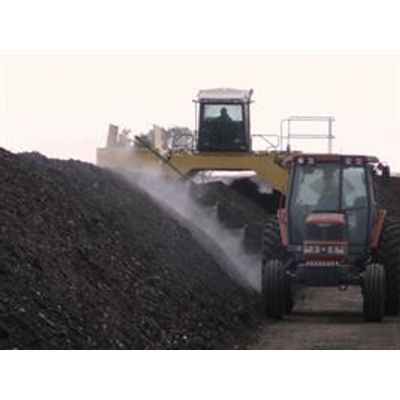
QuikSoil - Model 2500 -Deodorizers
QuikSoil® 2500 (BAT 505) is a bio-augmentation and odor control product useful in all municipal and private waste processing operations including landfill and compost. QuikSoil® 2500 is helpful wherever organic materials are decomposing intentionally or unintentionally. Many of the odorous compounds associated with waste processes are the products of incomplete oxidation1. Others are the products of anaerobic decomposition volatilizing on exposure to oxygen during mechanical processing or moving of materials2. Still other odors are the result of insufficient biological activity to utilize chemically available nutrients before they combine and volatilize3. Insufficient microbial activity is common even in the presence of abundant food (organics and nutrients) due to stresses in temperature, moisture, and physical conditions such as machine activity and materials movement.
QuikSoil® 2500 utilizes a series of amino groups containing significantly increased quantities of hydroxyls and forming a variety of highly reactive amino hydroxyl groups. These groups are housed in a nitrate solution in conjunction with a series of minerals. Nucleic acid and nucleotides are also included. In short, QuikSoil® 2500 is composed of amino hydroxyl groups, mineral coenzymes and reserves of molecular and cellular essentials.
The function of the amino hydroxyl groups is to facilitate and speed certain reactions in known compounds of decomposition that are odorous or are precursors to odorous compounds. These groups are catalytic in function. This means that they enable a reaction without being consumed, decomposed, or bonded to the products of the reaction. Each group is capable of facilitating the same reaction ten or more times before structural stress disables it, thus providing the most treatment for the least amount of concentrate.
In addition to the amino hydroxyl groups and nitrates, saponin glycosides with readily available carbohydrates are added. As these compounds separate, the glycosides become immediately available as energy food to any extant microbial population. This availability can help generate new bio-activity and increase stress resistance to less than perfect temperature or moisture conditions. Saponin glycosides have also proven valuable in providing the same type of stress relief against unfavourable pH changes or high salt environments.
The nitrates also serve an important function. They provide an immediate alternative to sulfates as food for reducing bacteria. The reduction of sulfate causes the formation of reduced sulfur compounds such as hydrogen sulfide (H2S). Nitrate provides an equally desirable reducing agent with non-odorous nitrogen gas rather than sulfides as the by-product. Some percentage of RSC (Reduced Sulfur Compound) formation is thus replaced by nitrogen formation. Additionally, hydroxy! radicals from the proteins and added ribose in QuikSoil® 2500 facilitate oxidation of extant and newly formed RSC`s. Typically, the hydroxyl group reacts with a sulfide to form an amino hydroxyl sulfate (through oxidation).
Initially, this increase in sulfate and nitrogen levels, and a corresponding decrease in sulfide levels, results in a change of pH caused largely by the decrease in hydronium ions. Each sulfate has fewer hydronium ions than a sulfide. The nitrogen produced in the reduction of the nitrate has no hydronium ions and the products of the corresponding oxidation and subsequent reactions - including ammonia - are rich in hydroxide ions. So a slight rise in pH toward the basic occurs. This also facilitates decreases in RSC formation.
The aforementioned hydroxyl group becomes "re-available" as part of the same sequence by which the sulfides are originally reacted (ionically) into amino hydroxyl sulfides and then (by oxidation) into amino hydroxyl sulfates. The pH change in the environment facilitates the ionic separation of the amino hydroxyl sulfates back into a sulfate group and an amino group. The amino group is then free to react with another sulfide. Thus the amino hydroxyl function catalytically, allowing large-scale treatment with the minimum of concentrated 2500. This set of reactions is illustrated below.
51
- Immediate Temporary Deodorization
- Wide variety of application equipment options
- Concentrate is diluted with water for super cost effective use
- Odor Specific variations