

- Home
- Companies
- Unfors RaySafe AB
- Products
- RaySafe - Model 452 - Radiation Survey ...
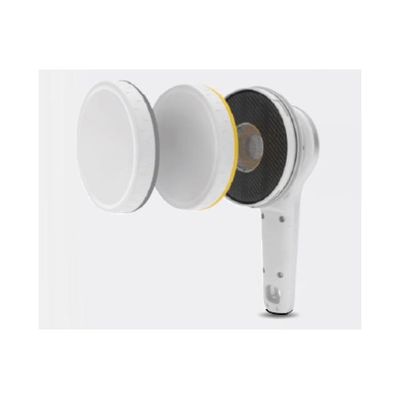
RaySafe - Model 452 -Radiation Survey Meter
The RaySafe 452 Survey Meter is used for radiation measurements, and is compliant with IEC 60846-1. It has high sensitivity combined with a wide and flat energy response making it suitable for a broad range of medical and industrial radiation applications. RaySafe 452 does not require any corrections or manual settings, letting you focus on radiation protection rather than setup. Just turn on the instrument and within a few seconds, you are ready to measure. One device for every situation means less to carry, learn and handle. That equals less expense, more efficiency and time savings.
Broad range of applications
The ability to measure alpha, beta, gamma, and X-ray radiation, combined with excellent performance over a wide energy range, makes RaySafe 452 suitable for X-ray tube leakage, scattered and environmental radiation detection, non-destructive testing, and more. It measures ambient dose equivalent, air kerma and counts, all in one device.
Fast response time and automatic data storage
The proven technology utilizing silicon diodes combined with an energy compensated Geiger-Muller tube provides high sensitivity and stability over a very wide energy and dose rate range. The dose sensitive thin-walled Geiger-Müller tube enables a fast response time even at very low dose rates while the silicon diodes provide accuracy and speed at higher dose rates. The dose rate value is automatically saved every second providing comfort not to lose data.
Data analysis and reporting
RaySafe View, the included PC software, provides easy data transfer for further analysis and reporting. This software also supports settings of alarm threshold values.
Easy handling
The intuitive interface shows all parameters in one view. The integrated handle and display are positioned so you are able to see readings at all times. Navigation buttons are within easy reach of your thumb when holding the device.
Built for indoor and outdoor usage
Featuring a durable design, a wide temperature range, and IP64 classification ( (dust-proof and water resistant), makes indoor and outdoor measurements possible without worrying about the instrument. RaySafe 452 can also without any problems be wiped with a wet cloth or washed under rinsing water.
The RaySafe 452 Radiation Survey Meter can be used for many applications including these:
- X-ray tube leakage
- X-ray wall leakage
- Scattered room radiation
- Contamination measurements
- Environmental radiation
- Non-destructive testing
Tube leakage
Tube leakage is the radiation emitted from the machine outside the primary beam. All X-ray tubes have some radiation leakage. Tube leakage measurements are important for controlling the work environment for hospital staff who work close to the X-ray machine. Several measurements are made around the tube housing, and at positions where personnel typically stand during an operation. From tube leakage measurements, calculations are made to estimate an operator’s body radiation dose, for a single exposure or over an extended period.
According to IEC 60601-1-3, clause 12.4, the tube leakage is not allowed to exceed 1 mGy, averaged over the busiest hour in the lab, when measured at a distance of 1 m from the focal point with a sensor area of 100 cm2.
Scattered room radiation
At an examination, a portion of the X-rays that hit the patient and the table are scattered and travel in all directions in the room. Survey meter measurements of scattered radiation are important for controlling the work environment for personnel who work close to the X-ray machine.
At measurements of scattered radiation, a phantom is placed in the primary X-ray beam to simulate a patient and increase the scatter. The survey meter is often mounted on a stand but may also be hand-held. Several measurements are made around the X-ray machine at positions where personnel typically stand during operation. From the measurements, calculations are made to estimate an operator’s body radiation dose, for a single exposure or over an extended period of time.
Wall leakage
Wall leakage measurements are performed to ensure radiation from X-ray rooms does not leak through the walls and exceed critical limits outside the X-ray room. Common measurement cases are at installation of new X-ray machines or after renovations of X-ray rooms.
The survey meter measures across the walls of interest while the X-ray machine is operating. Measurements are normally performed with a worst-case scenario of settings on the X-ray machine (high kVp and/or high mAs). Typical points of interest for wall leakage measurements include the upper part of the wall, corners, windows, doors, etc. The survey meter is often hand-held but may also be mounted on a tripod for longer measurements. Low dose rates normally mean longer integration times of the survey meter.
From the survey meter measurements, calculations are made to check if critical radiation limits are exceeded. To perform the calculations correctly, it is vital to know if the location is a controlled or public access area. Furthermore, parameters such as workload, occupancy, leakage, and target dose need to be considered.
Control of radioactive drugs in patients
In nuclear medicine, radioactive drugs are used for imaging and treatment. Small amounts of radioactive material is ingested by the patient, typically by inhalation, swallowing, or injection into the bloodstream.
Patients undergoing nuclear medicine treatments can be a source of radiation exposure for staff, family and the public. Survey meters are used to monitor the radiation from the radioactive drugs in the body. The measurement results decide if the patient needs to be quarantined or if it is safe for staff and family to be near the person. Patients may be monitored for several days after a treatment, and data needs to be logged.
For repeatability, it is common to measure radiation at a certain distance from the patient. At measurements, the survey meter can be hand-held or mounted on a tripod.
Contamination
In nuclear medicine, radioactive substances are used for imaging and treatment of patients. Since radioactive substances have a specific decay time, and only are active for a certain amount of time, drugs must be prepared at the hospital right before the examination. At preparation, it is important to ensure that no radioactive substances have been spilled on surfaces, or on the radiopharmacist preparing the drugs. The presence of unintended or undesirable radioactive substances is commonly referred to as contamination.
The survey meter is typically used to scan for spills on surfaces, as well as gloves and hands of the radiopharmacist. When sweeping across the area of interest to detect and measure contamination, it is important to be close to the surface and to move the meter slowly, since the amount of spilled source can be very small and hard to detect.