


- Home
- Companies
- Process Combustion Corporation (PCC)
- Products
- PCC - Regenerative Thermal Oxidizers ...
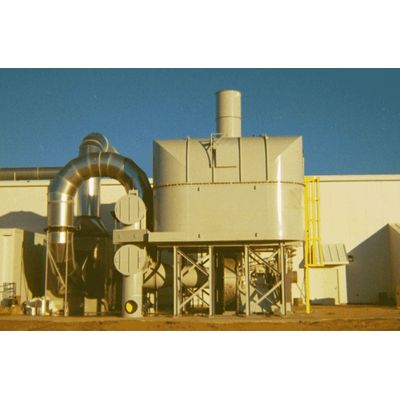
PCC - Regenerative Thermal Oxidizers (RTO)
Reduce air pollution emissions from a variety of industrial processes. Regenerative Thermal Oxidizers (RTOs) destroy Hazardous Air Pollutants (HAPs), Volatile Organic Compounds (VOC`s) and odorous emissions. PCC`s systems achieve emission destruction through the process of high temperature thermal oxidation, utilizing the 3 T`s of Destruction, Time, Temperature and Turbulence, at the proper oxygen level to convert the pollutants into carbon dioxide and water vapor. PCC`s RTOs are designed to repurpose the thermal energy generated during operation, reducing the energy consumption and operating costs. By thoroughly understanding your process, our systems are engineered and designed to optimize performance, maximizing your investment.
30 Years of Experience and Discovery in RTO Technology
7 RTO Related Patents
The PCC Difference
Compare the PCC RTO with any others and you`ll find these distinct advantages:
Quick Switch Indexing Valve
PCC Quick Switch Indexing Valve (QSV) - PCC`s Quick Switch is an air sealed indexing valve that ensures durability with high performance. The indexing valve utilizes an air seal to assure a leak-free operation with soft stoppage, reducing valve slamming. The seals are selected for resistance to process gases, temperature, longevity, and durability.
The QSV indexing valve and control system is designed to eliminate the continuous maintenance brought about by the endless movement and slamming of poppit valves. The proven QVS indexing valve drive system operates the flow control dampers smoothly in two chamber designs. The QVS indexing valve consistently moves the valve disks seat to seat in less than 1/2 second.
Virtually no pressure spikes and contaminant bypass as the valves operate in unison.
No leaky/erratic hydraulics or compressed air that change frequency during temperature fluctuations.
No moisture freezing pneumatic lines and cylinders.
Less maintenance, more up-time operation.
Integrated Manifolding
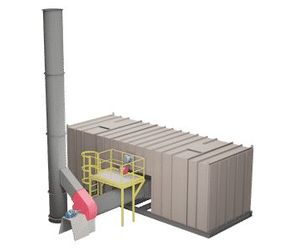
The PCC RTO assembly incorporates the inlet and outlet exhaust manifolds into the RTO`s overall shell configuration, rather than fabricating the typical network of bulky, exterior space-consuming manifolds. This eliminates external RTO ductwork and insulation, enabling the system to sit flat on a concrete pad without legs.
This streamlined assembly design decreases maintenance costs and creates a compact footprint that is cost-effective to both manufacture and installs.
Application Specific Heat Recovery Ceramic Media
Our heat recovery chambers are designed to accept all types of media (structured/random packed) including ultra low-pressure drop media specifically designed for use in PCC`s RTOs. The combination of high heat recovery with low-pressure drop results in significantly lower gas and electric usage, as well as higher VOC destruction efficiency, making it one of the most environmentally responsible pollution control units available today.
How PCC`s RTO Works
The premise of PCC`s RTO design is as simple as 1-2-3:
Heat is extracted from the hot purified gas and stored in the reheat recovery chamber as it leaves the combustion chamber.
After a period of time, the inlet/outlet QSV indexing valve switch positions (rotates clockwise) and the contaminated process gas is redirected through the hot heat sink (ceramic media) recovery chamber, where it is preheated to within 5% of the combustion temperature before it enters the combustion chamber. The QSV indexing valve rotates on a time base depending on the hydrocarbon loading and heating value (normally every 4 minutes).
In the combustion chamber, the burner supplements the 5%, bringing its temperature to 1500°F, at which the VOC is converted to harmless CO2 and water vapor.
Features
- Seven industry patents
Benefits
- Quick, 3-day installation