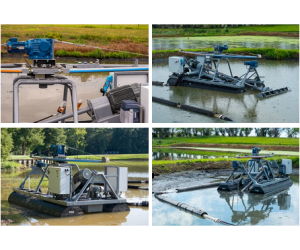
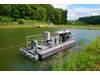
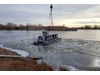
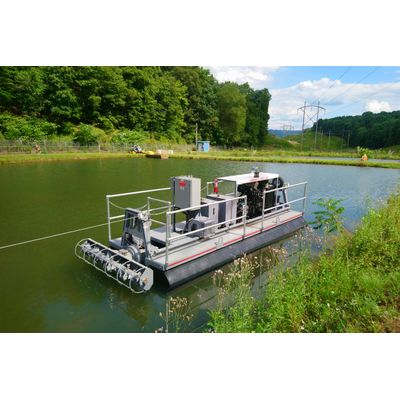
Crisafulli - Model RDF-50 & RDF-75 -Remote Controlled and Cabled Dredges
The RDF is a perfect dredge for when you don`t have access to adequate power to run an electric FLUMP, and want to operate the dredge remotely. The RDF solves industrial and municipal environmental problem in a low-cost, efficient manner. The RDF removes settled wastes and other by-products that no longer may be scattered over the countryside, but, instead, must be contained in settling ponds or lagoons, built to prevent wastes from leaching into the water-table.
Built tough to ensure dependable service in harsh environments, The RDF is simple to operate, easy to transport and can be built with HDPE pontoons, or in steel or aluminum. Crisafulli’s specialists have solved liquid waste problems for more than thirty years.
- The RDF doesn`t require 420V electricity
- The dredge operator isn’t exposed to potentially hazardous dredged materials
- Sophisticated instrumentation options measure dredging performance
- High solids dredging performance with minimum turbidity
- Easily transported to multiple sites
- Simple to maintain
- Reliable and manufactured to last
- Superior after-sale support from Crisafulli worldwide
RDF-50
- Maximum Dredging Depth: 12`
- Cutterhead width: 102"
- Weight: 8500 lbs
- Length: 24.5`
- Width: 8.5`
- Height: 8.3`
- Draft: 15"
- Pontoon Material: HDPE or Aluminum
- Horse Power: 50HP
- GPM: 800
- Cubic Yards Per Hour: 45
- Remote Control: Yes
- Cabled Traverse: Yes
- Self Powered: Yes
RDF-75
- Maximum Dredging Depth: 12`
- Cutterhead width: 102"
- Weight: 8750 lbs
- Length: 24.5`
- Width: 8.5`
- Height: 8.3`
- Draft: 15"
- Pontoon Material: HDPE or Aluminum
- Horse Power: 75
- GPM: 1000
- Cubic Yards Per Hour: 80
- Remote Control: Yes
- Cabled Traverse: Yes
- Self Powered: Yes
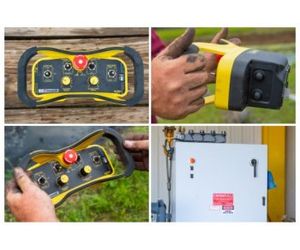
- Works in the rain
- Dredge depth readout on the transmitter (Optional)
- Frequency hopping
Daylight visible dredge status lights can be seen from a distance; in full sunlight.
- STATUS LIGHTS INDICATE
- When electrical power has energized the dredge.
- When the operator has control of the dredge.
- When the dredge motors are on.
- When there is a fault.
- When the cutterhead is jammed.
The unmanned FLUMP dredge, or the Rotomite, when operated in a cabled traverse system, are positioned and moved, either manually or automatically, along a tensioned galvanized steel cable extending across the lagoon or pond. The cable is attached at either end of the lagoon or pond to a galvanized steel cable affixed to sturdy steel posts set firmly in the ground (generally in concrete foundations). This form of traverse system is built with either two or four posts. Lateral positioning of the FLUMP is either manual, or electric by shore based electric winches.
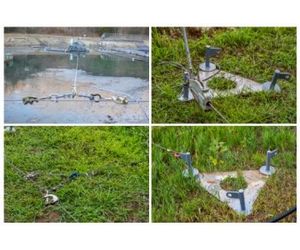
Dramatically reduces down time. Crisafulli’s unique pivoting traverse allows the entire FLUMP to pivot 180 degrees within one minute at the end of each forward dredging pass. Without the Crisafulli Pivoting Traverse, operators spend much time repositioning the dredge between dredging passes when a dredge is run on a cabling or rail traverse system. While some dredge makers claim full pumping rates when their dredges move backwards, few if any achieve 100% efficient dredge operation in reverse.
Pivot forward, and work faster. View the system in action.