


- Home
- Companies
- Bristol Industrial & Research ...
- Products
- Biral - Model RWS-30 - Road Tunnel ...
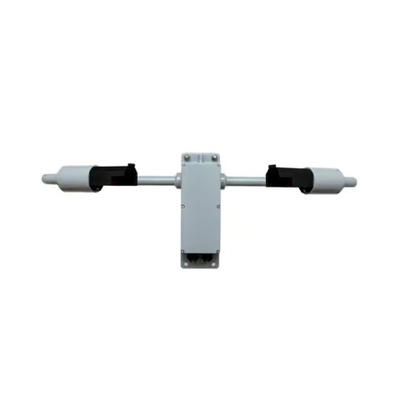
Biral - Model RWS-30 -Road Tunnel Weather Sensor
The RWS-30 Road Tunnel Weather Sensor is designed for use in road and tunnel applications where accurate and reliable visibility measurements are required. The forward scatter measurement principle provides a compact design with measurements that are both accurate and reliable in all weather conditions. The RWS-30 outputs have been chosen to match those recommended for use in tunnel systems.
- Areas: Visibility & Present Weather Sensors, Visibility Weather Sensors
- Application: Roads and Transport
Applications
As road networks become more congested those tasked with the management of traffic flow and road user safety are turning to Road Weather Information Systems (RWIS) to collect meteorological data they need. Road tunnels pose a unique set of problems as they are affected by the weather at either end and can have their own internal microclimates. Couple this to the added risk of pollution from stationary vehicles or fire after a crash and the need for a sensitive and accurate sensor to measure visibility becomes essential. The RWS-30 has been developed to meet the specific needs created by the tunnel environment and complies with current international guidelines as defined by the PIARC Technical Committee.
Tunnel Safety
Visibility sensors, especially those with an extended visibility range, can act as sensitive pollution monitors allowing the ventilation systems to be activated before pollution increases to dangerous levels. Visibility sensors can also form part of a fire detection system by detecting a sudden and isolated visibility decrease. The RWS-30 has a measurement range of 200m to 99.99km (with a resolution of 1m) making it a very sensitive sensor for both air quality and fire detection.
- 200m to 99.99km measurement range
- Compact forward scatter design
- Not affected by lights
- Easily installed by one person
- Window heating and contamination monitoring
- EXCO and MOR Outputs
- Analogue voltage and current outputs
- Serial data output (RS232, RS422 or RS485)
The RWS uses a 45° forward scatter angle and 850nm infrared light source to provide a flexible, cost effective, visibility solution specifically tailored to road weather applications. Visibility is output as both Meteorological Optical Range (MOR) and Extinction Coefficient (EXCO) to provide compatibility with the widest range of control systems.
In common with all Biral visibility and present weather sensors, the RWS-30 uses our established, reliable, 2kHz modulation of the light source, combined with narrow pass band optical filters and synchronous detection at the receiver. This established technique ensures the measurement is not affected by bright or intermittent (flashing) lights, and is optimised for road usage. This unique design also ensures the sensor accurately reports visibility during precipitation. The horizontal hood design eliminates surface reflections problems that are a source of error in sensors employing look down hood geometries.
The sensor hoods can be fitted with optional hood heaters to ensure blowing snow does not block the optical path. The hood heaters have their own supply connection, allowing the use of unregulated supplies which can help to reduce infrastructure costs. The hood heating only operates when the temperature drops below 2°C and can be disabled through the sensor interface if required.
The optical windows of the sensor are fitted with low power heaters to prevent the formation of condensation. Window contamination monitoring and compensation allows the visibility output to maintain its accuracy even as dirt builds up on the optical surfaces. The sensor reports the window contamination in the output message, using two stages of warning flags to allow cleaning to take place in a convenient manner.
Communication with the sensor is over a serial data link that is user configurable for RS232, RS422 or RS485. ASCII encoded data is used and the sensor can operate in either a polled or broadcast modes. The sensor’s standard analogue voltage and optional current outputs can be configured to report either MOR or EXCO. The sensor also has the option of being supplied with two threshold relays and one fault relay. The threshold relays can be configured by the user as either two user defined visibility thresholds relays, or one visibility threshold relay and one window contamination alert relay.
The sensor operates from a low voltage (9V to 36V) DC supply and requires just 3.5W. The low power window heaters which can be set to only operate when condensation is detected take an additional 1.7W (5.2W total). The optional high power hood heaters have a separate power connection allowing the use of an unregulated heating supply.
The RWS-30 is a single lightweight unit that can be easily installed by one person. The sensor enclosure is constructed from aluminium which is surface passivated and finished with a grey powder coat paint. It is designed for use in all types of weather and has a wide operating temperature.
- Measurement: Visibility (MOR & ESCO)
- Output:
- RS232, RS422 or RS485
- 0-10V
- 4-20mA and relay outputs
- Measurement principle: Forward scatter meter with 39° to 51° angle, centred at 45°
- Measurement error: ≤10.0% at 200m to 10,000m ≤20.0% at 10,001m to 30,000m
- Sensor power: 9-36Vdc
- Window contamination monitoring: Fitted as standard to both sensor head windows
- Operating temperature: -40°C to +60°C
- Operating humidity: 0-100% RH
- Protection rating: IP66/IP67
- Weight: 4.3kg
- Colour: Grey - RAL 7045