


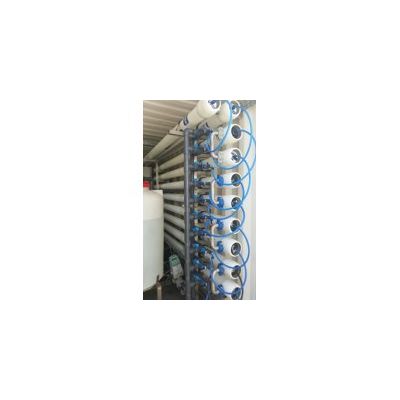
Rotec - Model RF -Desalination System
The basic concept of the ROTEC system is smart `flow reversal`. To avoid scaling, the system alternates the desalination process direction flow (switching of the entrance and exit of the feed stream) before reaching the critical point in which scaling forms. Flow reversal at the induction time halts the crystallization of minerals, lowers salinity levels in feed water and `cleans` membranes and pipes. While simple in concept, this operation is complex to implement and requires a gradual and precise process that can be hazardous to the desalination plant equipment if not properly performed.
Implementing the ROTEC system results in many benefits for the desalination plant: Enhanced performance - Higher recovery rates and lower waste brine volume in any RO plant; Easy installation – existing desalination plants can install the ROTEC system with only a brief down-time period; Fallback - ROTEC`s system is installed in a non-disruptive manner in existing plants or configured as a feature in new plants, allowing for easy fallback; Lower maintenance costs – Desalination plants implementing the ROTEC system can expect longer periods between regular maintenance work on critical elements such as the membrane and connected valves. This will directly translate into lower maintenance costs and fewer down-time periods; Suitable for new and existing plants;
ROTEC will sell "Customized Service & Equipment Packages" to enable application, adaptation or incorporation of Flow Reversal technology in existing and/or new BWRO desalination plants. This package includes all relevant equipment, engineering services and other supporting services that are required to apply the Flow Reversal technology.
The Market
The ROTEC system is best suited for brackish water RO and industrial use desalination plants. In the past 45 years, the desalination industry has grown from virtually zero, to over 60[1] billion m3 of treated water annually. While it is unclear exactly how many commercial desalination plants exist worldwide, there is information about over 16,000 desalination facilities that have been built for commercial and municipal use. Current addressable market size is $7.1 Billion. It is estimated that by retaining an annual growth rate of 9% this market will reach $9 Billion by 2017.
The Competition
ROTEC`s competition is from existing and developing anti-scalant technologies, mainly chemical compounds that are added to the feed water at various stages and inhibit scale formation, new membrane materials having the potential to increase recovery rates and increase their resistance to scale deposition and companies offering technological solutions for raising recovery rates in new and existing desalination plants.
ROTEC`s main competitive advantage stems from the system`s ability to perform as an add-on to existing plants and alongside other high recovery solutions. Thus, a desalination plant utilizing anti-scalant chemicals to achieve higher recovery rates may add ROTEC`s system to further increase its recovery rate and lower waste brine ratio. In this case 1+1 > 2.
ROTEC is an easily installed, non-expensive eco-friendly solution that allows easy fallback.
Low conductivity RO product for juice production factory
The RO system inthe juice factoryis working on filtered lake water .
It has been running for 3 years @ recovery of 75%.
AST retrofitted the system with ROTEC flow reversal technology to increase recovery to 91%, maintaining high product quality and lowering CIP demand (was 1/month, currently unknown frequency)
The water quality is constantly monitored. Also the operation parameters are weekly analyzed.
Local team operates the system with remote and local AST support when needed.
AST performed the system retrofit in less than 1 week of system downtime, and the startup sequence has been rapid to quickly return to production. The upgrade operates in coordination with the main system PLC which did not require any change.
After the retrofit the system is producing ~64% less brine.