


- Home
- Companies
- Russell Finex Limited
- Products
- Russell - Model AMPro - Sieve Station
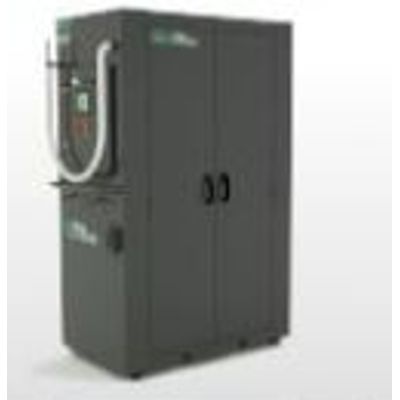
Russell - Model AMPro -Sieve Station
The Russell AMPro® Sieve Station guarantees the quality of your additive manufacturing (AM) powder, and has been designed to provide optimum sieving efficiency, ensuring your powder is ready for use or reuse as and when you require it.
With an integrated storage hopper and convey system, this all-in-one powder management system includes Smart Flow™ (patent pending) technology for autonomous sieving as well as data logging capabilities for process validation. This also includes options for connecting directly to your 3D printer for a fully closed-loop powder handling system.
The flexibility of the Russell AMPro® Sieve Station means that you can use the system for numerous powder handling tasks – being a modular design ensures that it can be configured to meet your exact requirements.
-
Sieving virgin powders - Guarantee the quality of virgin powder before it enters your production process
-
Closed-loop powder recovery - Connect directly to your 3D printer, allowing you to transport your powders quickly and safely to the sieve station, and return immediately to the printer ready for re-use
-
Build chamber evacuation - Quickly evacuate and screen loose powder from your build chamber, minimizing production downtime
-
Powder vessel transfer - Easily connect to your loading container to guarantee the quality of your AM powder before use
-
Prevent cross-contamination - Russell Compact Sieve® style technology, with minimal contact parts, for tool-free strip down and easy cleaning
-
Maximum powder recovery - Remove all out of spec powder, recovering all reusable powder ready for use
-
Fully modular system - Can be used for numerous powder handling tasks, with various modifications available including inert atmosphere and multiple material use
-
Minimize operator involvement - Fully automated and enclosed system with simple one-button operation and fully programmable for complete process integration and minimizing operator exposure