


- Home
- Companies
- The Saur Group
- Products
- Saur - Membrane Technologies
Saur - Membrane Technologies
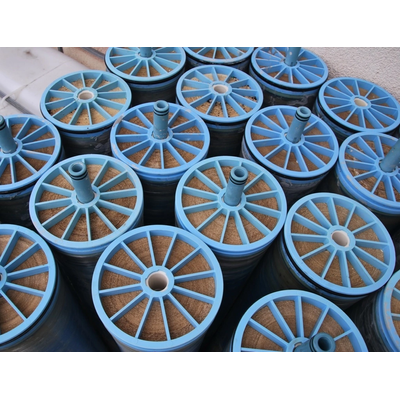
With the emergence of new contaminants—such as PFAS, pharmaceutical residues, and pesticides—water treatment requirements are rapidly evolving. To meet these challenges, the Saur Group deploys high-performance membrane technologies: ultrafiltration (UF), nanofiltration (NF), and reverse osmosis (RO), suitable for a wide range of applications.
These technologies provide targeted physical filtration capable of removing a broad spectrum of micropollutants, down to the molecular level. Depending on the required performance level, membranes retain particles based on their size. Their semi-permeable structure acts as a selective barrier, allowing water to pass through while blocking unwanted substances.
In response to the increasing complexity of water resources and stricter health and environmental standards, membrane technologies offer concrete, sustainable solutions. They address four key challenges for municipalities and operators.
Membrane technologies effectively remove a wide range of pollutants, including the most persistent ones such as short-chain PFAS, pharmaceutical residues, and pesticides. They help deliver water that meets the highest sanitary standards.
Safely treating vulnerable or at-risk water sourcesParticularly well-suited for surface water, turbid, or polluted sources, membranes offer a reliable barrier against diffuse contamination. They protect natural resources while ensuring the safety of the treated water.
Meeting evolving regulatory and environmental requirementsBy integrating membrane technologies, operators can stay ahead of regulatory developments in public health and environmental protection, while reducing the use of chemical reagents and minimizing impact on natural ecosystems.
Saur tailors each membrane solution to the quality of the water to be treated and to your objectives.
Ultrafiltration (UF)
Pore size: 2 to 100 nm – Targets: bacteria, viruses, fine particles
Clarifies raw water and protects downstream stages—ideal for turbid resources.
Nanofiltration (NF)
Pore size: ~1 nm – Targets: PFAS, organic micropollutants
Removes dissolved contaminants while preserving part of the mineral content. Suitable for surface water.
Reverse Osmosis (RO)
Pore size: <1 nm – Targets: short-chain PFAS, persistent residues
Removes even the most persistent pollutants to produce high-quality treated water.