


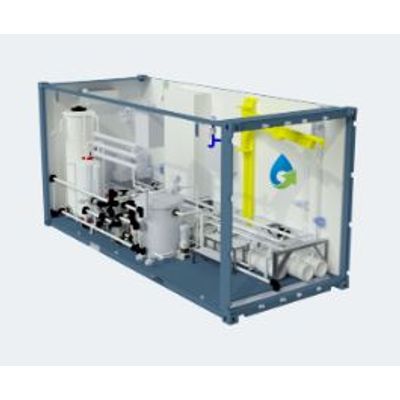
Nomado - Seawater Desalination Units Using Reverse Osmosis
Nomado specializes in seawater desalination using reverse osmosis (RO) technology, a process essential for converting seawater into potable water by removing salts, including sodium chloride, which can reach concentrations of 30g/l to 40g/l in seawater. The RO process utilizes high-pressure application and semi-permeable membranes with pore sizes not exceeding 1nm to filter ions, pesticides, bacteria, and other organic compounds efficiently. This desalination process is crucial in regions where seawater is the primary source of drinking water. Beyond desalination, RO is employed in various industrial applications, offering solutions for demineralization, capturing endocrine disruptors, and treating complex wastes such as nuclear, radiological, and biological compounds. Nomado provides adaptable, cutting-edge solutions, including containerized and skid-mounted systems, with additional capabilities for re-mineralizing water to counteract pH imbalance post-RO, ensuring its versatility and effectiveness across diverse scenarios.
Treatment
Seawater represents more than 95% of the water stock on the planet. In some areas it is the only resource available for producing drinking water.
The concentration of salts (mainly sodium chloride: NaCl) in seawater can reach 30g/l to 40g/l. These are the salts that need to be removed in order to achieve drinking quality water. They are composed of chlorine, sodium, sulfates, magnesium, calcium and potassium.
Process
The pore size of the semi-permeable membrane does not exceed 1nm in diameter, which filters out ions (mostly salts), pesticides and other organic compounds, colouring agents, bacteria, viruses and microalgae.
Cost Benefits :
- Cost-effective alternative to civil engineering infrastructures and buried facilities
- Systems that can be reused and relocated (worksite bungalows, industrial reorganisation, end of concession)
- Portable investment
- Possibility to rent, buy back or lease with option to purchase
- In-situ production or treatment
Operational and environmental benefits
- Multimodal transportation (rail, road, sea, air…)
- Simple, fast installation and commissioning
- Maintenance by our technicians possible
- Easy, rapid dismantling upon project completion
- Reduction in carbon footprint
- Worksite hazards reduced
Quality and HSE
- Treatment process adaptable to discharge standards
- Design in accordance with country standards and regulations
- Pre-built and factory tested
- Anticipation of the possibility of deteriorated operating conditions (scenario analysis)
- Targeted oversizing of critical equipment (pumps, motors, etc.)
- Specific job site conditions taken into account (heat, sand, sea, etc.)
Versatile and adaptable
- “Plug & play” design
- Possibility of adding a unit in the event of a variation in load or flow rate
- Can be integrated into an existing facility