


- Home
- Companies
- Sensor Instruments GmbH
- Products
- Sensor-Instruments - Color control and ...
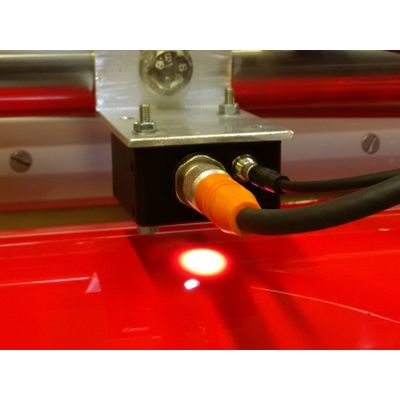
Sensor-Instruments - Color control and color measurement
The SPECTRO-1 sensors are contrast sensors that can reproduce even the slightest differences in brightness almost in real time. Analog and digital signals are available at the output. The light guide types (FIO) can be used to control both transmitted and reflected light modes.
With the SPECTRO-2 series, the gap between the contrast sensors (SPECTRO-1 series) and the color sensors (SPECTRO-3 series) has now been closed.
The SPECTRO-2 system can function as a pure 2-channel system (two SPECTRO-1 sensors in one housing), but can also work as a comparative (standardized) system in which one channel can serve as a reference.
Using Windows® operator software, a variety of evaluation algorithms are available to choose from, and in conjunction with appropriate special light guides - there is also a large selection available here - a wide variety of tasks can be solved.
For example, the use of BICONE light guides enables highly accurate, space-saving distance measurement that is suitable for hazardous areas (with quartz fiber light guides and UV LEDs, among other things, for distance measurement on glass surfaces).
Furthermore, the water content in objects such as textile and paper webs, wood, bricks, ceramics and other building materials can be controlled by comparing two IR wavelength ranges. Furthermore, inhomogeneities in moving objects (e.g. chatter marks or defects on metal strips) can be detected with the light guides suitable for this task.
Wavelength ranges starting from the UVC range (from approx. 250 nm) to the IR range (up to approx. 2000 nm) are available for selection on both the transmitter and receiver sides.
We are also happy to address your specific needs, as the system is designed to be flexible in terms of both software and hardware.
The SPECTRO-3 series is a family of color sensors that have been specifically tailored for “true color” detection (“see colors like humans”) and for a high switching frequency.
The devices can be operated in both AC and DC mode with an integrated or external light source. The lighting can also be switched off with a mouse click on the Windows® PC software included in the delivery, so that self-illuminating devices such as LEDs, rear lights of cars, halogen lamps or even fluorescent lamps can then be controlled according to color and brightness.
With the SPECTRO-3 series, attention was paid to a compact design and to ensuring that the different types have largely the same appearance (M34 design or rectangular), which makes it easier to install the sensor. Up to 31 colors can be output via the 5 digital outputs; the maximum switching frequency is for the true color color sensors of the SPECTRO-3 (M34 design), SPECTRO-3-CL, SPECTRO-3-MSM-DIG and SPECTRO-3- series. JR at typ. 35 kHz.
With the new true color color sensors from the SPECTRO-3-SL, SPECTRO-3-ANA and SPECTRO-3-MSM-ANA series, the product range has been expanded to include extremely fast color sensor types, with which scanning frequencies of up to 90 kHz can now be achieved. Up to 3 colors (or 3 color groups up to a total of max. 31 colors) can be taught into these color sensors; the output takes place via two digital outputs or, for the ANA types, via three analog outputs.
In addition to a super-bright white light source, a powerful UV light source is also available, meaning that even fluorescent colors can be easily differentiated according to color and brightness. With the help of the various attachment optics, working distances of approx. 0.2 mm to 500 mm can be achieved with detection ranges of approx. Ø 0.5 mm to Ø 100 mm. The use of the fiber optic version allows working in hazardous areas.
? Information on type selection
? Measuring principle SPECTRO-3, SPECTRO-3-CL, SPECTRO-3-JR
with Windows® software SPECTRO3-Scope
? Measuring principle SPECTRO-3-ANA
with Windows® software SPECTRO3-ANA-Scope
? Measuring principle SPECTRO- 3-MSM-ANA
with Windows® software SPECTRO3-MSM-ANA-Scope
? Measuring principle SPECTRO-3-MSM-DIG
with Windows® software SPECTRO3-MSM-DIG-Scope
? Measuring principle SPECTRO-3-SL
with Windows® software SPECTRO3-SL-Scope
? Measuring principle SPECTRO-3-SLE
with Windows® software SPECTRO3-SLE-Scope
? Measuring principle SPECTRO- 3-SLA
with Windows® software SPECTRO3-SLA-Scope
? Convenient quick parameterization
with Windows® software SPECTRO3-COMFORT-Scope
Information on type selection
– COF (confocal transmitting and receiving optics)
Fast color recognition of small objects
The confocal sensors of the SPECTRO-3-COF series project a white light spot with a diameter of approx. 1 mm to 8 mm or with dimensions of 4 mm x 0.7 mm on the object to be detected. The transmitting optics are mounted in the middle of the receiving optics, which results in a very compact design. This makes it possible for small objects such as paint marks or wires to be detected precisely and quickly from a large distance.
– DIF ( diffuse light using a volume diffuser)
Shiny effect suppression through diffuse lighting
This type of sensor was specially developed for applications in which suppression of direct reflection is necessary for color control. With the DIF color sensor types, an optimal scattering effect is achieved by installing a volume diffuser that acts as a diffuser. Only the diffusely reflected light reaches the receiver, so the gloss behavior of a measurement object does not influence the measurement result.
–DIL (diffuse light using a surface diffuser)
color control of structured and inhomogeneous surfaces
Many objects on which a color check must be carried out have inhomogeneous surfaces that cause problems when determining the color. For example, a structured surface contributes to fluctuations in gloss, which conventional color sensors have difficulty with, as the color is sometimes recorded more or less intensively depending on the level of gloss.
The actual color is lightened or "softened" by the direct reflection, which depends on the respective level of gloss of the surface. With the color sensors of the SPECTRO-3-DIL series, the diffuse lighting ensures a significant reduction in the glossy effect. Furthermore, the large detection range (approx. 10 mm to 30 mm) optically integrates structural fluctuations, meaning the color is recorded stably and reliably. Furthermore, the true-color color detector (“sees colors like humans”) and the evaluation software (“evaluates colors like humans”) ensure that even the smallest color differences in objects are reliably detected.
–FCL (directed light through the use of a clear glass pane)
Safe and fast color recognition from a long distance Distinguishing
objects from a long distance by color is made possible using the SPECTRO-3-FCL series. Depending on the design and object, a distance of up to 500 mm can be achieved. The FCL series features, among other things, super-bright white light LEDs and a so-called true color chip that sees the colors like the human eye. Up to 31 colors can be taught; during operation, the sensor chooses the color reference that comes closest to the current color of the object (interprets colors like humans do).
The sensors in this series can be ideally used to distinguish between shiny and non-glossy objects of the same color (e.g. objects without and with transparent film).
–POL (polarized light using a polarization filter)
Color control of shiny objects
In practice, reliably detecting the color of shiny objects is usually extremely difficult, as the actual color information is mixed with the direct reflection as a result of the shiny effect. Strong colors become “soft” colors. With the help of the polarization filter integrated in the SPECTRO-3-POL color sensor, direct reflection is prevented, the actual color is clearly visible and can therefore be reliably recorded. Reflective surfaces such as high-gloss paints on automotive components can be recognized very clearly.
–UV (use of UV LEDs)
Fast color recognition of fluorescent objects
With the luminescence color sensors of the SPECTRO-3-UV series, color differentiation can also be carried out in addition to brightness differentiation. The fluorescent objects can be taught either using the Windows® PC software SPECTRO3-Scope or via the teach button integrated in the sensor or via the digital input IN0. With a scanning frequency of 35 kHz, the capture and recognition of fast-moving, fluorescent marks is also possible.
–FIO (for connecting light guides and attachment optics from the FIO series)
Color control even for difficult tasks thanks to flexible applications
The FIO series is probably the most flexible color sensor series. In addition to more than 50 different probe versions for transmitted and reflected light operation, there are almost 70 different attachment optics (front ends) to choose from. The dynamic range can be significantly increased using an external light source. Due to the use of fiber optics, this series is also used in hazardous areas.
• Color measurement of self-luminous lamps with the SPECTRO-3-FIO. The SPECTRO-3-FIO, in conjunction with a reflective light guide and a neutral absorber attachment, enables color control of various self-illuminating lights.
• Fluorescence color mark detection with the SPECTRO-3-FIO-UV In conjunction with the super bright UV light source SPECTRO-3-ELS-UV, fluorescent color marks can be recognized very quickly with the SPECTRO-3-FIO-UV evaluation unit. The sensor not only records the brightness of the fluorescent mark but also its color.
– 45°/0°
As with the –POL types, these types also have massive gloss suppression, but direct reflection towards the receiver is avoided because the ring-shaped LEDs emit light at 45° to the vertical, while the receiver emits light at 0° to the vertical controlling surface is directed. A direct reflection towards the receiver is avoided when checking or measuring the color of flat objects arranged perpendicular to the optical axis of the receiver. The –45°/0° types are primarily used for high-gloss paints and metallic paints (car paints, furniture paints, etc.), as the –POL types are rather unsuitable for checking metallic paints. Transparent films can also be made using a white tile,
– SLU
In the –SLU types, the lighting unit is housed in a separate housing, which allows transmitted light measurements and V-arrangements (direct reflection) to be implemented. Diffuse light sources as well as directed light sources are available. These types can ideally be used, for example, to measure the color of flat glass in transmission and the coating of float glass in reflected light mode.
– SA and -BA
The –SLU receivers have a version with a small aperture (–SA) and a version with a converging lens arranged in front of the color detector (–BA). If the signal is correspondingly weak, the –BA type is preferable. If, on the other hand, only a small angular range can be viewed, for example with direct reflection in a V arrangement, the –SA type should be used.
– MSM-ANA
The –MSM-ANA types form the series of measuring SPECTRO-3 color sensors with three analog outputs (for X, Y, Z and color space values) as well as two digital outputs (for teaching a maximum of three color space triples, using dE as a tolerance value or dL* and da*b* as tolerance values. With these types a L*a*b* , L*u*v* , L*u`v` , x,y,Y , X,Y,Z as well as L*C*h* color measurement enables.
– MSM-DIG
The –MSM-DIG types form the series of measuring SPECTRO-3 color sensors with five digital outputs (for teaching a maximum of 31 color space triples, using dE as a tolerance value or dL * and da*b* as tolerance values. With these types an L*a*b* , L*u*v* , L*u`v` , x,y,Y , X,Y,Z and an L* C*h* color measurement enabled.
– XL
The –FIO-XL types use light guides with a large light guide cross section (5mm, 6mm and 8mm diameter), which means that systems with a light guide length of up to 15m can be implemented.
– ANA
In addition to the SPECTRO-3 sensors with digital outputs, there is also a series with analog outputs. With the three available analog outputs (0V ... +10V), both the raw color values R,G,B and the color values s,i,M, x,y,INT, L*a*b*, L*u*v *, X,Y,Z, x,y,Y and L*C*h* are output.
Measuring principle SPECTRO-3, SPECTRO-3-CL, SPECTRO-3-JR
with SPECTRO3-Scope (Windows® PC software)
Signal acquisition with the SPECTRO-3 is very flexible. The sensor can be operated in alternating light mode (AC mode), for example. Here the sensor is independent of external light. Constant light operation (DC mode) can also be set. Here the sensor is extremely fast. A scanning frequency of up to 35 kHz is achieved. An OFF function switches off the integrated light source on the sensor and switches to DC operation, then the sensor can detect so-called “self-luminous lights”. Extremely dark surfaces can be reliably detected in PULSE operation. The infinitely variable adjustment option of the integrated light source as well as selectable amplification of the receiver signal and an INTEGRAL function enable the sensor to be adjusted to almost any surface or any “self-illuminator”.
If the integrated illumination of the SPECTRO-3 color sensor is activated, the sensor detects the radiation diffusely reflected back on the measurement object. A white light LED with adjustable transmission power is used as the light source on the SPECTRO-3 color sensor. An integrated 3-fold receiver is used as a receiver for the red, green and blue components of the light reflected back by the measurement object, or the light emitted by the “self-illuminator”.
DemSPECTRO-3 color sensor can be “taught” up to 31 colors. Tolerances can be assigned for each trained color. In the “XY INT - 2D” or “si M - 2D” mode, the tolerances represent a color cylinder in space. In the “XY INT - 3D” or “si M - 3D” mode, the tolerance represents a color sphere in space. The color evaluation according to siM is based on the Lab calculation method. All modes can be used in conjunction with several operating modes, including FIRST HIT and BEST HIT. The raw data is displayed with a 12-bit resolution.
A special feature is that the sensor can be taught two completely independent parameter sets. The input IN0 tells the sensor which parameter set should be used.
Color recognition either works continuously or is started by an external PLC trigger signal. The color recognized is either available as a binary code at the 5 digital outputs or can be output directly to the outputs if only up to 5 colors are to be recognized. At the same time, the recognized color code is visualized using 5 LEDs on the SPECTRO-3 housing. [Please note: Visualization via LEDs is not available for the SPECTRO-3-…-JR types.]
Up to 31 colors can be taught to the color sensor using a TEACH button attached to the sensor housing. To do this, the corresponding evaluation mode must be set via software. The TEACH button is connected in parallel to the IN0 input (green wire on the cab-las8/SPS cable). [Please note: TEACH button not available on the SPECTRO-3-…-JR types.]
Parameters and measured values can be exchanged between the PC and the SPECTRO-3 color sensor
via the RS232 interfaceAll parameters for color recognition can be saved in the non-volatile EEPROM of the SPECTRO-3 color sensor via the RS232 serial interface. After the parameterization has been completed, the color sensor continues to work in STAND-ALONE mode with the current parameters without a PC. The sensors of the SPECTRO-3 series can be calibrated (white light balance). The comparison can be made on any white surface. An alternative is a ColorChecker TMTable available. This has 24 color fields according to the CIE STANDARD. The white light balance or calibration can be done on one of the white fields.
The SPECTRO-3-…-UV color sensors use a UV LED (375 nm or 365 nm when using an external UV lighting unit SPECTRO-ELS-UV) with adjustable transmission power as the light source to excite the luminescent marking. These UV sensors can be optimally adjusted to almost any luminescent dye that can be excited in the long-wave UV range (365 nm or 375 nm). The sensors of the SPECTRO-3-...-UV series can also be calibrated. Analogous to the white light balance with the color sensors, the SPECTRO-3-...-UV could be adjusted to any luminescent color marking.
Measuring principle SPECTRO-3-ANA
with SPECTRO3-ANA-Scope (Windows® PC software)
Signal acquisition with the SPECTRO-3-ANA is very flexible. The sensor can be operated in alternating light mode (AC mode), for example. Here the sensor is independent of external light. Constant light operation (DC mode) can also be set. Here the sensor is extremely fast. An OFF function switches off the integrated light source on the sensor and switches to DC operation, then the sensor can detect so-called “self-illuminating lights”. The infinitely variable adjustment option of the integrated light source as well as selectable amplification of the receiver signal and an INTEGRAL function enable the sensor to be adjusted to almost any surface or any “self-illuminator”.
If the integrated illumination of the SPECTRO-3-ANA color sensor is activated, the sensor detects the radiation diffusely reflected back on the measurement object. A white light LED with adjustable transmission power is used as the light source on the SPECTRO-3-ANA color sensor. An integrated 3-fold receiver is used as a receiver for the red, green and blue components of the light reflected back by the measurement object, or the light emitted by the “self-illuminator”.
Up to 3 colors can be “trained” to the SPECTRO-3-ANA color sensor. Tolerances can be assigned for each trained color. In the “XY INT - 2D” or “si M - 2D” mode, the tolerances represent a color cylinder in space. In the “XY INT - 3D” or “si M - 3D” mode, the tolerance represents a color sphere in space. The color evaluation according to siM is based on the Lab calculation method. All modes can be used in conjunction with several operating modes, including FIRST HIT and BEST HIT. The raw data is displayed with a 12-bit resolution.
A special feature is that the sensor can be taught two completely independent parameter sets. The IN0 input tells the sensor which parameter set to work with.
Color recognition either works continuously or is started by an external PLC trigger signal. The color recognized is either available as a binary code at the 2 digital outputs or can be output directly to the outputs if only up to 2 colors are to be recognized. In addition to the 2 digital outputs, 3 analog outputs are also available. Either the red, green, blue components or the calculated color coordinates (X, Y, INT or s, i, M) from 0-10V are output.
The color sensor can be taught up to 3 colors (31 in group mode) via the IN0 input (green wire on the cab-las8/SPS cable). To do this, the corresponding evaluation mode must be set using software.
Parameters and measured values can be exchanged between the PC and the SPECTRO-3-ANA color sensor via the RS232 interface . All parameters for color recognition can be saved in the non-volatile EEPROM of the SPECTRO-3-ANA color sensor via the RS232 serial interface. After the parameterization has been completed, the color sensor continues to work in STAND-ALONE mode with the current parameters without a PC.
The sensors of the SPECTRO-3-ANA series can be calibrated (white light balance). The comparison can be made on any white surface. Alternatively, a ColorChecker(TM) table is available. This has 24 color fields according to the CIE STANDARD. The white light balance or calibration can be done on one of the white fields.
The SPECTRO-3-UV-ANA color sensors use a UV LED (375 nm) with adjustable transmission power as the light source to stimulate the luminescent marking. These UV sensors can be optimally adjusted to almost any luminescent dye that can be excited in the long-wave UV range. The sensors of the SPECTRO-3-UV-ANA series can also be calibrated. Analogous to the white light balance with the color sensors, the SPECTRO-3-UV-ANA could be adjusted to any luminescent color marking.