


- Home
- Companies
- Tricel Environmental UK
- Products
- Tricel Fortis - Model 5 - Septic Tanks
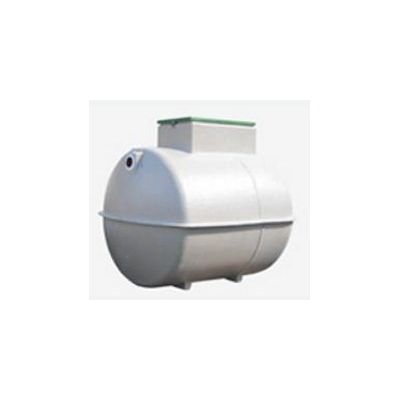
Tricel Fortis - Model 5 -Septic Tanks
Tricel Fortis septic tanks are manufactured from GRP (Glass Reinforced Plastic – Fibreglass). The unique range of Fortis septic tanks can be installed in most sites without the need for a concrete backfill. Our range goes from 4 PE to 60 PE in a single tank format.
Why buy a Tricel Fortis?
Local advice and back up service ensuring a swift response to after sales service calls.
Capacity (litres) 2800
Length (mm) 2178
Width/Dia (mm) 1680
Height (mm) 1679
Inlet invert to base (mm) 1118
Reliability
Tricel is over 40 years in business, currently treating over 18 million litres of wastewater per day.
Choice of material
Fibreglass is extremely tough and will withstand harsh soil conditions.
Value for money
The Tricel fortis is a durable long lasting product. They are expertly designed for effective and efficient treatment of wastewater at a highly competitive price.
The Tricel Septic Tank System is constructed from hot pressed GRP (glass reinforced plastic), and the tank is divided into two compartments.
Waste water flows by gravity into Chamber 1, where the solids and heavier material settle to the base of the unit. A small amount of anaerobic breakdown occurs at this stage. The liquid and lighter waste material flow over the baffle into the second chamber. A layer of scum forms at the top of the liquid.
A specially designed outlet pipe is fitted to the unit to ensure that only the liquid flows into the percolation area. This dip pipe prevents the scum from passing into the percolation area which may block pipes.
Final improvement of the waste water occurs as it penetrates through a specially designed percolation area.
Percolation area
As the majority of treatment occurs in the percolation area, a percolation test should be undertaken to determine the composition of the drainage area. The test results also determines the drainage area and the length of percolation trenches required.
The waste flows by gravity into a distribution chamber, which evenly disperses the liquid between the percolation pipes. To ensure even distribution, it is important that percolation pipes have a uniform gradient and constructed in a loop format.