DEWESoft - Shakers
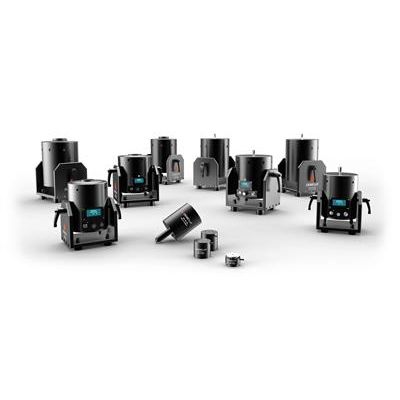
Full range of modal and inertial shakers with integrated and easy-to-use amplifiers. Dewesoft permanent magnet shakers are compact, lightweight and powerful general-purpose shakers which can be used for modal and vibration testing. They have a high DUT capacity despite their small sizes.
- INTEGRATED AMPLIFIER: PM-20, PM-100, MS-20 and MS-100 shakers have integrated amplifiers. It only requires to plug-in the one cable and the shaker is ready to run.
- INTEGRATED SIGNAL GENERATOR: Besides having an integrated amplifier, PM-20, PM-100, MS-20, and MS-100 shakers have integrated signal generator as well. Of course, you can also generate an analog output signal from the SIRIUS DAQ system but this option gives you the chance to try the test system or the shaker or make some simple test to understand their structural behavior.
- TRUNNION AND HANDLES: All MS and PM shakers have trunnion and handles. These parts allow shaker to be positioned in any orientation and position.
- INTEGRATED SCREEN: This feature can be used only with an integrated signal generator. It shows the frequency of the generated signal. By visualizing generated signal frequency it is possible to set the shaker to a certain frequency from 1 Hz to 15 kHz and even can see the behavior of the structure under excitation with a certain frequency.
- SMALL AMPLIFIER BOX FOR INERTIAL SHAKERS: All inertial shakers are using the same amplifier box. This box is also capable of generating sinus signals and can be used for 3rd party shakers as well. Small, all-in-one box can be customized to generate different signals like white or pink noise or different forms.
Dynalabs permanent magnet shakers are compact, lightweight and powerful general-purpose shakers which can be used for modal and vibration testing. They have high DUT capacity despite their small sizes. DYN-PM-20 and PM-100 have an integrated amplifier and a sine wave signal generator where the frequency can be adjusted from 1 Hz to 15,000Hz.
Advantages:
- Lightweight, durable, portable and easy to use
- Adjustable trunnion base provides a high degree of flexibility
- Broad frequency range
- Embedded power amplifier and signal generator for PM-20 and PM-100
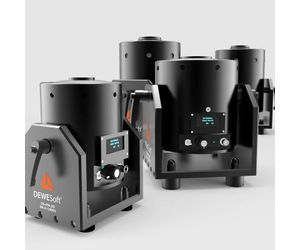
Modal testing can be performed with modal hammers or shakers. If high-frequency excitation content or signal controlled testing is desired, then modal shakers are the only excitation solution. Dynalabs modal shakers are lightweight and powerful modal shakers which can go up to 15,000 Hz and provide force levels up to 440N with a maximum 25mm stroke.
Advantages:
- Modal stinger can be easily adjusted by the through-hole armature
- Lightweight, durable, portable and easy to use
- Adjustable trunnion base provides high flexibility
- Up to 25mm stroke and broad frequency range
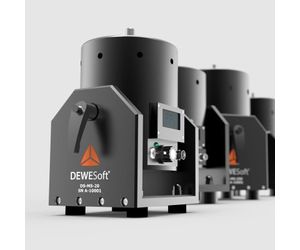
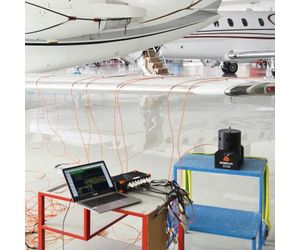
The shakers used in modal testing and in-flight tests of aircraft are usually electrodynamic shakers. However, the traditional shakers are not very portable and the attachment process takes time. Dynalabs inertial shakers are easily mounted and have great mobility. It can be used as a handheld.
Advantages:
- Compact and lightweight design
- Superior low-frequency performance
- Any angle mounting
- Low friction bearing guided

In real life applications, machine parts and mechanical systems are rarely under static loading. Most of the time they are excited by dynamic loads. The structure responds to these dynamic loads according to its dynamic parameters such as natural frequencies and mode shapes. Therefore, an engineer has to have a solid insight into the dynamic behaviour of the structure which has been designed. The process of finding the dynamic behaviour of a structure is called structural system identification.
Structural system identification consists of finding the transfer function of the system which is established by finding the modal parameters of the structure such as, natural frequencies, damping, modal vectors, and residues.
The transfer functions of a structure can be obtained by mathematical modelling or by experimental methods. The experimental way to obtain the transfer function of a structure is achieved by measuring the response of the structure to a measured input. The responses are generally acceleration and the inputs or excitations are generally impulses or random/sine signals.