

Shaping and Sintering
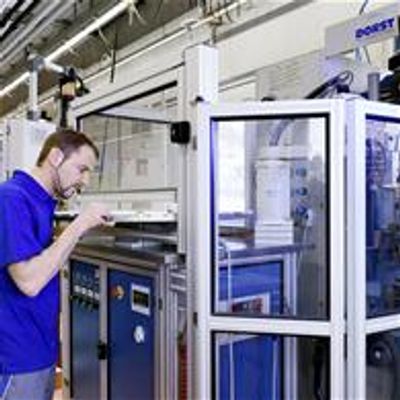
For the shaping of ceramic powders, Ceramaret uses fully automated single and double action mechanical presses, as well as cold and hot isostatic presses (CIP and HIP). Tungsten carbide is generally used in the manufacture of shaping equipment, thus guaranteeing maximum precision and durability. For ceramic components of complex shape with high volume requirements, the molding of green parts by injection (Ceramic Injection Molding or CIM) is more appropriate .
Near net shape products by means of various pressing techniques
Various pressing techniques can achieve the desired shape of a ceramic part that meet your product specifications. Our mastery of tool design and the manufacturing process enable us to achieve unmatched dimensional and geometric precision.
Ceramic injection molding, whether high-pressure (high-pressure injection molding) or low-pressure (low-pressure injection molding), is part of the Ceramic Injection Molding (CIM) process.
The main difference between high-pressure and low-pressure ceramic injection lies in the level of pressure used to inject the ceramic paste into the mold. High pressure is preferred for parts requiring fine, complex detail, while low pressure can be used for parts with less demanding specifications in terms of detail and complexity.
With regard to high-pressure ceramic injection molding, the production machines currently available can have a high degree of automation and are generally very suitable for the manufacture of precision ceramic parts in medium to large production runs.
Production facilities for low-pressure ceramic injection are normally of simple design, and the process is not automated. An operator must assemble the mold for each part injection. This means production is a little slower, but investment in tooling is a fraction of that required for high-pressure injection. Low-pressure ceramic injection will mainly be used to manufacture precision ceramic parts in small production runs.
The shaping can be done by high speed machining in a blank of simple or preformed shape of pressed but not sintered ceramic. Different oxide or non-oxide materials are available for this process.
Additive manufacturing of technical ceramic parts is ideal for small series or prototyping work from simple to very complex parts. Different oxide or non-oxide materials are available for this process.
Sintering, the process for the compacting of ceramic particles, uses high temperatures (up to 1600 -1800°) to heat the shaped and debinded parts over a long period of time.
Specifically designed furnaces are required to carry out these two processes.