

ShenAo - Titanium Anode for Extracting Copper from Alkaline Etching Waste Liquid
Micro-etching is the process of polishing, electroplating, copper, copper, nickel gold, oxidation resistance (OSP), and tin spraying in the production process of circuit boards. The purpose is to roughen the copper surface and increase the bonding force with the coating. Sodium persulfate/sulfuric acid, ammonium persulfate/sulfuric acid, or hydrogen peroxide/sulfuric acid systems are used in the treatment process. Sodium persulfate, ammonium persulfate, and hydrogen peroxide can increase the oxidation value of the micro etching solution, improve the oxidation capacity of the liquid, and achieve rapid micro etching The effect of copper. However, when the concentration of copper ions in the micro etching solution reaches a certain value (15g/L), the micro etching ability is significantly weakened, and the tank needs to be replaced or regenerated, and the waste solution needs to be discharged or regenerated.
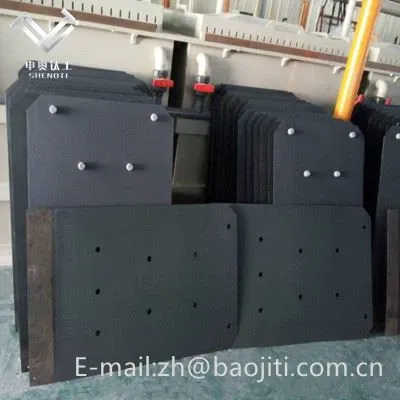
Micro-corrosion waste liquid recovery copper equipment is equipment for electrolytic treatment of waste liquid generated after copper surface processing by the micro-corrosion system. The electrolytic deoxidation-electrodeposited copper process is used to treat the micro-corrosion waste liquid. The electrolytic oxidant removal process is to reduce the oxidant such as sodium persulfate, ammonium persulfate, and hydrogen peroxide from the high concentration to 0 under the reducing action of the electrode cathode by the micro-corrosion waste liquid after using the equipment. The copper electrodeposition process uses equipment to reduce the Cu2+ to elemental copper from the micro-corrosion waste liquid under the reduction action of the electrode cathode after the oxidant is reduced to 0 so that the Cu2+ concentration of the waste liquid is reduced by more than 95%, which is easy to discharge wastewater and reduce environmental protection. The pressure of Cu2+ and the by-product of economic value in the process-electrolytic plated copper.
Titanium Anode for Extracting Copper from Alkaline Etching Waste Liquid Process principle :
In the printed circuit board industry, the micro-etching waste liquid discharged from the micro-etching production line contains a small amount of Cu2+. In order to reduce the pressure of environmental protection treatment, the copper ions in the micro-corrosion waste liquid can be extracted by electrolysis. The developed direct electrolysis equipment for a micro-etching solution is connected with the equipment supporting the micro-etching process of PCB enterprises. It can directly electrolyze the Cu ions contained in the micro etching solution into elemental copper, so as to achieve the goal of clean production and pollution control. A waste alkaline etching solution
The alkaline etching solution is a chemical solvent formed by adding ammonia water to the copper chloride solution and the compounding reaction occurs. The waste alkaline etching solution mainly contains copper chloride and ammonium chloride, and the copper content can reach 140-170g/L.
Cu+Cu3(NH)4Cl2→2Cu(NH)l2
2Cu(NH)***l2+1/2O2+2NH4Cl2+2NH3→2Cu(NH3)4Cl2+H2O
Total reaction:
Cu+1/2O2+2NH4Cl2+2NH3→Cu(NH3)4Cl2+H2O
Titanium Anode for Extracting Copper from Alkaline Etching Waste Liquid advantage:
- Reduce the difficulty and cost of wastewater treatment (the cost of chemicals can be reduced by 0.5-0.8 yuan/m
- Turn waste into treasure and obtain high-quality electrolytic copper with a high production value。
- The hydrogen peroxide micro-erosion process potion is recycled, saving more than 30% of the cost of medicament
- Reduced sludge discharge, lowered the conductivity of wastewater after treatment, and created conditions for the realization of wastewater resources.