- Home
- Companies
- Scientific & Medical Products Ltd
- Products
- Sherwood Laboratory Fluid Bed Dryer
Sherwood Laboratory Fluid Bed Dryer
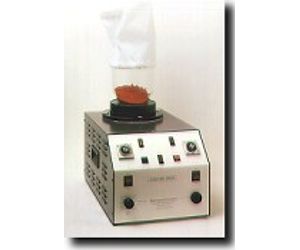
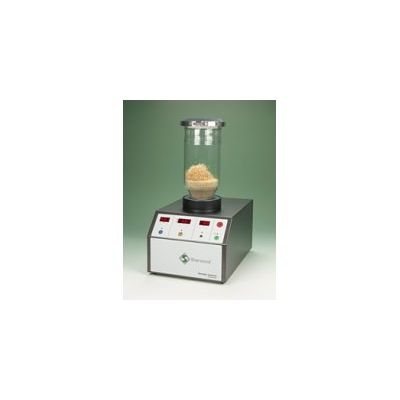
Sherwood Scientific have developed and manufactured a range of two general purpose Fluid Bed Dryers (FBDs): one analogue and one with digital controls of airspeed, temperature, and time. In addition we have developed a programmable version where drying programmes can be created, and stored on computers.
- The laboratory fluid bed dryer offers significant advantages over conventional drying techniques
- The high rates of heat and mass transfer ensure much faster and more homogeneous drying than other methods such as oven and vacuum drying.
- Drying times range from a few seconds to minutes. Complete drying is usually achieved in under 15 mins, the exact time for a given sample, airflow rate and temperature setting being very repeatable. A uniform reproducible moisture content can also be achieved with the appropriate settings.
- The temperature range from ambient to 200°C covers the majority of drying and solvent removal operations. Due to good mixing, the sample temperature is uniform and under close control during drying. This proves advantageous when drying heat sensitive materials or coating particles.
- Among the wide range of materials that can be processed are pharmaceuticals, chemicals, minerals, foods, coals, wood chips, plastics, resins, etc. Ask for our specific applications sheet on your material.
The filter bags fitted to the top of the drying tubs retain any stray particles of the sample being fluidised while allowing the passage of the exit gases. There are just two sizes of bag for the whole range of tubs and a wide choice of materials to ensure compatibility with the substance being dried and the drying temperature.
Nylon and terylene are normally chosen as filter bag materials; nylon is resistant to alkali vapours while terylene shows greater stability with acids. Polypropylene is inert to most chemicals but degrades more rapidly than the above materials over 100°C. A special alkali-tolerant material, nomex, is available for sustained high-temperature drying, e.g. around 200°C. Finally, a fluorocarbon filter bag can be used when tolerance to both high temperature and a broad range of chemicals is required.