Cembrane - Silicon Carbide (SIC) Ceramic Single Module
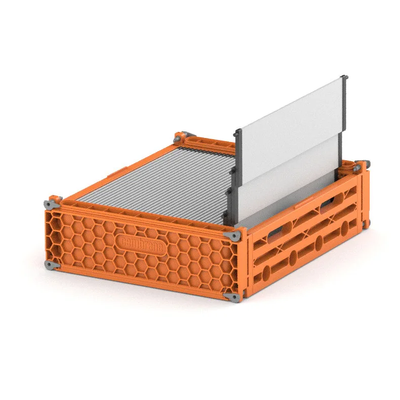
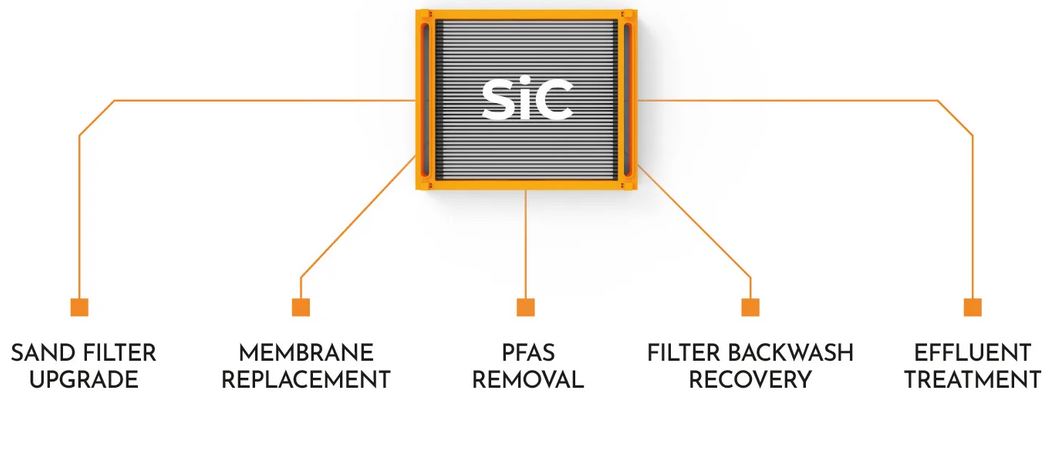
Our flat sheet membranes are fitted in a square module consisting of 42 membrane sheets that are individually interchangeable. The modules are submersible and can be stacked individually on top of each other up to 15 modules in total.
- Stackable module concept
- Integrated filtrate line
- Exchangeable membranes
- Applicable in saline & aggressive water
- BOTTOM CONNECTION TO PERMEATE LINE
- LIFTING FROM TOP MODULE
- 14% MORE MEMBRANE AREA
- INTEGRATED AERATION
- INTEGRATED SPRINKLER & PERMEATE LINE
- APPLICABLE IN SALINE & AGGRESSIVE WATER
Our proprietary membrane is based on Silicon Carbide (SiC) and can be used to filter various sources of contaminated water to the highest reuse-, portable- or discharge standard.
The SiC membranes are configured into a module that can be configured to meet the needs of any project. SiC modules can be easily stacked to fit any basin size, creating unprecedented flexibility within the industry.
The module consists of three basic elements:
- Membrane module
- Top permeate module
- Bottom diffusor case module
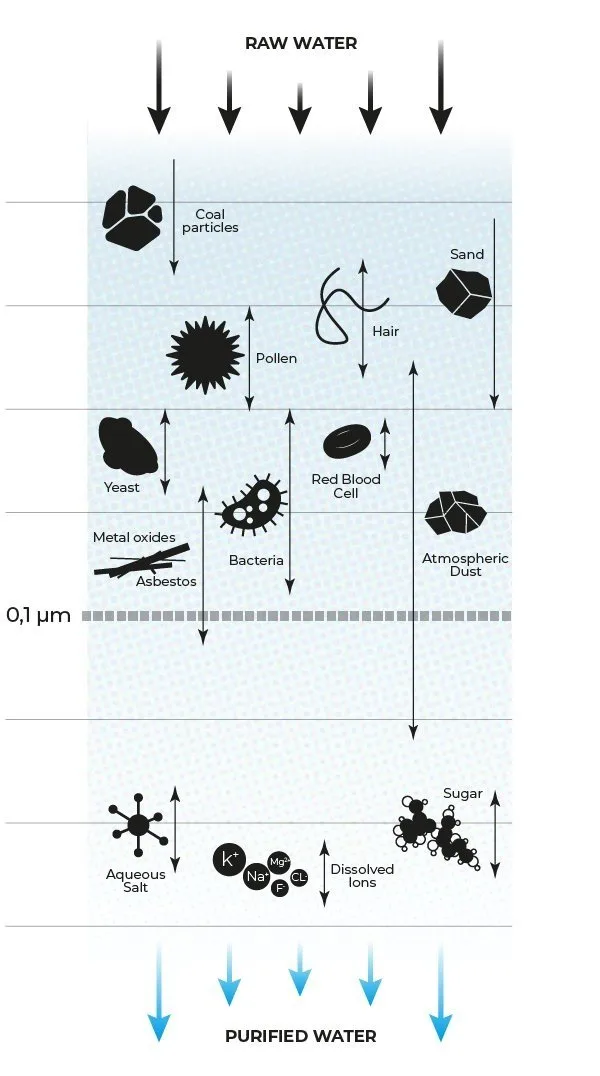
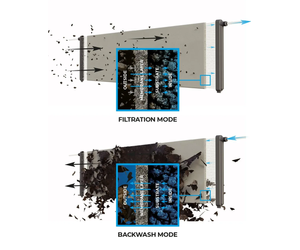
A slight vacuum is applied to the membrane to pull water through the membrane pores. SiC is one of the few membrane materials that is naturally and permanently hydrophilic, meaning organic foulants, including oil, are repelled by the membrane while water is naturally drawn in.
Solids, pathogens, and other contaminants are blocked by the membrane pores and are retained on the surface.
Our SiC membranes are used in a wide variety of water and wastewater applications in both municipal and industrial sectors. Its primary goal is to remove solids, toxic pollutants, and pathogens, creating a safe, clean, and sustainable water source.
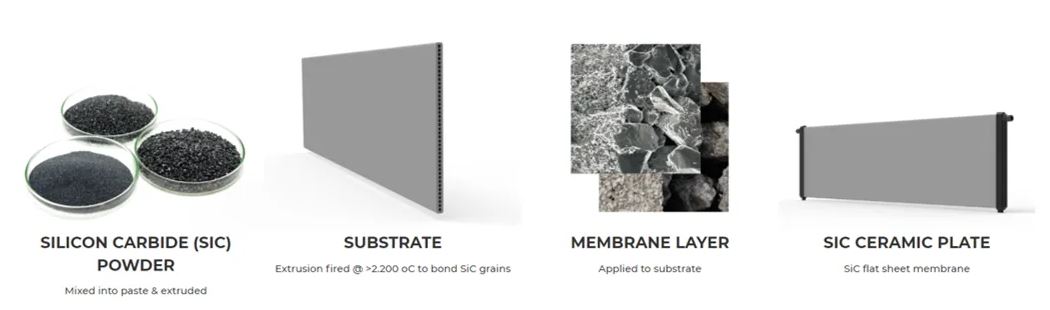
Silicon carbide (SiC) powder is first mixed into a paste and extruded to form the membrane substrate. The substrate is fired at over 2,000 C to permanently bond the SiC grains to one another. After firing, the substrate is coated with another layer of SiC powder to form the micropores of the SiC membrane. Once coated the substrate is fired again to form a monolithic membrane plate. SiC plates are assembled into modules. SiC modules are assembled on top of one another to form stacks or towers.