


Element 1 Corp
- Home
- Companies
- Element 1 Corp
- Products
- Element 1 - Model S-Series - Small ...
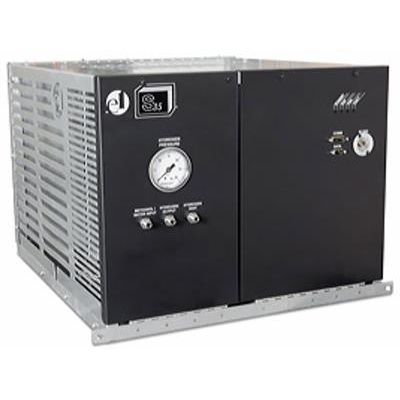
Element 1 - Model S-Series -Small Scale Hydrogen Generator
FromElement 1 Corp
e1’s S-Series hydrogen generator uses our advanced catalytic reforming and hydrogen purification technologies to convert a mixture of methanol and DI water into high purity hydrogen, on-site and on-demand to economically meet the needs of 1 kW to 7.5 kW fuel cell power solutions. The S-Series was designed to displace expensive cylinders of compressed hydrogen for critical power applications where long runtimes are required.
Most popular related searches
hydrogen generator
CO2 emissions
security camera
particulate matter
hydrogen compressor
water tank
particulate matter emissions
zero emissions
- Low cost of hydrogen: Converts an environmentally friendly, easily handled, readily available, and hydrogen dense feedstock blend of methanol and DI water into fuel cell grade high-purity low-cost hydrogen.
- Low initial cost of equipment:Under the license, manufactured cost pathway of S75 (75 sLm of hydrogen production) in low production volumes is less than the cost of a typical commercial PEM fuel cell module. Supports fuel cell cost competitiveness against legacy diesel fuel solutions.
- Scalable to support 1 to 7.5 kW fuel cell solutions:S-Series is scalable to produce from 1 to 90 sLm of hydrogen. With minimal additional engineering, the solution is scalable up to 110 sLm.
- Long run times:Runtimes determined by the size of methanol and DI water feedstock tank. An e1 S75 hydrogen generator paired with one 55-gal drum of methanol/water feedstock is able to produce the equivalent hydrogen of 22 “T” sized cylinders of compressed hydrogen.
- Minimal power requirements:Requires less than 600 W of electrical power when in standby, and less than 100 W of electrical power when generating hydrogen.
- Compact design:The hydrogen generator is typically smaller in size than the fuel cell module it supports, and it readily fits into standard cabinets for outdoor installations.
- Reduced and simple maintenance:Advanced fuel reforming process and proprietary membrane purifier have few moving parts, robust design and a long lifetime.
- 100% turndown:Fully automated controlsallows for load-following hydrogen production, reduces feedstock and hydrogen waste, and provides flexible support for variable fuel cell power demand.
- Reduced Emissions:No particulate matter, and low CO2 emissions. If renewable methanol is used, zero net CO2 emissions.
- Telecom cellular stations
- Security camera
- Railroad crossings
- Broadband repeater stations