

S2N - Model SWB -Smart Buoy for Water Quality Monitoring
Monitoring the quality of our surface waters requires extensive testing, but the number of possible sampling points is usually limited by distance and manpower. Ad hoc manual checks are no longer sufficient. Continuous, real-time information is required, in the case of a larger water surface, measurements at several points are required.
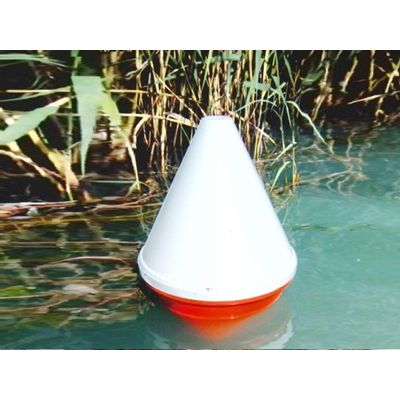
The Sensors2Net Smart Buoy continuously measures the quality of surface water on site using high-precision sensors built into the buoy body without the need manual testing by staff. An easy and quick to install solution, even in hard-to-reach places. The physical and chemical parameters of the water (pH, temperature, dissolved oxygen, conductivity, ORP) are transmitted by the data collection unit with its own battery using modern radio wave or GSM-based NBIoT technology They are then displayed in a personalized way chosen by the user, even on a mobile device. The analysis of the measurement data, with the involvement of our Artificial Intelligence solution, gives the operator a reliable forecast of the processes taking place in the water, and warns him in time of the danger of the formation of harmful algal blooms. Costly damage events involving mass fish deaths can be prevented and their severity reduced.
In the case of fisheries lakes, the aquaculture user can even display the collected local data on social media, giving anglers valuable information on what to expect about fish behavior. Safer catch, more visitors, controlled water quality – all thanks to the well-managed data provided by Sensors2Net Smart Buoy, which takes place in a place that meets the strictest environmental standards.
Water quality parameters measured by the buoy:
- dissolved oxygen
- pH
- temperature
- ORP (redox potential)
- conductivity
The WaterScope S2N Smart buoy is a cutting edge solution for continuous monitoring of water parameters in lakes, rivers, surface water bodies, natural baths/spas, beaches, sea shore & aquaculture. The S2N Smart buoy has been developed to measure the five most important characteristics simultaneously and in real time. The five most important parameters may vary for different water bodies, so beyond the basic three parameters, temperature (T), pH (pH) and dissolved oxygen (DO), plus two additional parameters selected by the client can be installed. These can be the Oxydation-Reduction Potential (ORP), conductivity (EC), nitrate level, or ammonia level.
The buoy includes the latest technological solutions which make it a truly ‘smart’ appliance. Its special energy management is specially designed to help achieve longevity and ease of use. The buoy performs measurements depending on customers’ need with the help of the built-in sensors; then uploads the measurement data to the cloud server, where the data are stored and are ready to be analyzed with the help of AI, providing valuable proactive forecasts to the user.
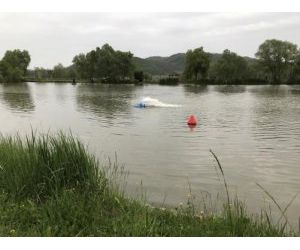
Further smart solutions built into the buoy optimize the measurement procedure for the highest accuracy. This smart solution follows the sensors’ measurement figures, and then records the measured results at the optimal time for each sensor. Due to this method, the reliability of the measurement results is significantly higher than that of similar solutions.
When required, data from other environmental parameters can also be channeled into the system, such as
- air temperature
- humidity
- wind strength
- solar radiation
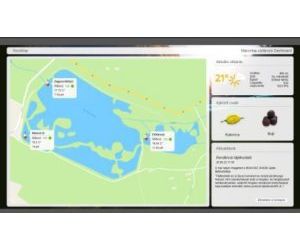
The collected data is sent to the cloud server via LoRaWAN or NBIoT network and from there to the users via the Internet.
The data is then displayed in a visualized and tailored way for each client, and can even be sent to a mobile device. Access to the data can be achieved online in open fashion, or protected by fully secure login rights (login, password).
The analysis of the measured data, with the involvement of Artificial Intelligence as required, provides the operator with a reliable forecast of the processes taking place within the water. When thresholds, defined jointly with the user are reached, the system sends a warning signal or alarm. The system is capable of generating automatic daily/weekly/monthl reports and statistics, which then can be exported in xls or csv format according to the user`s needs.
By using the S2N Smart Buoy, the operator of natural water bodies can follow the trends of water quality in real time, build models and perform effective proactive damage prevention activities.
Fields of application can be both natural waters and artificial waters, like aquacultures, fishponds, rivers, canals, lakes, reservoirs, pools and beaches as well. S2N Smart Buoy is recommended to be deployed at intakes and outlets, additionally 1 buoy/10 ha.
If several S2N Smart Buoys are deployed at different locations, the buoys can be connected to a system to perform comprehensive monitoring of multiple lakes or pond systems simultaneously.
- Natural water bodies (rivers, streams, lakes)
- Natural water baths/springs, coastal areas and beaches
- Water basins, reservoirs, water treatment & reuse facilities and networks
- Aquaculture - intensive fish farms, shellfish farms and urban vertical farms
- Sea farms
The S2N Smart Buoy continuously measures key water quality parameters using built-in sensors in real time, such as:
A./ Standard parameters:
Dissolved oxygen: This is one of the most important environmental factors for aquatic life communities, so it is a useful indicator of water quality and its changes. Various organic substances in water (materials for feeding animals, plant and animal waste, feces) and sediment decomposition processes, oxidation of inorganic compounds, and respiration of aquatic organisms consume oxygen, while its production by photosynthesis of aquatic plants and algae and by diffusion from air. The amount of dissolution depends on the temperature, atmospheric pressure and the salt concentration dissolved in the water.
pH: Specifies the pH of solutions, whether acidic, alkaline or neutral. If the pH of any given water measured is too low, algae and other bacteria can multiply in it, which can lead to a decrease in water quality and, in more severe cases, mass fish death.
Temperature: Temperature of the waters is a very important parameter, as it is closely related to the dissolved oxygen content and the biological and chemical processes in the water, as well as the effect of any toxic components on aquatic organisms.
B./ Optional Parameters:
ORP (redox potential): The redox potential of water is a measure of the oxidizing and reducing ability of a solution, which is a parameter suitable for controlling water quality. It is related to the chemical nature, concentration, ratio of the substances in the solution, as well as the temperature and pH.
Conductivity: Conductivity measurement is used to determine the degree of salinity and is also closely related to pH. In the case of living waters, the lower the conductivity, the "cleaner" e.g. the water in the fishpond.
Nitrate: The nitrate content of water indicates the presence of nitrogen-containing compounds (fertilizers, slurries, fertilizers, sewage, sewage sludge), which means a high environmental impact. Nitrate is one of the main causes of eutrophication of waters, with the unwanted accumulation of algae and aquatic plants, endangering the ecological balance and oxygen balance of the water body.
Ammonia: Inorganic nitrogen is present in waters primarily in the form of ammonium ions, which in itself does not pose a hazard to living organisms, but in an alkaline medium, ammonia is formed, which is toxic. It is important, therefore, that in aquatic ecosystems, among other parameters, we can measure the alkalinity (pH) and nitrate and ammonium content of water at the same time.
The operation of the S2N Smart Buoy does not require special professional knowledge, the person(s) involved in the regular maintenance of the water body are able to perform this task. The system performs the measurements and data transmission automatically.
Dissolved oxygen sensor:
- measuring range: 0.07 50,000 μS / cm
- accuracy: +/2%
- service life: approx. 10 years
PH measuring sensor:
- measuring range: 0 14
- accuracy: +/0.001
- service life: approx. 4 years +
- Conductivity measuring sensor (K 1.0):
- measuring range: 5-200,000 μS / cm
- accuracy: +/2%
- service life: approx. 10 years
ORP measuring sensor:
- measuring range: +/2000 mV
- accuracy: +/1mV
- service life: approx. 4 years +
- Temperature measuring sensor:
- measuring range: -55 ° C to 220 ° C
- accuracy: +/(0.15 + (0.002 * t))
- service life: 15 years
Data collection and transmission:
- measuring period time: 15-3060-240 minutes adjustable depending on demand
- battery operation (2-4 years depending on the number of measurement periods and use)
- LoRa WAN or NB IoT data transmission
- encrypted data transmission 802.15.4 encryption (AES-128)
- Use of two security-enhancing keys, Network (NWkSkey) and Application Session Key (AppSkey)