


- Home
- Companies
- Scientific and manufacturing Firm (SMF) ...
- Products
- SMF PRODECOLOGIA - Model EBS (corona) - ...
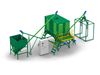
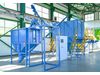
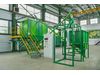
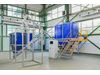
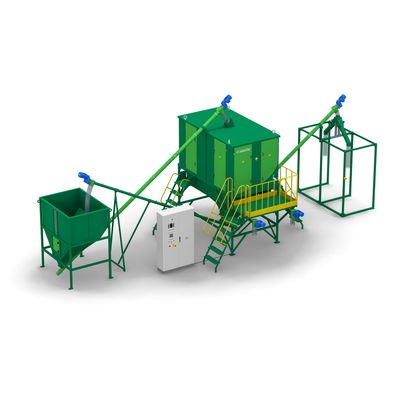
SMF PRODECOLOGIA - Model EBS (corona) -Electrostatic Separators EBS (corona)
Intended for dry high-efficiency separation of materials, that differ in electric properties:
Most popular related searches
electrostatic separator
plastic waste recycling
corona discharge
plastic waste
tire shredding
crumb rubber
waste recycling
cable recycling
tire recycling
domestic recycling
Intended for dry high-efficiency separation of materials, that differ in electric properties:
- mixtures of plastics and metals, including shredded cables, into metal (copper, aluminium), and non-conducting material (plastic);
- mixtures of different materials upon condition that one of the components has conducting characteristics (among them extraction of textile cord from rubber crumb in the processing of used tires)
- shredded WEEE (including PCB’s) into metal (aluminium, copper, nickel, bronze, precious metals and other) and non-conducting material (plastic, textolite, fiber-glass plastic and other);
and also for dry benefication:
- nonmetallic raw material (feldspar, pegmatite, quartz sand);
- collective concentrates of deposits, in composition of minerals of zirconium, ilmenite, rutile, leucoxene, staurolite, tourmaline, distan, quartz;
- rough concentrate of ores of rare metals (tin-tungsten, monacite);
- ores of precious metals (gold, silver)
- diamond-bearing raw materials.
- Cable recycling
- Glass and porcelain industry
- Lead and zinc industry Municipal engineering
- Processing of plastic waste
- Recycling of household appliances
- Recycling of worn tires
- Recycling of worn tires
- Titanium-magnesium industry
- WEEE and PCB`s recycling
- WEEE recyclin
- The product is separated into the components, depending on the electro-conductivity, in the combined field of corona discharge with the electrostatic field.
- The input product is fed on the receiving electrode, which rotates and is under a positive potential.
- In the inter-electrode space all particles are charged with negative ions of air. Conductive particles, exiting the corona discharge zone, are recharged, take the sign of the receiving electrode’s charge and are repelled from it.
- The deflecting electrode, having the same potential as the corona electrode, creates an uneven field, facilitates an earlier deviation of electro-conductive fraction from the receiving electrode increasing the efficiency of separation into the conducting and non-conducting products. Non-conductive particles, having negative charge, are held on the drum and removed by the cleaning roller.