Solvita - Grain Respiration Detection Technology
The incredible conundrum of grain production is that even while you can’t see it, micro-organisms are at work spoiling your hard-earned efforts, creating grain spoilage and loss that’s hard to recoup. The Solvita® Fungal Spoilage Test for grain gives you the tools to change all that, by detecting mold even before it’s visible – it’s like an early warning signal for fungal activity. This revolutionary grain spoilage test measures grain respiration, a unique measurement that helps predict spoilage before it happens.
Grain storage studies have shown that testing grain respiration – the release of carbon dioxide (CO2 from incubated grain) – can accurately predict the remaining grain storage life and the grain’s susceptibility to spoilage. Solvita® combines these findings with modern technology in a reliable, simple-to-use process that you can perform quickly and economically. It can monitor and alert you to unusually high fungal spoilage. Use the Solvita® grain test to:
- Reduce the likelihood of harmful spoilage of grain
- Predict the storage life remaining at current conditions
- Detect spoilage
- Measure the extent of spoilage
- Identify where spoilage occurs so grain can be quickly used
- Evaluate the quality of on-farm grain storage
- Test with no extra lab equipment required
- Provide information to develop an effective grain management strategy.
How does the Solvita® grain test work?
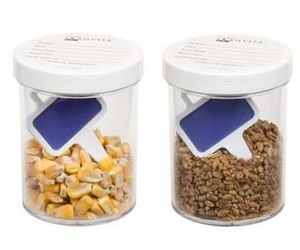
- Simply collect a grain sample. (Be sure moisture content is at least 14%)
- Fill the cup to the fill line.
- Insert the Solvita® paddle and seal the container.
- Allow the container to incubate for 24 hours.
- Read the results.
 At all points of the grain process – pre-harvest, harvest, storage, processing and export, the Solvita® grain test gives you valuable info on spoilage potential to help you leverage your grain for maximum value:
- Measure fungal levels in the field
- Check grain at harvest
- Test stored grain for signs of spoilage
- Determine grain suitability for export – test loaded rail cars or barges