


Met One Instruments Powered by Acoem
- Home
- Companies
- Met One Instruments Powered by Acoem
- Products
- Climatronics - Model 900MHz - Spread ...
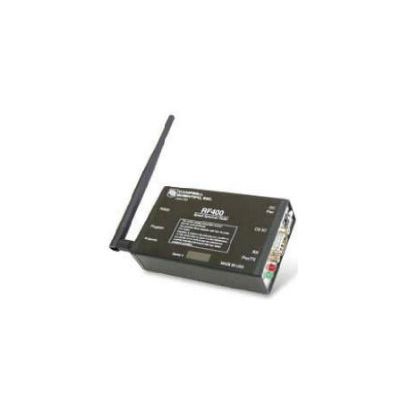
Climatronics - Model 900MHz -Spread Spectrum Radio for IMP- Series Data Loggers
Spread spectrum radios spread the normally narrowband information signal over a relatively wide band of frequencies. This allows the communications to be more immune to noise and interference from RF sources such as pagers, cellular phones and multipath.
Most popular related searches
The P/N 102590 Spread Spectrum Radios reduce susceptibility to RF interference from other spread spectrum devices by providing user-selectable frequency hopping patterns. The P/N 102590 Spread Spectrum Radios spread spectrum radio modems support point-to-point and point-to-multipoint data logger communications. They can serve as a field modem/radio while connected to the data logger or as a base station modem/radio when connected to a computer.
- The operating frequency band of these radio modems may be shared with other non-licensed services such as cordless telephones and with licensed services including emergency, broadcast, and air-traffic control.
- P/N 102590 Spread Spectrum Radios, like all FCC Part 15 devices, are not allowed to cause harmful interference to licensed radio communications and must accept any interference that they receive. Most Climatronics users operate in open or remote locations where interference is unlikely. If there is a problem, interference can be reduced using methods such as moving the device, reorienting or using a different type of antenna, or adding RF shielding. We recommend the use of licensed UHF or VHF narrowband frequencies for critical communication links.
- Rugged, Low-Cost Transceivers
- 100 mW, 900 MHz Frequency
- Frequency-Hops Over 25 Channels
- Does Not Require An Individual FCC License2
- Can Be Used In The Field As A Transceiver Or In The Office As The Base Station
- Current Drain Can Be As Low As 1 Ma
- Transmits Up To One Mile With Omni-Directional Antenna; Ten Or More Miles With Directional Antennas
- Settings Stored In Non-Volatile Memory
- Operating Frequency: 910 to 918 MHz
- Type: Frequency Hopping Spread Spectrum (FHSS) Transceiver
- I/O Data Rate: 9600 bps
- Channel Capacity: 65,000 Network Identifiers share 25 hop channels
- Frequency Hopping Patterns: Six different selectable patterns
- Frequency Control: Direct FM
- Receiver Sensitivity: -110 dBm (-104 dBm RF415) at 10 -4 bit error rate (data logger protocols will issue retries wherever a bit error occurs)
- Interference Rejection: 70 dB at pager and cellular phone frequencies
- Transmitter Power Output: 100 mW nominal
- Antenna Connector: Reverse polarity SMA
- FCC ID: OUR9XTREAM
- Operating Temperature Range: -25° to +50°C (call about extended temperature ranges)
- Dimensions: 4.75 x 2.75 x 1.3 inches (12.1 cm x 7.0 cm x 3.3 cm)
- Power: 9 to 16 Vdc
- Average Current Drain: <1 mA stand-by (assuming power-saving options used), 24 mA while receiving, <75 mA while transmitting
- LEDs: Power on, TX, RX, diagnostics
- Data Logger I/O Connector: 9-pin “D” Male for all needed communications lines. Newer loggers provide power to the radio on this connector. Older loggers may require optional power cable #14291*
- RS-232C Connector: 9-pin “D” Female for TX, RX, CTS, ground RS-232C levels
- Power Connector: Barrel connector, center positive 12 V for use in base station configuration or with older data loggers (newer loggers provide power to the radio on the I/O connector)
- Parts List: The P/N 102590 includes the spread spectrum radio, the mounting bracket to hold it in the data logger enclosure, an RF surge protector, and a cable to connect the radio to the external RF connector.