

- Home
- Companies
- Adarsh Stainless Pvt Ltd
- Products
- Adarsh - Model 304 and 304L - Stainless ...
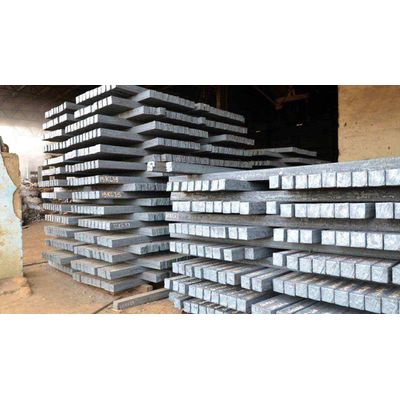
Adarsh - Model 304 and 304L -Stainless Steel Billets
Stainless steel 304 and 304L billets are crucial raw materials in the production of various industrial components, providing exceptional corrosion resistance, durability, and versatility. Let`s delve into the key characteristics, applications, and manufacturing processes associated with these billets. Chemical Composition: Stainless steel 304 is an austenitic stainless steel known for its excellent corrosion resistance and high-temperature strength. It is composed of iron, chromium (18-20%), nickel (8-10.5%), and a small amount of manganese, silicon, carbon, phosphorus, and sulfur. The addition of nickel enhances its corrosion resistance, while the low carbon content in 304L minimizes carbide precipitation during welding, reducing the risk of corrosion.
Properties: Stainless steel 304L billets exhibit outstanding mechanical properties, including high tensile strength, excellent formability, and good weldability. These properties make them suitable for a wide range of applications across diverse industries.
Construction and Architecture: Stainless steel 304 billets find extensive use in construction projects, architectural elements, and structural components due to their corrosion resistance and aesthetic appeal.
Food and Beverage Industry: The hygienic and corrosion-resistant properties of stainless steel make it a preferred material for equipment and machinery in the food and beverage industry.
Chemical Processing: Stainless steel 304L billets are employed in chemical processing plants for their resistance to corrosive chemicals and high temperatures.
Automotive Industry: Components such as exhaust systems, trim, and grills in the automotive sector often utilize stainless steel 304/304L due to its durability and corrosion resistance.
Medical Equipment: The biocompatibility and corrosion resistance of stainless steel make it a suitable material for manufacturing medical equipment and devices.
Manufacturing Process: The production of stainless steel 304 billets involves several stages. Initially, raw materials like iron ore, chromium, nickel, and other alloying elements are melted in an electric furnace. The molten metal is then cast into large rectangular shapes, known as billets. These SS 304L billets are hot-rolled or forged into the desired shape and size. Subsequent processes, such as heat treatment and pickling, refine the material`s properties.
- Specification Of SS 304L Billet
- Types Of Stainless Steel 304 Billets
- Other Types Of Stainless Steel 304L Billet
- Stainless Steel 304 Billets Equivalent Grades
- Chemical Composition of SS 304L Billets
- Mechanical Properties of SS 304 Billets
- UNS S30400 Billet Price, Dimension, Weight
- SS 304 Billets Industrial Application
- Export & Supply Destination of SS 304L Billet