


- Home
- Companies
- Tri Round Bars
- Products
- Tri-Round - Model ASTM A276 AISI 304 - ...
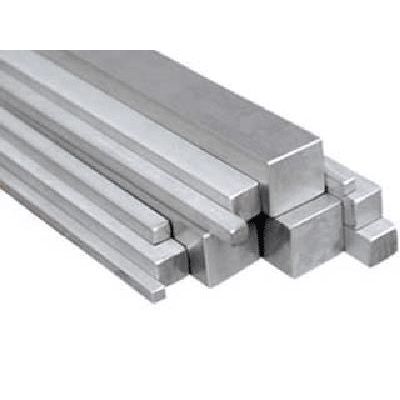
Tri-Round - Model ASTM A276 AISI 304 -Stainless Steel Round Bar
ASTM A276 SS 304 Bars, 304 Stainless Steel Bar, SS 304 Round Bar, Stainless Steel Bars, Stainless Steel UNS S30400 Forged Bar, 304 Black Bars, Stainless Steel Round Bar, Stainless Steel 304 Rectangle Bar Exporter, Stainless Steel 304 Bar Suppliers in Mumbai, India.
Triroundbars.com is a PED approved manufacturer of Stainless steel Bright Bars, Mild steel Bright Bars & alloy steel bright bars and many other Stainless Steel Materials & Grades. Our manufacturing punit is in compliance with the international quality standards which makes us in top 10 stainless steel bright bar exporters in INDIA
Triroundbars.com can produce AISI 304 Grades Steel Round Bar, Hex Bar, Forged Bar, Hollow Bar, Square Bar catering to segments ranging from industrial fasteners manufacturers to pharmaceuticals manufacturers to other advanced applications with emphasis on 200 series (low nickel).
Stainless 304 Round Bar Definition are Recognized as the Prominent Manufacturer, Exporter and Supplier of a broad assortment of Stainless Steel 304 Round Bar. The offered SS 304 Round Bar is designed with utmost precision in conformity with the international quality standards.
Steel bars can be categorically said to be one of the core components of any manufacturing industry or for that matter any industry that relies on machinery. It can be used in automotive, textile, fabrication, construction, cement, ship building, paper and pulp, defence, heavy earth moving equipment, or aerospace.
ASTM A479 refers specifically to ASME SA479 grade 304 round bars used in boilers and pressure vessels, whereas ASTM A276 refers specifically to ASME SA276 grade 304 rod for reforging as well as free machining. Astm a276 type 304 round bar is available in various conditions, such as A, H, B, S, and T.
In each condition, the requirement for furnishing is different, for instance Condition A indicates that the bar has been annealed, Condition H indicates that the bar has been hardened and tempered at a relative temperature, Condition T, on the other hand, indicates that the bar has been hardened and tempered at a relatively high temperature, Condition S indicates that the bar has been strain hardened or relatively lightly cold worked, and Condition B indicates that the bar has been relatively severely cold worked. Heat treatment and corrosion testing are applied to ASTM A479 type 304 bars.
Stainless 304 Round Bar Definition Triroundbars.com, are Recognized as the Prominent Manufacturer, Exporter and Supplier of a broad assortment of Stainless Steel 304 Round Bar. The offered SS 304 Round Bar is designed with utmost precision in conformity with the international quality standards.
304 Stainless Steel Round Bar can be categorically said that steel bars are one of the core components of any manufacturing industry or for that matter any industry that relies on machinery. versatile applications in automotive, textile, fabrication, construction, cement, ship building, paper and pulp, defence, heavy earth moving equipment or aerospace.
Grade 304 Stainless Steel is the standard “18/8” stainless; it is the most versatile and most widely used stainless steel, available in a wider range of products, forms and finishes than any other. It has excellent forming and welding characteristics. The balanced austenitic structure of Grade 304 enables it to be severely deep drawn without intermediate annealing, which has made this grade dominant in the manufacture of drawn stainless parts such as sinks, hollow-waASTM A276 AISI 304 Stainless Steel Round Bars has impressive forming and welding properties, which can be conducted with or without the filler methods. Welding may require post-annealing treatment. Three hundred four stainless steel round bars are resistant to corrosion, and they perform well in many atmospheric environments. These bars are highly resistant to chloride and other chemical reactions which occur due to the reaction of oxidation and corrosion.
AISI 304 Stainless Steel Round Bars provide sporadic service at a temperature range of 870°C-925°C. These grades are made with 8% of nickel and 18% of chromium composition, making them more substantial than other alloys. These bars are available in different sizes and types, such as square, rectangle, hex, flat, etc. The dimensions of these bars differ from 1-6 metres. The tensile strength of these bars is Psi 75000, and the yield strength is Psi 30000re and saucepans. For these applications it is common to use special “304 DDQ” (Deep Drawing Quality) variants.
SS UNS S30400 Round Bar,304 Stainless Steel Round bar,SS 304 Round Bar Suppliers,304 Stainless Steel Round Bar Manufacturers in India, JIS SUS 304 Flat Bar Exporter, SS 304 Square Bar, 304 SS Bar Leading Manufacturer,SS 304 DIN 1.4301 Bar & Rod, Stainless Steel 304 Black Round Bar, SS 304 Polish Bar, SS 304 Flat Bar Manufacturers & Suppliers in India
ASTM A276 round bars are one of the best quality and highly demanding bars in all industries. These bars are enriched with excellent properties, which make them a superior grade for factory applications.
304 Stainless Steel Bar Corrosion Resistance304 has excellent corrosion resistance in many environments and when in contact with different corrosive media. Pitting and crevice corrosion can occur in environments containing chlorides. Stress corrosion cracking can occur above 60°C.
304 Stainless Steel Bar Heat Resistance304 has good resistance to oxidation in intermittent service up to 870°C and in continuous service to 925°C. However, continuous use at 425-860°C is not recommended if corrosion resistance in water is required. In this instance 304L is recommended due to its resistance to carbide precipitation.
Where high strength is required at temperatures above 500°C and up to 800°C, grade 304H is recommended. This material will retain aqueous corrosion resistance
304 Stainless Steel Bar FabricationFabrication of all stainless steels should be done only with tools dedicated to stainless steel materials. Tooling and work surfaces must be thoroughly cleaned before use. These precautions are necessary to avoid cross contamination of stainless steel by easily corroded metals that may discolour the surface of the fabricated product.
304 Stainless Steel Bar Cold Working304 stainless steel readily hardens. Fabrication methods involving cold working may require an intermediate annealing stage to alleviate work hardening and avoid tearing or cracking. At the completion of fabrication a full annealing operation should be employed to reduce internal stresses and optimise corrosion resistance.
304 Stainless Steel Bar Hot WorkingFabrication methods, like forging, that involve hot working should occur after uniform heating to 1149-1260°C. The fabricated components should then be rapidly cooled to ensure maximum corrosion resistance.
304 Stainless Steel Bar Machinability304 has good machinability. Machining can be enhanced by using the following rules:
Cutting edges must be kept sharp. Dull edges cause excess work hardening.
Cuts should be light but deep enough to prevent work hardening by riding on the surface of the material.
Chip breakers should be employed to assist in ensuring swarf remains clear of the work
Low thermal conductivity of austenitic alloys results in heat concentrating at the cutting edges. This means coolants and lubricants are necessary and must be used in large quantities.
304 Stainless Steel Bar Heat Treatment304 stainless steel cannot be hardened by heat treatment.
Solution treatment or annealing can be done by rapid cooling after heating to 1010-1120°C.
304 Stainless Steel Bar WeldabilityFusion welding performance for type 304 stainless steel is excellent both with and without fillers. Recommended filler rods and electrodes for stainless steel 304 is grade 308 stainless steel. For 304L the recommended filler is 308L. Heavy welded sections may require post-weld annealing. This step is not required for 304L. Grade 321 may be used if post-weld heat treatment is not possible.
Why use 304 Stainless Steel Bar- Austenitic stainless steels are extensively used for service down to as low as liquid helium temperature (-269 deg C). This is largely due to the lack of a clearly defined transition from ductile to brittle fracture in impact toughness testing.
- Various types of stainless steel are used across the whole temperature range from ambient to 1100 deg C.
- The ferritic types may be limited, in practice, to lower temperatures as they have lower strengths at elevated temperatures than the austenitic types. The ferritic types can also suffer from embrittlement with extended exposure to temperatures above about 450°C.
You can also read about:
- Steel bar Comparative / similar specifications
- Steel bar Standards and specifications by country
- Steel bar Standards and specifications by company
Stainless steel types 1.4301 and 1.4307 are also known as grades 304 and 304L respectively. Type 304 is the most versatile and widely used stainless steel. It is still sometimes referred to by its old name 18/8 which is derived from the nominal composition of type 304 being 18% chromium and 8% nickel.
Type 304 stainless steel is an austenitic grade that can be severely deep drawn. This property has resulted in 304 being the dominant grade used in applications like sinks and saucepans.