


- Home
- Companies
- Centerway Steel Co., Ltd
- Products
- Centerway - Stainless Steel Seamless ...
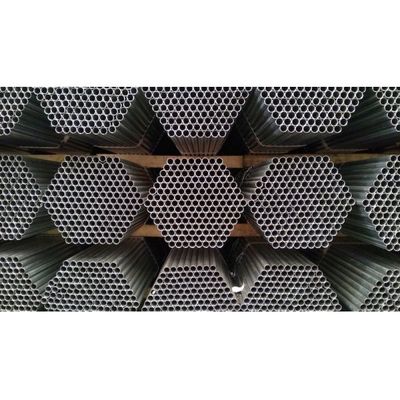
Centerway - Stainless Steel Seamless Pipe
Stainless steel pipe is primarily used in piping systems for the transport of fluids or gases. Stainless steel pipe resists oxidation, making it a low-maintenance solution that is suitable for high temperature and chemical applications. Because it is easily cleaned and sanitized, stainless steel pipe is also desired for applications involving food, beverages, and pharmaceutical applications.
Seamless Piping
Specification: ASTM A312 (ASME SA312): Specification for Seamless, Welded, and Heavily Cold Worked Austenitic Stainless Steel
Pipes
ASTM A790 (ASME SA790): Specification for Seamless and Welded FerriticVAustenitic Stainless Steel Pipes
ASTM B423 (ASME SB423): Specification for Nickel-Iron-Chromium-Molybdenum-Copper Alloy (UNS N08825 and N08221) Seamless
Pipe and Tube
ASTM B407 (ASME SB407): Specification for Nickel-Iron-Chromium Alloy Seamless Pipe and Tube
The specifications of JIS G3459 EN 10216-5, DIN 17456, DIN 17458 are available.
Boiler Tubing and Piping
Grade : 304H, 31 OH, 321H, 347H, 347HFG
Specification:
ASME SA213: Standard Specification for Seamless Ferritic and Austenitic Alloy-Steel Boiler Superheater, and Heat-Exchanger Tubes
The specifications of ASME SA312, JIS G3459, EN 10216-5, DIN 17456, DIN 17458 are available.
3. Pressure Vessel Tubing
1) Heat Exchanger Tubing (Straight and U tubing)
2) Air Cooler Tubing
3) Condenser Tubing
4) Evaporator Tubing Specification:
ASTM A213 (ASME SA213): Specification for Seamless Ferritic and Austenitic Alloy-Steel Boiler, Superheater and Heat-Exchanger
Tubes
ASTM A789 (ASME SA789): Specification for Seamless and Welded Ferritic/Austenitic Stainless Steel Tubing for General Service
ASTM A268 (ASME SA268): Specification for Seamless and Welded Ferritic and Martensitic Stainless Steel Tubing for General Service
Final Finishing: Solution Annealed & Pickled, Bright Annealed
The specifications of JIS G3463, EN 10216-5 are available.
- Pressure Vessel Tubing
- Heat Exchanger Tubing (Straight and U tubing)
- Air Cooler Tubing
- Condenser Tubing
4) Evaporator Tubing Specification:
ASTM A213 (ASME SA213): Specification for Seamless Ferritic and Austenitic Alloy-Steel Boiler, Superheater and Heat-Exchanger
Tubes
ASTM A789 (ASME SA789): Specification for Seamless and Welded Ferritic/Austenitic Stainless Steel Tubing for General Service
ASTM A268 (ASME SA268): Specification for Seamless and Welded Ferritic and Martensitic Stainless Steel Tubing for General Service
Final Finishing: Solution Annealed & Pickled, Bright Annealed
The specifications of JIS G3463, EN 10216-5 are available.
5. Instrumentation Tubing & Hydraulic Tubing
Specification:
ASTM A269: Standard Specification for Seamless and Welded Austenitic Stainless Steel Tubing for General Service
ASTM A213 (ASME SA213): Specification for Seamless Ferritic and Austenitic Alloy-Steel Boiler, Superheater and Heat-Exchanger
Tubes
Final Finishing: Solution Annealed & Pickled, Bright Annealed, OD Polished
The specification of EN 10216-5 is available.
6. Pipes for Producing Pipe Fittings
Specification:
ASTM A312 (ASME SA312): Specification for Seamless, Welded, and Heavily Cold Worked Austenitic Stainless Steel Pipes
ASTM A790 (ASME SA790): Specification for Seamless and Welded Ferrftic/Austenitic Stainless Steel Pipe
ASTM B423 (ASME SB423): Specification for Nickel-Iron-Chromium-Molybdenum-Copper Alloy (UNS N08825 and N08221) Seamless
Pipe and Tube
ASTM B407 (ASME SB407): Specification for Nickel-Iron-Chromium Alloy Seamless Pipe and Tube
The specifications of JIS G3459 and EN 10216-5 are available.
The term `pipe" and "tube" are often used to describe the same product, but it is important to know the difference. Though they share the same cylindrical shape, steel pipes are measured by the interior diameter (ID), whereas steel tubes are measured by the outside diameter (OD) and wall thickness. Another difference is that pipes are used to transport fluids and gases, while tubes are used to build parts or structural components.