

- Home
- Companies
- Saifilter Filtration Technologies
- Products
- Saifilter - Stainless Steel Sintered ...
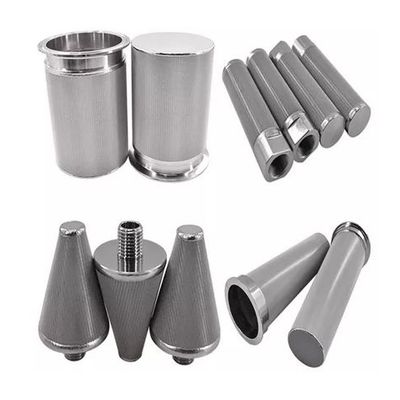
Saifilter - Stainless Steel Sintered Filter Cartridges
The sintered filter is divided into three major filter elements, which are the sintered felt filler element, sintered wire mesh filter element, and sintered metal powder filter element. The most widely used sintered filter in the industrial sector is the stainless steel mesh sintered filter. Pharmaceuticals, liquid and gas filtration, fluidized beds adopt the filter rating 1-250 for sintered mesh filter cartridges from stainless steel wire cloth.
Factors to consider in designing sintered stainless steel filters: It is advisable to consider the flow rate through the filter and particle retention when choosing a filter and, in most cases, the operating fluid and others. Our focus should be on its uses in defense, aerospace, and marine industries like hydraulic fluid filters and fuel filters. You will want to take into the following extra points when focusing on sintered metal filters, they include:
- The size of the pore: The pore size is also referred to as the micron rating; it summaries the specific size particles you plan to keep out. The rating of a filter determines the particles blocked or allowed through. For instance, a filter rated 5 microns "absolute," blocks 99% of all particles over 5 microns in size. Whereas, specifying a 5 micron "nominal" rating indicates that a high percentage may be over 60% of 5-micron particles will pass through.
- The drop in pressure: When gasses or liquids flow through the filter, a loss of pressure occurs; this loss of pressure is referred to as the pressure drop. Determine what your specific application allows and convey it to the filter manufacturer.
- Temperature range: The metal alloy used in your filter must be able to accommodate or withstand the hot or cold temperature in your operating environment of filtration.
- Strength: The strength of the sintered filter makes it reliable in cases where high strength is needed. They go far to provide the same level of strength in both forward or reverse flow.