


Standard Conveyor System
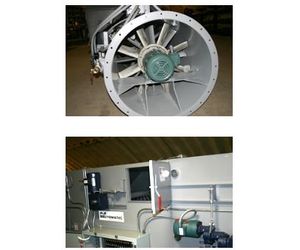
Standard Equipment (subject to change): Pre-wired electric panel with main disconnect (3-phase, high or low voltage, 50 or 60 cycle). All motors with thermo overload protection, TEFC. Hollow bore gear reducers. Thermometers. Tubular construction, carbon steel. High temperature limit safety switches. Adjustable pitch vane axial fan. Frequency drive on each conveyor drive. Course weave woven wire conveyor belt with roller rack. V-style bottom air chamber. Inlet hopper with adjustable product leveling gate. 2" to 12" of product depth. Conveyor drive roller with rubber lagging, auger idle pulley. Standard temperature designs up to 250 degrees Fahrenhei.
- 2" thick insulation
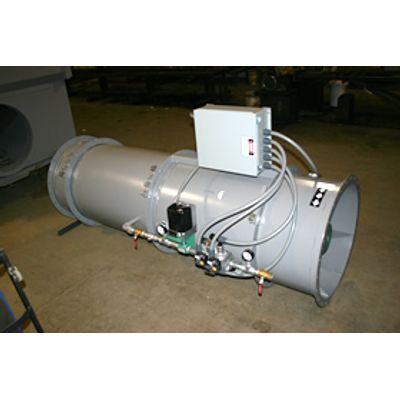
- Natural or vapor LP gas gun style burner with fuel, air mixture adjustment
- Modulating gas valve, safety valves, pressure gauges, and adjustable orifice
- Safety flame monitor, ignition transformer, and airflow switch
- Product spreaders: Oscillating tube, belt wiper, rotary beater, etc.
- Auto fines clean out systems
- Frequency drives on fan(s)
- Product discharge conveyor or auger
- UL approved electric panel, PLC integration
- Food grade construction (inside, outside, or all)
- Centrifugal fan(s)
- Fine weave conveyor belt (304SS), solid tray conveyor belt, or custom belt
- Product stirring equipment
- Alternate heat sources (steam, oil, biomass, waste, etc.)
- Removed fan and burner systems (fire safety)
- Reverse end conveyor drives with wash down area (CIP)
- Multiple doors (to customer specs, large or small)
- Fan silencers
- Cyclone systems and exhaust fans
- Rotary airlocks
- High temperature applications up to 400 degrees Fahrenheit
- Various burner design packages
- Multiple stages/passes
- Recycle heat options
Multiple-stage design is beneficial for many applications (i.e. products with high moisture content, heat sensitive products, connection of dryer with separate cooler, etc.). You can connect models together to meet your needs by combining any model in a series: parallel or stacked to make mutiple stage, multiple pass configurations. 