


- Home
- Companies
- Steve Vick International Ltd
- Products
- SteveVick - Live Gas Mains Insertion ...
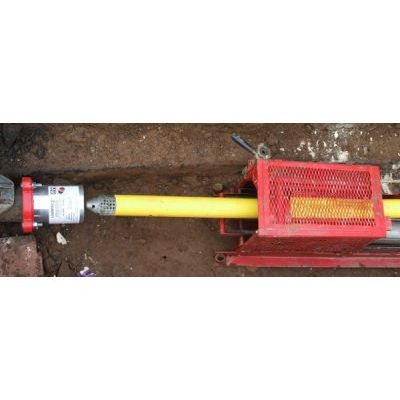
SteveVick - Live Gas Mains Insertion System
Live Gas Mains Insertion is similar to normal insertion of polyethylene pipe (PE) into an old cast iron main with one very beneficial difference. By using a special gland box, the old main is kept live throughout the insertion process and the new PE is gassed up to maintain gas supplies to customers. Once insertion is complete, the main is still kept live to supply customers via the annular space until it is operationally convenient to transfer the services to the new main. Live Mains Insertion is used for the insertion of low pressure (up to 75mbar) cast iron mains from 3” upwards and a wide range of PE/cast iron diameter combinations are possible.
- Cost savings of up to 14% compared with dead insertion
- Minimum traffic disruption–fewer excavations open at any one time
- Lower environmental impact
- Customers off gas for minimum time
- One-hit service renewal–only one purge and re-light per customer; no wasted fittings
- Services can be transferred in line with labour and customer availability
- CPs and AEs are required onsite for only short periods during insertion process
- Conforms to relevant codes of practise
- Low Pressure Mains up to 75mbar
- Previously used on Medium Pressure
- Host Main Size: 3″ to 36″ (Larger sizes can be accommodated)
- No minimum or maximum lengths
- Available for loose and tight fit sizes (e.g. 90mm/4″)
Companies using the technique have recorded cost savings of up to 14% compared with dead mains insertion and up to 38% compared with open trench replacement *.
From a health and safety aspect, a minimum number of excavations need to be open at any one time. Being a low-dig technique, the environmental impact of Live Mains Insertion is reduced. As consumers are off gas for a minimum time, the technique is also good for customer relations.
*Research in the UK has found that in the replacement of the most common pipe diameters (up to 6”/150mm), where the insertion is at least 150 metres in length, live mains insertion is more cost effective between 5% and 14%.
Statistics from the US show that when compared with open trench mains replacement, live mains insertion can save between 30% and 38% of costs.