


- Home
- Companies
- Wahaso - Water Harvesting Solutions, ...
- Products
- Wahaso - Stormwater Harvesting Systems
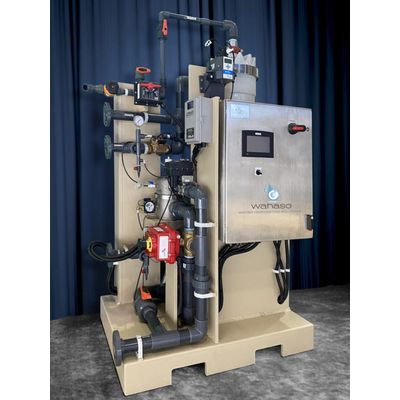
Wahaso - Stormwater Harvesting Systems
Depending on the site, stormwater detention or stormwater collection areas can be quite large and often contain contaminants such as silt, hydrocarbons and fertilizers in their stormwater harvesting system. Increasingly, communities are requiring developers to manage their stormwater runoff in order to reduce the load on the local storm system with a stormwater management system.
Wahaso’s stormwater system not only accommodates large quantities of stormwater but provides more robust treatment designed to handle difficult contaminants. The result is a system that provides a safe, treated supply of water that can be used for a variety of non-potable applications.
More and more communities are requiring developers to manage the run-off from their impermeable rooftops, hardscapes and parking areas to reduce the impact of the run-off on municipal treatment systems. This requires builders to install storage tanks that slowly release collected stormwater into surrounding waterways to protect the municipal treatment facilities from high stormwater flows.
This storage can require an investment of hundreds of thousands – or millions of dollars to filter the stormwater, remove hydrocarbons and then detain the treated water until the storm event has ended. Normally these detention systems represent a “sunk cost” from which the property owner will receive no direct benefit.
Wahaso recommends the Nutrient Separating Baffle Box (NSBB), which utilizes screening and hydrodynamic separation to capture the pollutants common in stormwater. The NSBB stores debris in a dry state, minimizing bacterial growth and nutrient leaching in the water.
The proprietary treatment train of Wahaso’s stormwater system is IAMPO 324 certified and filters the harvested water down to 0.02 microns, removing suspended solids as well as bacteria and viruses. Filtered water is sanitized using Ultraviolet (UV) and if required, chlorine, and is then sent to the end use or stored in a processed water holding tank to await re-pressurization.
- Turn a Liability into an Asset. Stormwater management often requires a detention system to hold the water for a period of time and release it slowly to the municipal storm system. Instead of releasing the water, why not retain it for reuse? The Wahaso stormwater harvesting system provides a way to collect and treat that water, providing a more sustainable and cost effective solution to stormwater management.
- Scalable. The Wahaso stormwater system can be Scaled to treat from 2,000 to 200,000 gallons per day or more.
- Low Maintenance. The system has been designed to run reliably for long intervals, with minimal maintenance required.
- Robust Controls. Wahaso’s proprietary control system is custom programmed to monitor and track all system activity.
- Integrated System Design. Wahaso’s stormwater processing skids are pre-assembled and integrated into comprehensive system designs that include all pumps, storage, filtration, sanitation and controls.
Wahaso’s stormwater system is fully scalable and able to process 2,000 – 200,000 gallons per day. Each standardized system includes the filtration and sanitation equipment. The customizable equipment includes tanks, pressurization and controls.
For more information on our stormwater harvesting systems, download the information sheets.