

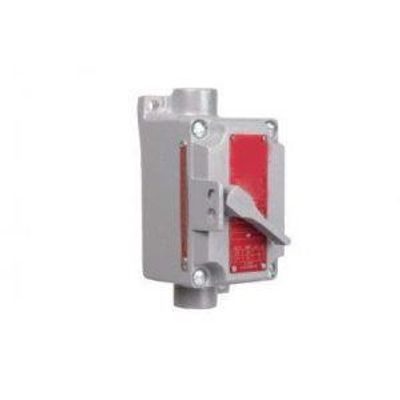
Norseman - Model CID1/CID2 -Switches
Hazardous location switches for any application.
CI D1 and CI D2 are considered hazardous areas where explosion or fire hazards exist because of flammable gases, vapors: or liquids that are part of the business operation. Under the National Fire Protection Association`s Publication 70 (NEC) and Occupational Safety and Health Administration (OSHA) defines the difference between CID1 and CID2 locations is how the gases or vapors are contained or used.
In a CID1 location (highest risk), ignitable concentrations of flammable gases or vapors may exist under normal operating conditions, or because of repair maintenance, or a leak. They also may exist because of a breakdown, or faulty operation may release ignitable concentrations of flammable gases or vapors.
In a CID2 location (moderate risk), volatile flammable liquids or gases are used but are normally confined in closed containers or closed systems. It also may be a place where ignitable concentrations of gases or vapors are prevented with positive mechanical ventilation. They only escape in the event of an accident or breakdown. Or a CID2 location may be next to a CID1 location, and the ignitable concentrations of gases or vapors might be occasionally present unless prevented with adequate positive-pressure ventilation with effective safeguards against ventilation failure.
In Unclassified locations (no risk), also known as non-hazardous or ordinary locations, these locations are determined to be neither CID1 or CID2 or any combination thereof. These are designated as a very low risk of causing an explosion. Unclassified locations on chemical and other plants are present where it is absolutely certain that the hazardous gas is diluted to a concentration below 25% of its lower flammability limit (or lower explosive limit (LEL).
Following Safety Codes & Equipment SOPs
It`s absolutely imperative that the dangers posed by volatile and flammable solvents is taken very seriously. In everyday use, under normal circumstances, the risk posed by these substances in a properly designed laboratory environment is minimal. However, when personnel are careless, extraction equipment malfunctions, is used improperly, or in the wrong environment, the situation can become deadly. The Building & Fire Codes are in place to protect persons from injury or death and prevent property loss. Though it can be stressful and seemingly oppressive at times, please remember that the building officials and Fire Marshalls enforcing these codes and SOPs are trying to protect you, your employees, and your property to the best of their ability.