


- Home
- Companies
- Environmental Group Limited (EGL)
- Products
- TAPC - Brink Mist Eliminators (BME)
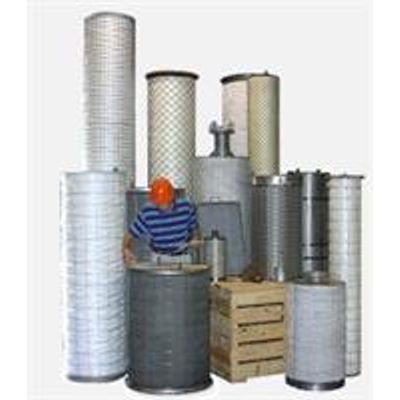
TAPC - Brink Mist Eliminators (BME)
Also known as candle filters and Brink mist eliminators, MME’s were developed by Monsanto to solve acid mist problems in sulphuric acid plants. They have since been developed to solve a range of mist problems, especially ultrafine acid and organic mists from sources such as chlorine plants, asphalt plants, sulphuric and nitric acid plants, vinyl curing operations and other applications producing condensed organic mists.
Filter elements are cleaned by a short burst of compressed air injected through a common manifold over a row of filters. In the TAPC PowerJet™ fabric filter range, the compressed air is accelerated by the PowerJet™ nozzle mounted in the blowtube, which increases the cleaning efficiency. Since the duration of the compressed air pulse is short (0.1s), it acts as a rapidly moving shock wave, traveling through the entire length of the filter element and causing the filter element surfaces to flex. This flexing of the surface breaks the dust cake, and the dislodged dust falls into a storage hopper below.The advantage of Pulse Jet filters over Shaker and Reverse Air filters is that they can be operated continuously and cleaned without interruption of flow (i.e. no module needs to be isolated from the gas flow). This is because the burst of compressed air is very small compared with the total volume of gas passing through the collector. Also, Pulse Jet dust collectors are usually not compartmentalized which allows them to operate at higher air-to-cloth ratios. In basic terms, this means that, for the same duty, they are smaller and cheaper than the other two styles.