

- Home
- Companies
- AL Gummi + Kunststofftechnik GmbH
- Products
- AL Gummi - Technical Moulded Rubber ...
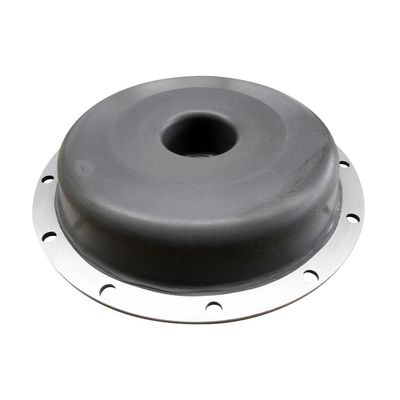
AL Gummi - Technical Moulded Rubber Parts
AL Gummi + Kunststofftechnik GmbH specializes in developing and manufacturing technical moulded rubber parts to meet specific application requirements, offering various sizes and configurations. Utilizing their decades of expertise, they adeptly create items for industries including pharmaceuticals, transport, logistics, and more. The company is known for producing high-performance rubber-metal compounds, effectively enhancing vibration damping and noise insulation. Their rubber composite parts, which primarily incorporate rubber-plastic mixtures, face unique challenges in crafting reliable materials with strong adhesion. AL Gummi employs numerous production methods such as compression and transfer moulding, allowing for tight precision in vulcanization and part formation. By combining technical know-how with a comprehensive understanding of elastomeric behavior, they ensure superior material selection and optimal production techniques tailored to client needs.
Moulded rubber parts for specific applications, in various sizes and in outstanding form and quality – that’s what the name AL Gummi stands for.
We have been manufacturing and developing high-quality rubber parts for machines and systems in a wide range of sectors and industries for over 30 years.
- Diameter or length and width, medium, temperature, pressure and movement absorption – we determine and calculate your requirements from all these factors. Either we find the optimum solution for you in our standard products or we produce them to measure.
- Hand-made production allows us maximum flexibility in material composition, dimensions and quantities. On our equipment, both single-item and series production are comparatively quick.
- With our machinery, we produce moulded rubber parts up to 1,200 millimetres in diameter.
- In addition to on-site measurements, our comprehensive service includes complete engineering, mould construction and on-site production.
Rubber moulded parts
We manufacture products for the highest demands from a wide variety of elastomers.
If special requirements are placed on material, geometry or precision, we develop and manufacture such parts according to your specifications or in close cooperation with you.
Due to our specific knowledge and experience in the design of moulded parts, we can optimally support you in your projects.
RubberMetal compounds
Rubber-metal compounds are effectively used for damping and insulating vibrations and noises as well as for elastic mounting and decoupling.
We offer a wide range of materials and hardnesses to meet your requirements. Contact us, we will help you with the implementation.
RubberComposite parts
By rubber composite parts we primarily mean rubber-plastic compounds. They are used in various applications.
The combination of different materials is a special technical challenge for development and production.
Precise preparation of the carrier materials and careful selection of optimal combinations of rubber compounds and adhesive systems guarantee an optimal result: stability, functionality and operational safety even under higher loads.
Our technicians will also be happy to discuss with you the optimal connection for your application.
Traditional handicraft and industrial manufacturing
The know-how of our employees and our various machines and systems allow us to select different production methods. This is how we find the optimal production method for your products.
Compression-Moulding / Pressing method
Compression moulding or pressing is considered a traditional process technology for the production of rubber parts. An appropriate amount of uncured rubber compound is placed in a heated vulcanising mould. The mould is then sealed under pressure in a press. Due to the press pressure and temperature, the compound softens, flows and fills the moulding cavity and vulcanises the moulded part.
Transfer-Moulding
Transfer moulding is an injection moulding process in which the rubber compound inserted in the upper part of a vulcanising mould is injected through channels into the mould cavities as the press is approached. Compared to the pure pressing process, the vulcanisation times are shortened because the rubber compound is additionally heated by the frictional heat that occurs during injection