


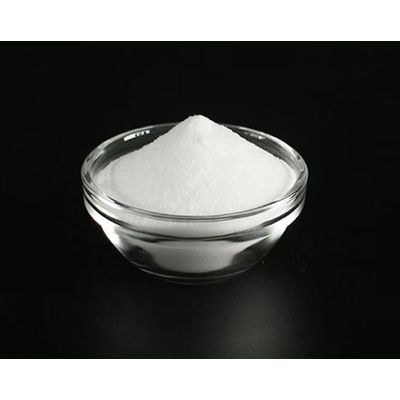
Technology - Superabsorbent Polymer (SAP) Technology
Superabsorbent polymer (SAP) is a water-absorbing polymer that can absorb and retain extremely large amounts of a liquid relative to its own mass. Water-absorbing polymers, which are classified as hydrogels when mixed, absorb aqueous solutions through hydrogen bonding with water molecules. A SAP’s ability to absorb water depends on the ionic concentration of the aqueous solution.
Types of SAP
- Sodium Polyacrylate (most common in diapers)
- Potassium Polyacrylate (used in agriculture)
- Polyacrylamide Copolymers (industrial uses)
Super Absorbent Polymers (SAPs) are highly absorbent materials widely used in various industries due to their ability to retain large amounts of liquid relative to their mass. Here are some key applications of SAP:
- Personal Hygiene Products : Baby Diapers; Adult Incontinence Products; Feminine Hygiene Products
- Agriculture & Horticulture : Water Retention in Soil; Seed Coating; Hydrogels for Plants
- Medical & Wound Care: Wound Dressings; Medical Ice Packs:
- Industrial & Construction : Water Blocking Cables; Concrete Curing; Flood Control:
- Food Packaging: Absorbent Pads
- Other Applications : Firefighting Gels; Toys & Novelty Items
Gel Polymerization
The most common technique is a process called ‘Gel Polymerization’ wherein acrylic acid, sodium hydroxide, water, cross linking agents and UV initiators are all sprayed onto a moving belt inside a long chamber with a row of high intensity UV lights. The UV radiation forces the components to react on the belt and crosslink, thereby forming the sodium polyacrylate. The mixture swells up in the chamber into a ‘wet cake’ which is passed into a mill to be ground up and then conveyed to drying equipment. The dried superabsorbent granules can be further treated with additional ‘surface’ cross-linking agents to improve performance characteristics such as absorption capacity, rate of acquisition and permeability.
- Suspension Polymerization
- Solution Polymerization
Gel Polymerization
The most common technique is a process called ‘Gel Polymerization’ wherein acrylic acid, sodium hydroxide, water, cross linking agents and UV initiators are all sprayed onto a moving belt inside a long chamber with a row of high intensity UV lights. The UV radiation forces the components to react on the belt and crosslink, thereby forming the sodium polyacrylate. The mixture swells up in the chamber into a ‘wet cake’ which is passed into a mill to be ground up and then conveyed to drying equipment. The dried superabsorbent granules can be further treated with additional ‘surface’ cross-linking agents to improve performance characteristics such as absorption capacity, rate of acquisition and permeability.
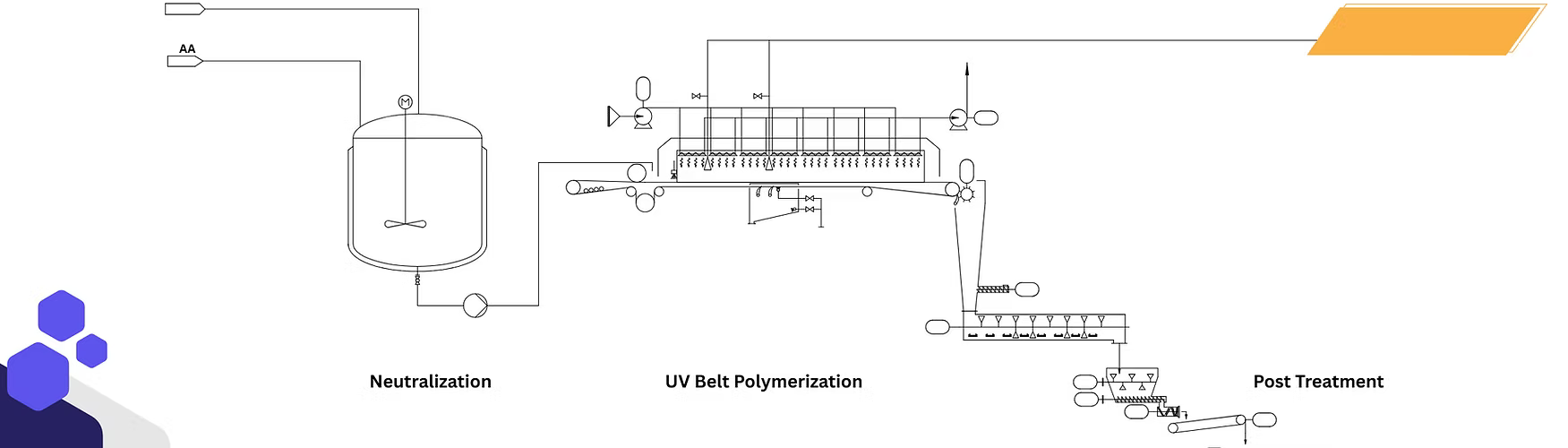
UV belt polymerization is an advanced method for producing superabsorbent polymers (SAPs), offering several advantages over traditional polymerization techniques like solution or suspension polymerization. Here are the key benefits of UV belt polymerization for SAP production:
- Energy Efficiency
- Faster Reaction Rates
- Better Control Over Polymer Properties
- Reduced Solvent Use & Eco-Friendliness