


- Home
- Companies
- Teledyne Tekmar
- Products
- Teledyne Tekmar - Model Torch - TOC ...
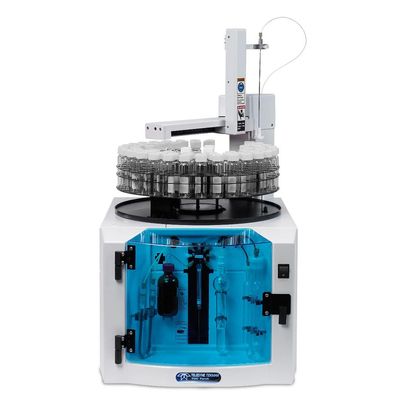
Teledyne Tekmar - Model Torch -TOC Combustion Analyzer
The Torch is considered the premium TOC combustion analyzer due to its many useful features and automated analysis processes. For example, it makes serial dilutions of stock standards to form a calibration curve and auto-dilute samples with concentrations above the calibration curve. The Torch software has built-in diagnostic and troubleshooting capabilities. For a luxury but affordable TOC combustion analyzer that you can just load and walk away, look no further than the Torch. You won`t regret it!
- The Torch utilizes a Static Pressure Concentration (SPC) for the analysis of TOC using high temperature combustion.
- Maintenance is simplified by design allowing easy access to all areas of the unit.
All of these features and competitive price positioning make this system ideal in keeping costs down and maintaining productivity in the laboratory.
NDIR PressurizationPressurized detection, or static read, is a technique used for concentrating the CO2 produced by the oxidation of the sample. The technique can be used for both qualitative and quantitative analysis.
- Built-in benchmark diagnostic check - including leak check
- Ability to program and store furnace temperatures to accommodate various methods
- Static Pressure Concentration Technology
- Intellidilution feature automatically detects samples that have exceeded the selected calibration range and dilutes it to fall within the selected range
- Multiple pre-set application ranges for analytical requirements
- Auto-calibration eliminates the need for manual standard preparation
- Detection Levels:
- Carbon 50ppb to 30,000ppm
- Easy access for maintenance of combustion tube
- Improved catalyst
- Built-in autosampler
- Increased throughput with ASM Sparge
- Auto-blanking
- Mass Flow Controller
- Optional vial mixing capabilities
- EPA 415.1, 415.3 and 9060A,
- Standard Method 5310B,
- EP 2.2.44, ISO 8245,
- EN 1484,
- USP 643 (Chapter 24),
- ASTM D2579,
- prENV 13370,
- AOAC 973.47