


- Home
- Companies
- Telonics, Inc.
- Products
- Telonics - Model MOD and LB series - ...
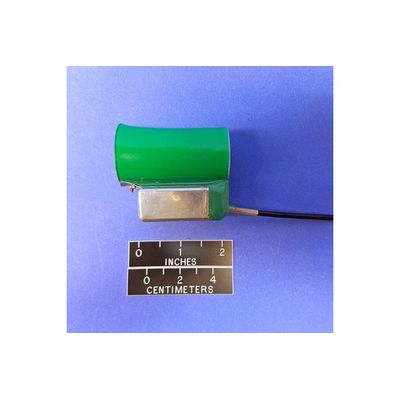
Telonics - Model MOD and LB series -VHF Transmitter Configurations for Birds
Telonics VHF transmitters designed for avian applications on larger birds group into two categories based on packaging and electronic technologies, and provide options for instrumenting birds weighing down to ~500 grams. The models described below can be provided with various attachment options. Researchers can choose the most effective mounting technique for specific species as discussed further below and at the time of order. Some attachment options add weight to what is indicated below.
- MOD and LB models use either Telonics MK-11 or MK-12, both of which are microprocessor controlled transmitters which can be programmed using Telonics Product Programmer (TPP). The MK-11 has synthesized frequencies programmed through TPP; the MK-12 is crystal controlled. The MK-12 is most frequently used in smaller configurations because it provides longer life particularly at temperatures of ~0°C or below.
- Customized transmission duty cycling (on/off periods) is available, including seasonal cycles which can vary throughout the life of the transmitter.
- All timing is controlled by a Real-Time-Clock, which allows seasons to start and end on any desired calendar date and time and sensor data to be accurately time stamped.
- MS6 mortality-motion option available at no additional charge.
- Other sensor options are available, including the MA activity option, MS4 temperature option, and MS5 temperature-triggered mortality option (sensor descriptions are provided below). Data collection from these sensors is user programmable with Telonics Product Programmer (TPP).
- Data Logging Option 350 is available to store mortality, activity, and/or temperature data in transmitter memory for download if the transmitter can be recovered.
- Transmission power levels are selectable to accommodate either greater range or greater life (4 levels with MK-12 electronics, and 3 with MK-11).
- Most configurations can be used on aquatic species as they are able to withstand the hydrostatic pressures experienced during an underwater dive of less than 100ft. Please call for details for applications on deep-diving birds.
Various mounting techniques are used on birds, often with specific methods preferred for specific species. As examples, gluing is often used on passerines; necklaces on grouse; backpack harnesses on raptors, turkeys, and ducks; neck bands on geese; and leg bands on cranes. The selection of a mounting technique has both biological implications and transmitter performance issues that must be considered. Ideally, the attachment should have as little impact on the animal as possible. In addition, considerations such as the type of transmitting antenna and how it is positioned will affect longevity of the antenna on the animal. The preferred mounting technique for specific species sometimes changes as the influence of techniques become better understood. We recommend that researchers check the literature and consult with colleagues on the suitability of a particular mounting technique for a specific species. In some cases, implant technology is a viable option to external mounting techniques.
Backpack Harnesses
Backpack harnesses are designed to position the transmitter on the back of the bird between the wings with the antenna extending down the back towards or past the tail. The loops of the harnesses generally work into the feathers and may be secured on the breast. In some cases the loops extend over the head and tail of the bird, while in other cases they fit over the wings like the straps on a person’s backpack. Various harness materials have been used including leather, coated wire, elastics or bungee cord, and Teflon ribbon. The following backpack harness materials are available from Telonics:
- MT-000555-001 Teflon ribbon harness material for small-bodied birds. Width: 0.25" (0.64 cm) Weight: 1.5g/foot.
- MT-000555-002 Teflon ribbon harness material for large-bodied birds. Width: 0.5" (1.3 cm). Weight: 3.0g/foot.
Aprons, Bibs, and Ponchos
Aprons, bibs, and ponchos are designed to mount the transmitting subsystem on flat durable material such as Herculite. A hole is cut into the material, which the bird`s head fits through, and the bird wears the system like an apron or bib. The antenna exits alongside of the bird’s neck towards their back. This kind of mount is often used with Gallinaceous birds that be adversely impacted by a backpack harness. The antenna is dressed along the material and exits past the neck and then drapes over the back of the bird.
Necklaces
Necklaces are similar to apron mounts; however, the material used makes the final assembly more closely resemble a collar. In general, a necklace holds the transmitter closer to the neck as compared to an apron mount.
Patagial Mounts
Patagial mounts position the transmitter on the wing of the bird. This technique is typically used on large, soaring birds such as vultures. Mounting may involve the transmitter being attached to a strip of material that is wrapped around the leading edge of the wing and secured, or the mounting mechanism may pierce through the patagium. In either case the transmitter typically positioned on the dorsal surface of the wing and the antenna is oriented parallel to the primary feathers.
Neckbands
Transmitters can be mounted on plastic neck bands, as are sometimes used to color mark and number waterfowl. The bands are coiled and flex open to fit around the neck. Typically a portion of the transmitting antenna is glued to the band and the remainder extends off the band. Telonics can mount transmitters on user-supplied bands.
Legbands
Leg bands are similar to neckbands, but they tend to be smaller in diameter and are often used to mark long-legged wading birds. They are typically mounted on the upper leg and rest on the knee. Weight is important because units that are too large can cause the band to wear against the skin of the knee joint. Any portion of exposed antenna is easily accessible by the bird and can be subject to preening and possible damage. The positioning of the antenna also results in it sometimes being submerged and thus negatively impacting system range. Telonics can mount transmitters on user-supplied bands.
Tail Mounts
Tail mounts involve directly attaching the transmitter to one or two deck feathers of the bird`s tail. This technique has the advantage of using the natural molt of the bird`s tail feathers as a breakaway mechanism. The units must be placed on hard pinned feathers and the antenna is often tied with surgical suture to the feather shaft. The timing of the attachment relative to the molt is an important consideration. Although the double feather mount is more stable and distributes the weight of the configuration over two feathers, one feather will likely molt before the other leaving the transmitter dangling from the remaining feather until it breaks or pulls out.
Glue
Gluing the unit directly to the skin of the bird involves the use of cyanoacrylate glues (e.g. Super Glue). This technique minimizes the weight of the overall transmitter configuration because there are no additional materials like harnesses, collars, or bands; however, gluing is normally only suitable for short-term attachments and are thus primarily used with small transmitters with short operational lives.
Implantation
Implantation is a technique used to place the transmitting unit a body cavity or under the skin of the bird. In such cases, the transmitter is coated in a physiological wax to minimize immunological reactions. This technique has the advantage that the unit is within the body contour, and there is no additional weight contributed by an attachment device. In species that do not wear external devices well, this may be the only practical means to instrument the animal.