

- Home
- Companies
- Polymer Characterization, S.A
- Products
- Polymer Char - Model TREF - Temperature ...
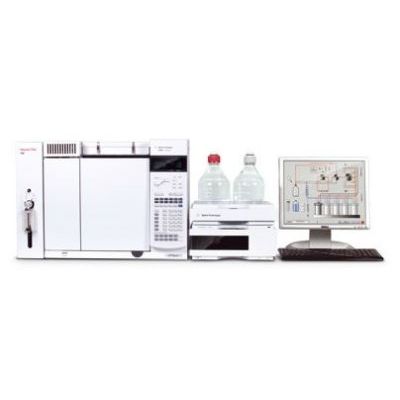
Polymer Char - Model TREF -Temperature Rising Elution Fractionation
Temperature Rising Elution Fractionation is the most comprehensive technique for the characterization of the Chemical Composition Distribution (CCD) in Polyolefins and Polymer Char’s TREF is the first fully automated analytical instrument that performs this technique.
The virtual instrumentation software controls the full process, so no manpower is required. Samples are put into the vessels and the instrument performs the solvent filling, dissolution, column loading, and temperature cycles combined with pump flow control. At the end, vessels and lines are cleaned and ready to analyze more samples.
The concentration of the sample is measured by an infrared detector (Polymer Char’s IR4), which can also offer information about comonomer content if a composition sensor is added. More information can be obtained by adding a Viscometer detector.
TREF can be converted into a CRYSTAF-TREF combined system capable of running both techniques by using the same hardware. Each technique can provide complementary information on the CCD in some complex resins.
- Five crystallization vessels to analyze up to 5 samples with no supervision required.
- Analysis time of 6 hours per sample under standard conditions.
- Fully automated process with no solvent handling, including a final cleaning of the lines and vessels.
- No manpower and no solvents handling along the whole process.
- Low solvent consumption.
- Infrared Detector IR4 incorporated, with the possibility of adding a composition sensor for methyls or carbonyls measurement.
- Virtual Instrumentation software with whole control of the instrument hardware and process.
- Possibility of calibrating the instrument to obtain the CCD curve in comonomer content units.
- Possibility of subambient capability (down to -20ºC) for low crystallinity samples.
- Possibility of remote control connection to allow a fast diagnosis.
- Possibility of adding a Viscometer detector.
- Easily convertible to a CRYSTAF-TREF combined instrument.