


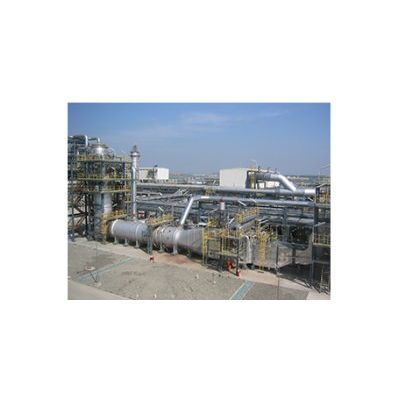
PCC - Thermal Oxidizers
Thermal oxidizers are used to reduce air pollution emissions from a variety of industrial processes by treating the polluted exhaust gas prior to discharging the exhaust gas to atmosphere. To destroy the contaminants in a polluted exhaust gas, a thermal oxidizer uses the principle of `thermal oxidation`. Thermal oxidation is a combustion process in which the contaminants within the polluted exhaust gas react with oxygen in a temperature controlled environment to create an oxidation reaction. This chemical reaction is what reduces the pollutants in the exhaust gas to an innocuous emission (CO2, water vapor, and heat) to atmosphere.
PCC Thermal Oxidizers:
PCC supplies two types of the Thermal Oxidizers. Direct fired thermal oxidizer (some times known as an afterburner), and recuperative thermal oxidizers. Both of these thermal oxidizers operate on the same principle mentioned above which is thermally promoting an oxidation reaction between the pollutant compound in the exhaust gas and the available oxygen.
Direct Fired Thermal Oxidizer (Afterburner) –
A direct fired thermal oxidizer or afterburner is the simplest type of thermal oxidizer. This type of thermal oxidizer does not include any type of heat recovery system to recover a portion of the waste heat generated by the combustion process. As shown in Figure 1, a direct fired thermal oxidizer system typically includes a burner, combustion chamber, blower, air/fuel train, instrumentation & controls, and an exhaust stack.
Typically a direct fired thermal oxidizer is less expensive than other types of thermal oxidizers. However, this type of thermal oxidizer will have higher operating cost (fuel use) for waste streams that are endothermic.
Recuperative Thermal Oxidizer (Afterburner) –
A recuperative thermal oxidizer is basically a direct fired thermal oxidizer with heat recovery added at the discharge end of the combustion chamber. This type of thermal oxidizer system incorporates down stream heat recovery equipment such as gas to gas heat exchangers, waste heat recovery boilers, gas to liquid heat exchangers, etc… to maximize the thermal oxidizer system overall efficiency. The down stream heat recovery equipment utilizes the available heat produced within the thermal oxidizer combustion chamber to reduce auxiliary fuel consumption, to produce steam, to heat a process air stream, or to heat a liquid stream. A recuperative thermal oxidizer system can have a single heat recovery device as shown in Figure 2 or multiple heat recovery devices as shown in Figure 3.
In addition to the recuperative thermal oxidizer systems shown above, a recuperative thermal oxidizer can incorporate combustion air preheat to conserve fuel or other heat recover equipment such as hot oil heater, hot water economizer, or asphalt heater.
Recuperative thermal oxidizers can be used to treat multiple gaseous and liquid waste streams that are endothermic and/or exothermic.