


- Home
- Companies
- SSI Electronics, Inc. | Medical Devices ...
- Products
- SSI - Touch Screen System
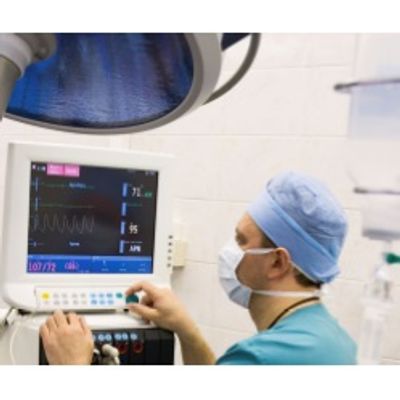
SSI - Touch Screen System
Since being invented in the early 1970s, touch screen technology has experienced slow but steady embracement by consumer and industrial product designers. The popularity of touch screens has recently experienced unprecedented growth, as they have become the standard input method for smartphones as well as computer tablets. As more and more users have embraced the light touch characteristics of touch screens, many other industries have been exploring whether this technology is well suited for their products. Like all technology, there are many tradeoffs associated with implementing touch screens into your products. This design guide has been compiled to help engineers understand the basic elements of touch screen technology as well as the many respective design considerations.
Touch Sensor
The touch screen component acts as the device for which the user actually touches. The touch screen most always utilizes a layer of clear, rigid material such as glass or plastic sheet. Additionally, the touch screen utilizes a clear conductive layer that interfaces to the touch sensing electronics.
Display
These full color displays are often either of the LCD or TFT variety. A multitude of off the shelf displays are commercially available. In some applications, custom displays are utilized.
Controller
The controller is a set of electronic components that translate the ‘message’ sent by the touch sensor. The controller interprets the location for which the touch sensor was pushed. These components are programmable and among other things control the sensitivity of the sensor.
Software Driver
Depending on the system for which the touch screen will be used, likely software will need to be configured to ensure that the touch sensor and controller interfaces properly with the operating system of the equipment.
Resistive
Resistive Touch Panels rely on pressure to create an electrical current change between conductive planes of material. The top surface is typically Polyester (PET) and the second conductive layer is glass. Both layers are coated with Indium Tin Oxide (ITO) and separated by a spacer material. This type of touch panel has high resistance to many liquids. The two layers of conductive ITO are usually aligned in an X-Y matrix and are made in a 4, 5, 6, 7, or 8 wire configuration. Resistive touch panels are typically lowest in cost. The disadvantage is due to having to press down, the PET is prone to scratching and/or puncture.
Capacitive
There are two types of Capacitive touch panels, Surface Capacitance and Projected Capacitance. Both consist of an insulator similar to glass and a conductive coating – ITO. The body is the conductor, therefore creating a change in the electrostatic field of the touch panel. This type of touch panel is very durable due to a hard coating on the first surface of the top material.
Surface Capacitance touch panels have a glass insulator sandwiched between two ITO layers. The change in capacitance is measured relative to the four corners of the part. Projected Capacitance touch panels have a glass first surface, two conductive planes separated by a spacer and a backing film or glass layer. The X-Y matrix of the conductive planes allow for a more accurate sensing system. It also allows for multiple touches to be detected at the same time.
Surface Acoustic Wave
Surface Acoustic Wave touch panels utilize ultrasonic waves that spread over the first surface of the touch panel. When the panel is touched, the wave is interrupted. Two sets of transducers are used to sense the location of this interruption. Surface Acoustic Wave touch panels allow for the best display of graphics but are often the most costly touch panel option.
Infrared
Infrared touch panels consist of an array of X-Y photodetectors and IR LED pairs aligned around the edges of the screen. The horizontal and vertical LED beams are disrupted when a touch occurs allowing the sensors to determine the position of the touch with high accuracy. This system does not require a bare finger for conductivity as other types do, allowing for a wide variety of input devices. The clarity of Infrared touch panels is very clear, but sensitive to other contaminates that can be interpreted as a touch.