


C-Therm Technologies Ltd.
- Home
- Companies
- C-Therm Technologies Ltd.
- Products
- C-Therm - Transient Plane Source (TPS)
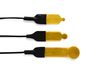
C-Therm - Transient Plane Source (TPS)
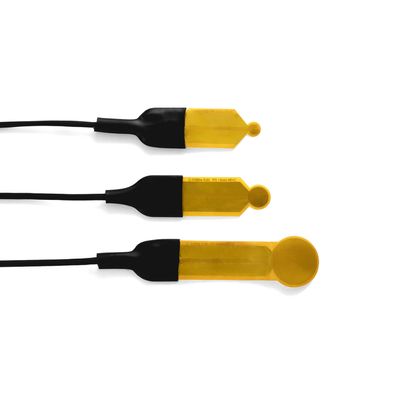
The TPS method employs a double-sided hot disc sensor to simultaneously determine thermal conductivity, thermal diffusivity and specific heat capacity of materials from a single measurement. TPS provides the user the greatest flexibility and control over experimental parameters and avoids the use of any contact agents. Recommended for more experienced users.
Most popular related searches
Check the full content and details here.
Principles of Operation
The C-Therm Trident Thermal Conductivity Analyzer Flex configuration employs the Transient Plane Source (TPS) technique in characterizing the thermal conductivity, thermal diffusivity and specific heat capacity of materials, conforming to ISO standard 22007-2.
How It Works
- Power is applied to the sensor`s spiral heating element, providing a small amount of heat. This results in a rise in temperature at the interface between the sensor and the sample, which induces a voltage change across the sensor element.
- The results from the initial scouting run are used to estimate test time, power level, and ideal sensor size. The experiment is run with the new parameters. This may need to be repeated until the correct parameters are identified. Guidance is provided in the ISO 22007-2.2.
- The test result is a plot of temperature vs time.
- The results are analyzed with an iterative solving procedure to generate thermal property data such as thermal diffusivity and thermal conductivity.