


- Home
- Companies
- Process Instruments (UK) Ltd. (Pi)
- Products
- TurbSense® - Turbidity Monitoring
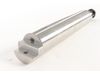
TurbSense® - Turbidity Monitoring
TurbSense® Turbidity Meters from Pi provide precise, real-time measurement of turbidity and suspended solids in water using nephelometric detection based on ISO 7027 standards. These sensors employ advanced LED optical technology to deliver high stability, accuracy, and minimal maintenance requirements. A key innovation of the TurbSense® system is its ability to dynamically adjust light intensity, enabling consistent turbidity measurements regardless of ambient light interference or electronic drift. This adaptive approach enhances measurement reliability and performance in a wide range of environmental conditions. The best part? The TurbSense® never needs to be calibrated as any drift is compensated for. However, if needed for compliance purposes, calibration can be done in one of three ways.The TurbSense® range of Turbidity/Suspended Solids analysers is made up of an ISO 7027 compliant Turbidity/Suspended Solids
Meter covering the range of 0.01-1000 NTU (0.01-2000mg/l depending on the sample).
Key benefits include:
• Extremely low total cost of ownership
• Single point calibration (patented) - no 'zero' required
• Autoclean solid state optical sensor - no moving parts
• Suitable for all potable, waste and most process waters
• Up to 1 year between calibration
• From 0.01-1000 NTU (0.01-2000 mg/l, application dependent)
• Stable and reliable - excellent process control
• Debubbling options available
The TurbSense® sensors are available with different controllers giving you the same great performance with different
communication, display, and control options. With the TurbSense® range of turbidity meters, you get great stability, reliability and
ease of use coupled with great resolution and limits of detection. Combine this with the simplicity of a single point calibration and
the TurbSense® is a joy to use. Calibration is made with liquid standards or the solid Secondary Standards from Pi.
Anywhere where the measurement range is 0.04-1000 NTU (approx 0-2000 mg/l, application dependent) is a suitable application for the TurbSense®.
Traditional turbidity meter applications where the TurbSense® is particularly suited:
- Raw water inlet
- Settled water turbidity
- Final water turbidity
- Waste water effluent turbidity
- Fire hydrant monitoring
- Swimming pool clarity monitoring
The TurbSense® determines true turbidity and/or suspended solids in water, using a nephelometric measurement of scattered light in accordance with ISO 7027. The TurbSense® sensor uses lifetime-based optical technology to provide an extremely stable, accurate, low maintenance sensor, with no moving parts and no consumables.
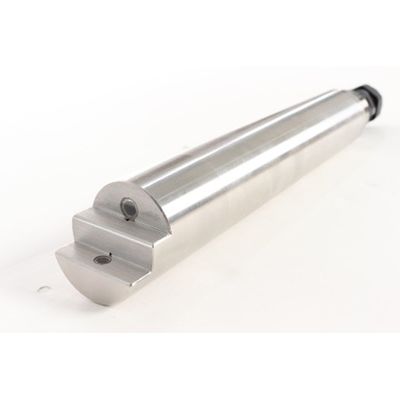
Each probe is equipped with a light source, a side detector for the measurement of scattered light from the sample and a reference detector for monitoring the light output. The light source is a long-life IR LED emitter. This configuration allows accurate and reliable measurements of turbidity and suspended solids to be made using the patented Mutolux® method. Reliable calibration can be carried our using a single calibration with no need for a 'zero'.
The probes are constructed of stainles steel and sapphire so can withstand demanding operating enviroments. An AutoClean system can be included to keep the optical surfaces clean, thereby reducing maintenance to a potential 'maintenance free'.
As with all turbidity instruments, bubbles can interfere. Pi has developed several methods of removing bubbles including using a pressure flow cell, the AutoClean function, and a debubbler cell. Whatever the source of bubbles, the TurbSense® can come equipped to handle them.
To keep the sensor clean, the TurbSense® is fitted with cleaning nozzles. These can be used to clean the optical windows with a jet of water. This cleaning procedure can be automated to carry out the cleaning at predefined intervals.
Due to the Mutolux® technology, calibration is never required as any drift is compensated for, however, if required for compliance purposes calibration can be done in one of three ways;
- Take a reading of the water with another method and enter the value into the analyser
- Put the TurbSense® sensor into our black polyethylene calibration pot filled with 0.5l of standard (typically 20NTU)
- Use a secondary standard from Pi
The analyser calibrates the sensor by a procedure that reduces the light output through four stages, takng measurements at each. This process provides a very accurate and reliable zero and span without the requirement to use a '0' NTU sample.