

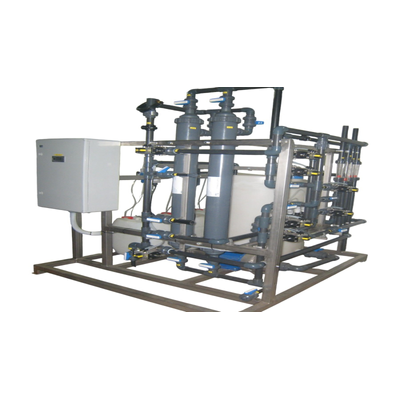
EPA CEVRE - Ultrafiltration System
Ultrafiltration (UF) is a pressure-driven membrane separation technology used to purify water. These systems use a porous membrane to physically remove suspended solids, viruses, bacteria, colloids, and other large molecules from water.
How does it work?
At the heart of an ultrafiltration system is a membrane. This membrane has very small pores, measuring just a few nanometres in size. The water to be purified is forced towards the surface of this membrane by a pump. Smaller molecules in the water (such as water, dissolved minerals and ions) pass through these pores, while larger contaminants remain on the surface of the membrane. This produces clean water that is free of contaminants.
What are the advantages of ultrafiltration?
- It removes over 99.9% of viruses and bacteria from the water, thereby improving its biological quality.
- It operates at lower pressure compared to other membrane technologies such as reverse osmosis, thereby reducing energy consumption. In most cases, it reduces or completely eliminates the need for chemical disinfection.
- It preserves the mineral composition of the water by allowing beneficial minerals (such as calcium and magnesium) to pass through.
- The wastewater ratio is lower than that of some other technologies.
Some of the most common applications include:
- Used to obtain safe drinking water in homes and residential buildings.
- Used in the pre-treatment stage for the reuse of wastewater in industrial facilities or municipalities.
- Used in the purification and clarification of products such as fruit juice and milk.
- Preferred for sterile water production and molecular separation processes.
Ultrafiltration offers a reliable and effective water treatment solution for both domestic and industrial scales.