


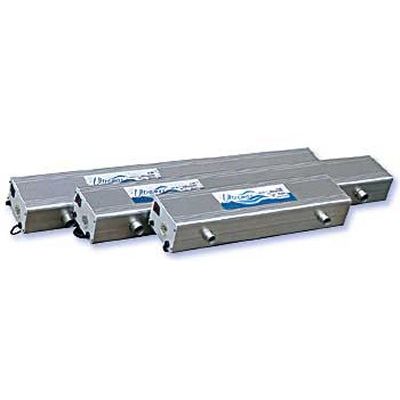
ULTRAMAX - Model C and S Series -Ultraviolet Water Sterilization Systems
Sterilization: It is the process of killing microorganisms found in water and air by destroying their DNA structure. In water treatment, sterilization can be done in many different ways. However, ultraviolet ray sterilization is the only system that has no side effects as it doesn`t require any chemicals. Today, result of experiments confirm that rays in UV-C band with 254 nm wavelength kill microorganisms by destroying their DNA structure. UV-C rays are produced by special fluorescent type tubes made of quartz glass and filled with mercury vapour.
ULTRAMAX sterilization systems obtain sterilization using special ray tubes that emit high dozage UV-C rays to kill bacterias, viruses and microorganisms in water by 99.9%.
Reactor chamber is made of 304 quality stainless stee to prevent direct contact to the eyes and the skin and to meet the food norms. A special quartz cover that permeates UV-C rays at the highest rate is used to isolate the ray tubes inside the chamber from water.
ULTRAMAX Ultraviolet Sterilization Systems are used in drinkable water treatment units, hospitals, restaurants, bottling plants, food industry, fish farms, pharmaceutical, agriculture, stockbreeding, electronics industry and in every other industries where sterilization is of highest importance.
With the ULTRAMAX system having a 99.9% of bacteria killing effect, sterilization is obtained in minimum contact period while no harmful byproduct and chemical reaction occurs. Besides, the assembly and the use of UV sterilization systems are so easy and the operation costs are so low.
It is recommended to use a 5µ or a less sensitive filtration in the access to the system. So that;
- This enables the reduction in the turbidity and increase in optical permeability.
- This avoids the presence of bacterias hidden inside the particles that may pass without being exposed to UV rays and not killed or sticking onto the quartz glass to reduce the UV permeability and thus the system efficiency.