

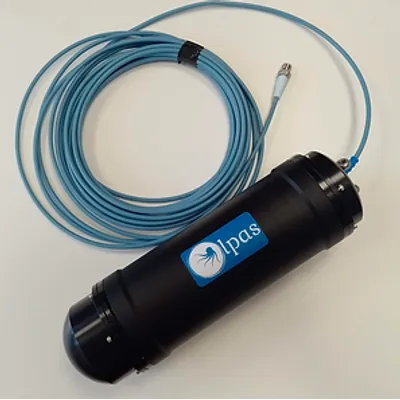
Olpas - Model OBO-IWAA-001 -Ultrasound Dry Solids Sensor
Dry Solids / Dry Matter sensor for Iron Sludge / Iron Water.
Advantages compared to optical sensors
-
The high absorption of iron sludge interferes interferes with the transmission of light, making it difficulet for optical sensors to optain accurate readings
-
Iron sludge can be highly opaque, which makes it unsuitable for optical measurement technology
-
Olpas sensors are not sensitive to changes in fluid colour
-
Olpas sensors are not sensitive to solids form and structure
-
Reduced sensor fouling: Iron sludge can cause fouling of the optical sensor surfaces. The buildup of sludge on the sensor can obstruct the light path and require frequent cleaning and maintenance to ensure accurate measurements; which is not needed for the Olpas Ultrasound Measurements.
Advantages compared to microwave sensors
-
The conductive nature and dielectric variability of iron sludge heavily distort the sensor readings and reduce measurement accuracy.
-
No need for recalibration every 7 days
-
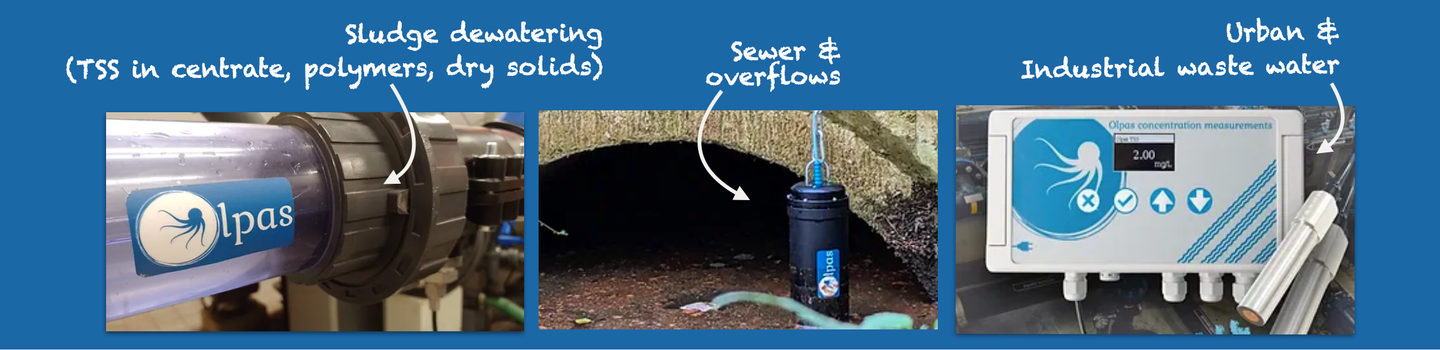
The Olpas Tentacle sensor can be place both in the basin or silo or inline
Measurement Principle:
Ultrasound measurement
Measuring Range: Between 2 %DS and 30 %DS
Accuracy: [Contact us for more information regarding your specific measurement]
Independence/insensitive to:
Fluid colour and fluid velocity
Solids form and structure
Suitable for measurements in Iron Water (cfr. "Waterijzer", iron sludge, ferric (hydr)oxide)
Standard maintenance
Cleaning with a cloth
Frequency depending on installation specifications and environment
[Get in touch for more information and to discuss your specific requirement]
Yearly maintenance
Thorough inspection and calibration checkup (45 min)
Delivered with standard calibration between 2% - 30%DS
Scaling factor and offset can be set.
The innovative Olpas measurement technology allows measurement of 2 to 30 %DS with an accuracy of up to 0,1% (absolute).