


- Home
- Companies
- Schoonover Inc
- Products
- Schoonover - Model TLD 500 - ...
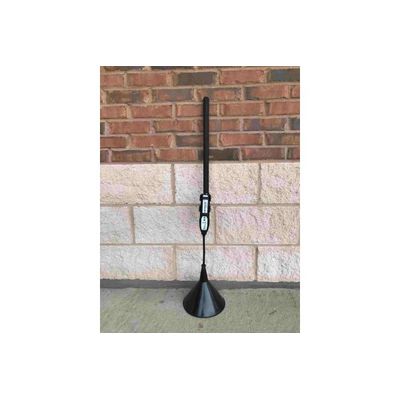
Schoonover - Model TLD 500 -Underground Pipe Leak Detector
The Hydro-Lok Subsurface Leak Detector with the highest sensitivity and lowest cost. Finding and locating subsurface leaks in underground transmission lines and pipes can be a long and expensive task. With the development of hydrogen leak detectors, you now have a low cost tracer gas solution for pinpointing those hard-to-find leak locations. Hydrogen/Nitrogen Mixture (non-flammable with 5% H2) is a very low cost abundant gas mixture. The mixture is commercially available throughout the USA. Hydrogen is an extremely small, high energy molecule that is very difficult to contain. Thus, when coming out of a pipe or line, it uses that energy to escape to the atmosphere where our Hydro-Lok Detection System can precisely detect the underground leak location.
- Hydrogen is a very high energy gas and a small molecule
- Background of hydrogen in air is extremely low, thereby providing good leak resolution
- Low cost gas that is abundantly available and can be created
- Hydrogen sensor offers great durability and robustness
- Sensor while very sensitive to hydrogen is relatively inexpensive
- Hydrogen Sensor- Can detect down to the single digit ppm’s of 5/95 tracer gas
- High Pressure Hydrogen Regulator- With Proper hydrogen fitting
- 50 ft. Connection Line with Quick Connect Fittings
- Portable Collector with 6″ Bulb to Trap Hydrogen Escaping the Ground
- Cylinder of 5%H2/95N2 Gas- 40 cu.ft- (optional)
- Isolate the underground line so that the hydrogen tracer gas mixture can be released into the pipe.
- Determine the depth the pipe is below the ground and the type/density of the underground soil/material.
- If the pipe is 2 ft. underground, it may only take 30 minutes for the tracer gas to surface. If it is much deeper and the material is concrete, the period could be as long as overnight.
- Inject the hydrogen tracer gas into the line pressurizing as much as possible without damaging any component in the piping system. Pressure is a major factor in leak rate, but keep in mind that leaking water lines expel a lot of tracer gas.
- Once you feel the tracer gas has surfaced, walk the line of the pipe, probing every foot or so until a leak is detected.
- Measure the leak rate in the area where indicated closely and determine the point of highest reading.
- The leak should be located within a 3 foot circle of where the highest leak rate is indicated.