

- Home
- Companies
- MTE Instruments
- Products
- MTE - Underwater Cabled Observatories ...
MTE - Underwater Cabled Observatories for Marine Environment Monitoring
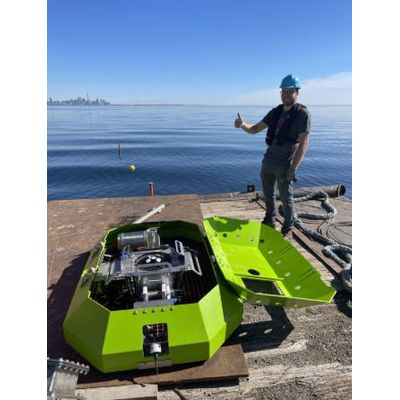
Underwater cabled observatories represent a sophisticated technological solution designed for the continuous and precise monitoring of maritime environments. These observatories consist of multiple interconnected modules integrated via a robust wired network, capable of collecting, analyzing, and transmitting oceanographic data in real-time. The infrastructure is engineered to withstand corrosion and high-pressure conditions while remaining anchored in place. Equipped with diverse sensor arrays, these observatories monitor a range of parameters including water temperature, salinity, ocean currents, turbidity, depth, and essential chemical properties like dissolved oxygen, pH, and CO2 levels. Employing high-speed underwater cables facilitates real-time data transmission, with wireless features further enhancing flexibility. These systems are vital in applications ranging from scientific exploration and marine resource management to natural disaster prevention and port surveillance, contributing significantly to comprehensive environmental protection efforts.
An underwater observatory is an advanced platform for continuously monitoring marine environments. It consists of interconnected modules via a wired network to collect and transmit data in real time. Its robust structure and corrosion resistance withstands high pressures and is equipped with anchoring systems to maintain a fixed position.
Our cabled observatories provide an advanced solution for continuous monitoring of submarine environments. They collect and transmit real-time data, offering a detailed view of ocean conditions through state-of-the-art sensors and reliable technologies.
Ideal for scientific research, marine resource management, and industrial applications, our systems ensure high-quality data and exceptional durability, even in extreme conditions.
The technical specifications of a wired underwater observatory vary significantly depending on its type and specific purpose. Observatories can be designed for specific missions such as environmental monitoring, studying ocean currents, seismic detection, or marine biodiversity research.
Thus, the technical specifications of wired underwater observatories are highly adaptable and customized to meet the specific needs of each scientific or monitoring project.
Underwater cabled observatories are advanced technological platforms for continuous and accurate monitoring of marine environments. They consist of interconnected modules via a wired network, allowing for the collection, analysis, and transmission of data in real-time. The main platform, resistant to corrosion and high pressures, is anchored to maintain its position.
Each observatory is equipped with specific sensors according to needs: water temperature, salinity, ocean currents (ADCP), turbidity, depth, and chemical parameters such as dissolved oxygen, pH, and CO2. Data is transmitted in real-time via high-speed underwater cables, with wireless options for added flexibility.
These observatories ensure continuous environmental monitoring, collecting data 24/7 to analyze ocean conditions and detect climate changes. They are used for marine resource management, ecosystem monitoring, natural disaster prevention, port surveillance, and drinking water intake monitoring, and they support scientific research in oceanography. Essential for understanding and protecting our water bodies, they offer:
- Continuous monitoring 24/7
- Integration of multiple sensors for comprehensive analysis
- Real-time data transmission via underwater cables
- Applications in scientific research, environmental monitoring, and maritime infrastructure projects.