


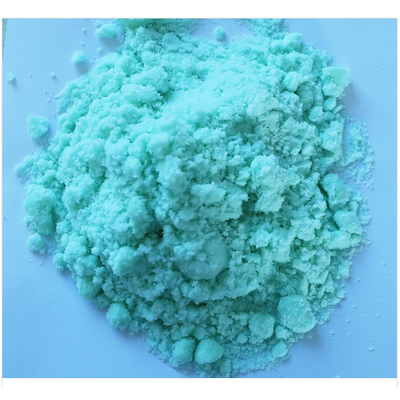
Unikem - Ferrous Sulfate
Ferrous sulfate heptahydrate is an inorganic compound with the chemical formula FeSO4, also known as blue-green heptahydrate FeSO4 · 7H2O. Anhydrous ferrous sulfate is a white powder, and the particles containing crystal water are light green crystal particles.
Ferrous sulfate heptahydrate is an inorganic compound with the chemical formula FeSO4, also known as blue-green heptahydrate FeSO4 · 7H2O. Anhydrous ferrous sulfate is a white powder, and the particles containing crystal water are light green crystal particles, commonly known as "green alum". Ferrous sulfate heptahydrate has a relative density of 1.898/cm3, a melting point of 64 ℃, is soluble in water, and the aqueous solution is light green. Insoluble in alcohol. Corrosive, easily absorbs moisture in humid air, and oxidizes into yellow or rust color by air. It can weather in dry air and turn into white powder on the surface. At 300 ℃, it is anhydrous and decomposes as the temperature continues to rise.
Medicinal Applications
Ferrous sulfate has significant medicinal uses, particularly for addressing iron deficiency, the most prevalent nutritional deficiency in the United States. Groups such as athletes, young women, vegetarians, and older adults are especially prone to this condition. Alongside other iron compounds, ferrous sulfate is utilized to fortify foods and treat conditions like anemia or iron deficiency caused by pregnancy. Iron plays a vital role in enabling blood to transport oxygen throughout the body.
Colorant Applications
Ferrous sulfate has long been valued as a colorant. Historically, it was a key ingredient in the production of iron gall ink, widely used from the Middle Ages through the 18th century. Tests on ancient documents, such as the Lachish letters (c. 588–586 BCE), suggest the use of ferrous sulfate in their ink, potentially combined with oak galls and copperas.
This compound has also been used as a mordant in wool dyeing and in the creation of harewood, a decorative wood used in marquetry and parquetry since the 17th century.
In the 18th and 19th centuries, ferrous sulfate was integral to the "china blue" indigo dyeing process, which involved reducing indigo in ferrous sulfate baths to create intricate designs, though it was less effective at producing deep hues.
Today, ferrous sulfate remains a component in fabric and food colorants. It combines with various materials to produce specific colors:
-
Pomegranate: Dark olive green
-
Madder: Deep grayish purple
-
Tannin: Grayed purple
-
Chestnut: Medium gray
-
Cutch: Rich chocolate brown
Plant Growth Enhancer
Ferrous sulfate serves as a soil amendment to lower soil pH, making nutrients more accessible to plants. In horticulture, it is used to treat iron chlorosis, a condition that causes yellowing of plant leaves due to iron deficiency. While it acts slower than ferric EDTA, its effects are longer-lasting. It is commonly mixed with compost to provide a sustained nutrient source and is also used as a lawn conditioner and moss killer.
Wastewater Treatment
Ferrous sulfate is widely used in wastewater treatment due to its efficiency as a coagulant. It is effective in clarifying water and acts as a sludge dewatering agent, aiding in the removal of:
-
Total Suspended Solids (TSS): Includes organic and inorganic matter such as sand, grit, and decaying materials.
-
Fats, Oils, and Grease (FOG): Common in food and dairy industry waste, these materials are known to block pipes and sewers.
-
Biochemical Oxygen Demand (BOD): Indicates oxygen consumed by microorganisms decomposing organic matter, essential for aquatic ecosystems.
-
Chemical Oxygen Demand (COD): Represents oxygen required to oxidize organic contaminants, often linked to harmful algae blooms and water toxicity.
- Ferrous sulfate has a range of additional applications, including:
- Developing collodion process images in photography
- Forming corrosion-resistant coatings in turbine condensers
- Precipitating metallic gold during refining
- Serving as a reagent for identifying mushrooms
- Acting as an iron catalyst in Fenton’s reagent for waste oxidation
- Functioning as a frothing agent for beer production
- Coloring canned black olives artificially
- Staining concrete, limestones, and sandstones with a yellowish rust hue
- Coloring maple wood with a silvery finish for woodworking projects