


- Home
- Companies
- Dakota Technologies, Inc.
- Products
- UVOST - UltraViolet Optical Screening ...
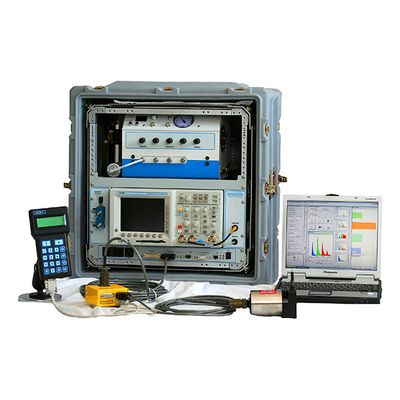
UVOST - UltraViolet Optical Screening Tool
Dakota`s UVOST product efficiently delineates petroleum, oil, and lubricant (POL) contaminants in the subsurface. All the usual forms of POLs, including; gasoline, diesel fuel, jet fuel, and hydraulic fluids, can be detected via the fluorescence response of their polycyclic aromatic hydrocarbon (PAH) constituents. The fluorescence signal scales proportionally with NAPL concentration. (UVOST struggles to detect high-PAH content NAPLs such as tars, bunkers, etc. - See TarGOST for these `heavies`). UVOST`s LIF technique, in conjunction with direct push deployment, yields a detailed three-dimensional map of the NAPL distribution, in real time - offering a true `seek and find` adaptive site characterization capability as promoted by U.S. EPA`s TRIAD approach.
- Typical detection limit of 10-500 ppm (NAPL type and soil dependent)
- Operates effectively above and below the saturated zone
- Fast! Probe may advance at roughly 0.8 in/sec (2 cm/sec) without pause
- Typical daily productivity of 300-500 feet across 10-20 locations
- One inch data density coupled with nearly instantaneous response provides continuous detailed log of product distribution and heterogeneity
- Color-coded logs for the ultimate in qualitative information at a glance
- Waveforms offer product identification/verification and rejection of non-contaminant fluorescence such as mineral, peat, and other minor interferents
- Advanced UVOST data analysis service from Dakota harvests waveform information to allow custom analyte isolation and/or interference rejection in the logs
- CPT and percussion (direct push technology) deliverable – if direct push sampling gets there, UVOST can get there
The new UVOST+HP tool enables the practitioner to efficiently delineate LNAPL petroleum while simultaneously classifying the scales of lithologic variability that control mass storage and transport in the source and distal segments of the LNAPL plume. This unique combination of technologies in a single tool reduces time and cost, while eliminating the need to integrate UVOST and HPT data from adjacent borings.