


- Home
- Companies
- V. Løwener A/S
- Products
- Vacuum Technic
Vacuum Technic
100% vacuum is defined as the complete absence of atmospheric pressure in a given space. Despite many attempts no one has so far managed to produce complete vacuum, i.e. an absolute pressure of zero. In everyday terms vacuum is used of pressures below standard atmospheric pressure, which is defined as 760 mm of mercury or 1013.25 millibars, or 101.35 kilopascals.Vacuum can be produced by vacuum pumps, of which there are many different types. The choice of pumps depends on the application, the gas to be pumped, and the vacuum one wants to attain.
We have a wide range of vacuum pumps and accessories such as gauges, valves, and fittings. And our service engineers will provide service and advice you in connection with repairs of vacuum pumps.
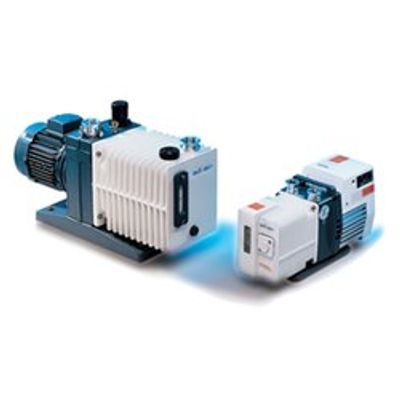
Vane vacuum pumps are very common. There are two types of vane pumps: Oil lubricated and dry running. Oil lubricated pumps are, resistant to moisture, and produce better vacuum; but they require regular service and maintenance. They are used in pick and place machines, packaging machines, for drying, filtration, degassing of oil, and distillation.
We have a large range of vane pumps, including turbo pumps, which can produce vacuum from 1013-1 millibars down to 10-7 millibars. For high vacuum applications we have a comprehensive programme of Alcatel products including helium leak detector systems.
Dry running vacuum pumps prevent contamination of the medium. These pumps are more expensive, but operating and maintenance costs are lower than for oil lubricated pumps, because less service is required and there are no expenses for oil. Dry running vacuum are especially suited for sterile applications in clean rooms, chemical applications, freeze-drying, research, central vacuum systems etc.
Liquid ring vacuum pumps with water as pump service liquid are also very common. These pumps are fully resistant to moisture, and are produced in many different materials. Other liquids than water can be used as pump service liquid. Max. vacuum is 33 mbar, and maintenance costs are low, because the pumps have very few moving mechanical parts. We have a large programme of pumps (with or without motor) from Travaini with capacities from 4 to 3,100 m³, as well as closed systems with recirculation of the pump service liquid.
The pumps are ideally suited for applications with large amounts of condensable vapours and condensates.
Rotary blowers are used to convey large amounts of air, especially in waterworks and in heat and power stations. We have blowers with capacities from 30 to 11,000 m³ per hour. Blowers can produce vacuum down to 550 millibars and pressure up to 1,200 mbar depending on the size of the pump.