

- Home
- Companies
- SR2O Holdings, LLC
- Products
- VersaBlack - Active- Activated Carbon
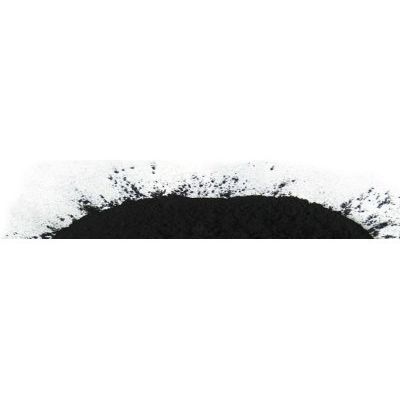
VersaBlack - Active- Activated Carbon
VersaBlack Active is a renewable virgin activated carbon. Activated carbon is a porous material containing carbon, which has highly advanced pore texture and is an excellent adsorbent, per gram of activated carbon adsorption area as much as the equivalent of eight tennis courts. The adsorption of activated carbon is reached by physical adsorption force and chemical adsorption force, besides carbon which contains a little hydrogen, nitrogen oxygen and ash, the structure is accumulated by carbon form six ring content. Because of six ring carbon irregular arrange, the activated carbon has the characters of microporous volume and high surface area. Activated carbon is constituted by various carbonaceous materials, which contains wood, sawdust, coal, coke, peat, lignin, nut shell, hard nut shell, sugar cane pulp, bone, lignite, petroleum residue and etc. The coal and coconut shell have become the most commonly employed raw material to produce activated carbon.
The usages of activated carbon: Activated carbon has high efficiency air purification function, can build comfortable and clean environment, also can care for human health, it is invisible air filters. Activated carbon uses the function of physical adsorption and chemical decomposition combined can decompose harmful gases such asmethanol, ammonia, benzene, cigarettes, lampblack etc. and all kinds of unusual smell, especially carcinogenic aromatic substances. It has strong adsorption capacity, is a common adsorbent, catalyst or catalyst carrier, and can easy fully touch with harmful gases in air. Activated carbon uses own pore adsorption to adsorb the harmful gases molecular into pore, then blow out fresh and clean air.
Activated carbon is widely used in all aspects of industrial and agricultural production, such as petrochemical industry non-alkali deodorization (refined de-mercaptan), ethylene desalination water (refined packing), catalyst carrier (platinum, palladium, rhodium and etc.), water purification and wastewater treatment, the power plant water treatment and protection in electric power industry, chemical catalyst and carrier, gas purification, solvent recovery and the decolorization and refining of oil in chemical industry, beverage, wine, MSG liquor in food industry and refining, decolorization of foodstuff, gold extraction and tail liquid recovery in gold industry, wastewater treatment, waste gas and harmful gas treatment, gas purification in environmental protection industry, and related industries cigarette filter, wood floor moisture proof, adsorbing odor, automotive gasoline evaporation of pollution control, the preparation of various impregnanting liquid and etc. Activated carbon will have a good development prospect and broad markets in the future.
Environmental applications
Carbon adsorption has numerous applications in removing pollutants from air or water streams both in the field and in industrial processes such as:
- Spill cleanup
- Groundwater remediation
- Drinking water filtration
- Air purification
- Volatile organic compounds capture from painting, dry cleaning, gasoline dispensing operations, and other processes.
Gas purification
Filters with activated carbon are usually used in compressed air and gas purification to remove oil vapors, odors, and other hydrocarbons from the air. The most common designs use a 1 stage or 2 stage filtration principle in which activated carbon is embedded inside the filter media. Activated charcoal is also used in spacesuit Primary Life Support Systems. Activated charcoal filters are used to retain radioactive gases from a nuclear boiling water reactor turbine condenser. The air vacuumed from the condenser contains traces of radioactive gases. The large charcoal beds adsorb these gases and retains them while they rapidly decay to non-radioactive solid species. The solids are trapped in the charcoal particles, while the filtered air passes through.
Mercury scrubbing
Activated carbon, often impregnated with iodine or sulfur, is widely used to trap mercury emissions from coal-fired power stations, medical incinerators, and from natural gas at the wellhead. This carbon is a specialty product costing more than US$4.00 per kg. However, it is often not recycled.
Freedonia – US Activated Carbon Market Report
US demand to rise 11.2% annually through 2017
US demand for activated carbon, including virgin and reactivated products sold by activated carbon suppliers, is expected to grow 11.2 percent per year to almost 1.3 billion pounds in 2017, with market value reaching almost $1.8 billion. Implementation of the US Environmental Protection Agency’s Mercury and Air Toxics Standards (MATS) will drive most of the growth, as utilities and industrial manufacturers upgrade their coal-fired power plants to comply with the regulations.
Compliance with the EPA’s Stage 2 Disinfectants and Disinfection Byproducts (DBP) Rules, which will be fully implemented by 2015, will lead to healthy gains in water treatment applications as well. Additionally, rising motor vehicle production, increased pharmaceutical output, and improving economic conditions will drive strong growth in several smaller applications.
New EPA mandates to be main driver of demand
Implementation of the EPA’s new mercury removal standards will be the single most important factor impacting activated carbon demand through 2017.
Mercury-emitting industrial facilities such as coal-fired power plants, cement kilns, solid waste incinerators, and other plants with large industrial boilers will predominantly turn to activated carbon injection (ACI) systems to meet these requirements. With an ACI system in a large industrial facility consuming up to two million pounds of powdered activated carbon annually, the phase-in of these new rules is expected to have a powerful impact on activated carbon demand, and powdered products will expand their market share to 70 percent of total US demand in 2017. As powdered activated carbon is generally not reactivated, sales of powdered activated carbon are expected to remain high even beyond the phase-in deadline for the mercury removal standards.
Compliance with EPA regulations will also boost activated carbon demand in water treatment applications. Demand will increase by over 50 million pounds through 2017 as the EPA’s DBP Rules go into full effect. While some compliance with the DBP Rules had been achieved by 2012, the final phase-in of the Rules will continue to promote growth. The majority of activated carbon used to address DBPs will be granular activated carbon, making water treatment applications the best growth opportunity for suppliers of granular products, both virgin and reactivated.
Smaller applications to also see strong growth
Among the smaller uses for activated carbon, motor vehicle applications, including emissions canisters and cabin air filters, will benefit from rebounding US motor vehicle production. Increased pharmaceutical output will promote demand for activated carbon in pharmaceutical and medical applications. Mining applications will also register gains, as increased processing will be necessary to maximize mine output. An improving economy will promote demand for activated carbon in chemical purification and other industrial processes. Many of these smaller applications use high value specialty products, such as activated carbon fiber or cloth and carbon monoliths, boosting demand in value terms despite accounting for a small share of overall volume demand. On the other hand, activated carbon use in food and beverage processing and solvent recovery will remain stable.
Roskill – Global Industry Market & Outlook:
Activated Carbon: Global Industry Markets and Outlook, 2013 (9th Edition)
Activated carbon markets are on the brink of an enormous change. The next four years could see world consumption almost double according to a new report from Roskill. Enough new production capacity should be in place by 2017 to meet new demand, but the potential exists for a shortfall to develop. The report quantifies Roskill’s supply and demand predictions to 2017.
A major driver of growth in the market is new mercury control legislation. The US Environmental Protection Agency (EPA) Mercury and Air Toxics Standard (MATS) was signed on 16 December 2011 and is designed to reduce mercury, other metal and acid gas emissions from coal- and oil-fired power plants. This long-anticipated rule finally became effective on 16 April 2012. The initial compliance deadline is three years after the effective date, or 16 April 2015. The power plant standard, and the cement and industrial boiler mercury control standards that will accompany it, are together expected to increase the North American market for powdered activated carbon by approximately 300,000tpy before 2017. The standard coincides with the US EPA Disinfection By-Products (DBP) Rule, which is expected to increase the US market for granular activated carbon in water treatment by at least an additional 35,000tpy by 2017.
On 19 January 2013, international negotiators also concluded a new global mercury control treaty, which will be signed in Japan in October 2013. The treaty includes commitments to undertake measures that will reduce airborne mercury emissions. Most of the steps outlined in the treaty will be taken by 2020 by the 140 UN member countries involved. As a tribute to thousands of Japanese victims of the Minamata mercury pollution tragedy of the last century, the treaty will be named the Minamata Convention on Mercury.
Activated carbon injection systems are the dominant control technology to address mercury emissions in 2013. The global mercury control treaty to be signed in October 2013 is expected to prompt new mercury control legislation in other UN member countries. Demand for activated carbon is expected to increase further in response to these new rules over the following five year period, 2017 to 2022. Increasingly stringent environmental regulations in the European Union, China and India are also expected to raise demand for activated carbon to 2017. Roskill’s report segments consumption forecasts by geography and by end-use.
Activated carbon prices increased steadily during the five year period 2007 to 2012 and have never been higher. The initial increase coincided with the almost simultaneous imposition of import duties by the US government and lifting of export incentives by the Chinese government, but it was perpetuated by a number of other factors described in the report. The next five year period, 2012 to 2017, is expected to see prices rise again.